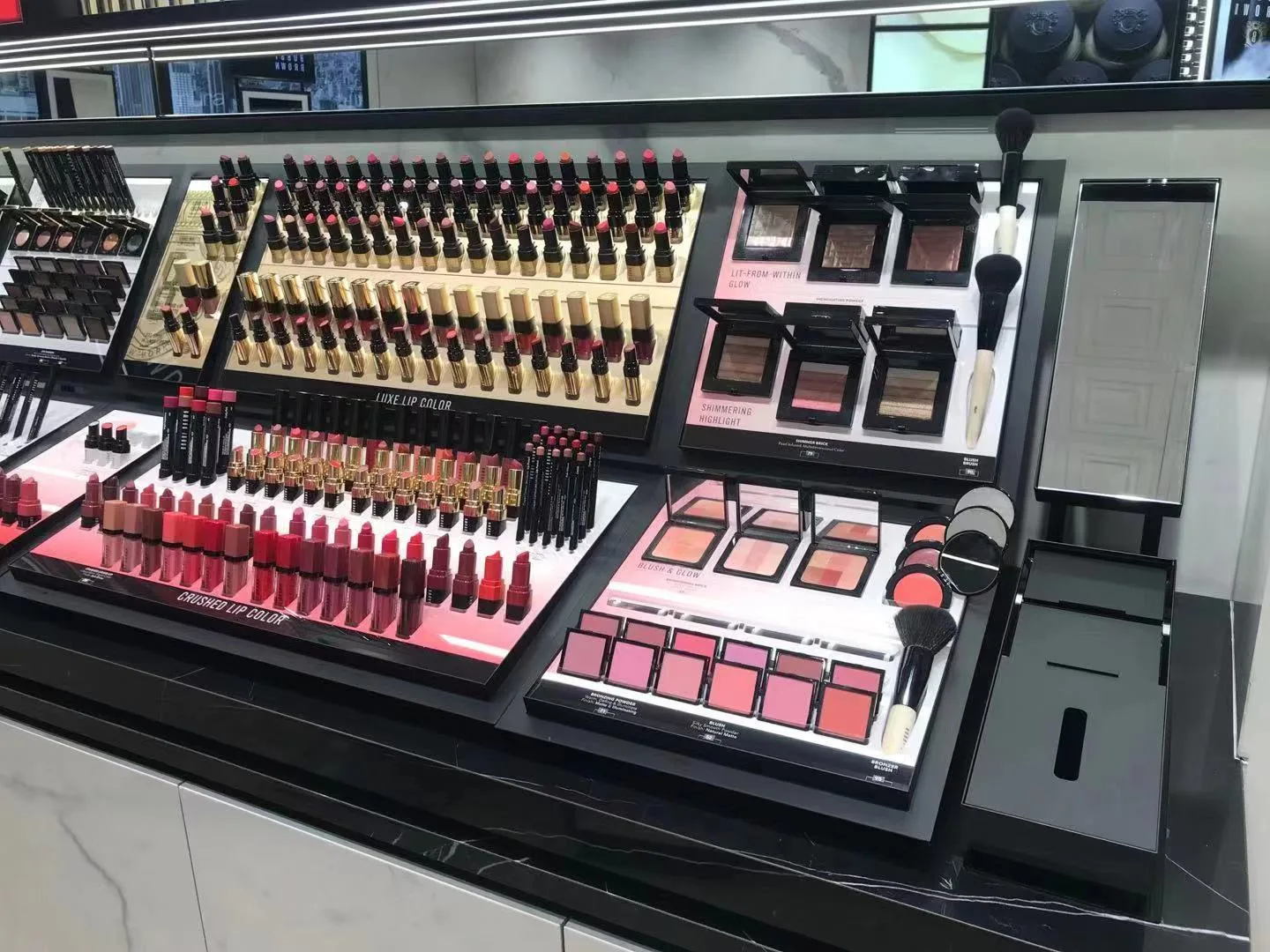
Cases of high-end beauty display stands in the North American, European and Asian-Pacific markets

Global Luxury Beauty Retail Display Case Study: How APEX

Supports Scalable Manufacturing Through Structural Optimization

and Multi-Material Integration

Project Overview

How can global luxury beauty brands transform complex retail display concepts into high-quality, consistent, and scalable physical display fixtures?

For professional retail display solution providers serving international beauty brands, the challenge goes beyond creating visually appealing in-store environments. It also involves turning creative designs into manufacturable, assembly-ready, and repeatable products while managing quality and delivery across multiple projects.

This project involves a specialized retail display solutions company serving leading global beauty and personal care brands. Operating across North America, Europe, and the Asia-Pacific region, the client provides in-store display design, manufacturing, and installation services for major brand manufacturers and large specialty beauty retailers.

With multiple retail display projects running simultaneously, the client faced demanding requirements involving structural complexity, material integration, production consistency, and tight launch schedules.

To address these challenges, APEX focused on structural optimization and multi-material manufacturing integration, supporting the transition from complex creative concepts to practical, standardized, and scalable retail display solutions.

This collaboration highlights an important consideration for professional retail display companies: choosing a manufacturing partner requires more than production capacity. It requires engineering expertise, cross-material coordination, and the ability to support complex manufacturing programs.


1. Client Background: A Professional Retail Display Solutions Provider Serving Global Luxury Beauty Brands

The client specializes in high-end beauty and personal care retail environments, serving leading global brand manufacturers and major specialty beauty retailers.

Unlike beauty brands that sell cosmetics directly to consumers, the client’s core business focuses on transforming brand concepts into physical retail experiences through professional design, manufacturing, and installation services.

Its portfolio includes in-store product display stands, branded display cabinets, and customer experience areas, with business operations spanning North America, Europe, and the Asia-Pacific region.

Why Do Luxury Beauty Retail Displays Require Advanced Manufacturing Capabilities?

For premium beauty brands, retail display fixtures do more than organize products. They are essential components of brand identity, product presentation, and the overall in-store customer experience.

Structural proportions, metal finishes, transparent acrylic components, and lighting details all contribute to the visual quality of a retail environment.

Luxury beauty displays often emphasize sophisticated material combinations and consistent visual details.

A single display fixture may incorporate precision metal structures, transparent acrylic components, integrated LED lighting, and branded decorative elements.

Each component must meet its individual manufacturing requirements while fitting together accurately during final assembly.

As a result, the client needed more than a supplier specializing in a single manufacturing process. It required a manufacturing partner capable of understanding complex retail display designs and coordinating multiple materials and production techniques.

Manufacturing Challenges Across International Markets

With projects spanning multiple international markets, the client also needed manufacturing solutions that could support consistent production across different retail environments.

When the same branded display concept is introduced across multiple stores or regions, structural dimensions, materials, finishes, and assembly requirements must remain consistent.

Manufacturing processes that rely heavily on manual adjustments or non-standard components can introduce variations between production batches, increasing the complexity of project coordination and installation.

Therefore, design standardization, manufacturing consistency, and scalable production capabilities were important considerations in selecting a manufacturing partner.

2. Client Challenges: Balancing Creative Design, Manufacturing Quality, and Delivery Efficiency

Challenge 1: Managing Multiple Projects Under Tight Product Launch Schedules

The client operates in a parallel project development environment, coordinating different display concepts, product development activities, and retail rollout schedules within overlapping timelines.

In this working model, design, engineering, material processing, and production preparation are closely interconnected.

A dimensional error, structural conflict, or manufacturing issue at any stage can lead to design modifications, production adjustments, and potential delays.

For beauty brands operating around scheduled product launches, display fixtures must be ready to support store merchandising and promotional activities at the required time.

Consequently, the client needed a manufacturing partner capable of more than producing fixtures according to drawings.

It needed engineering support that could identify potential manufacturability issues early, reducing the likelihood of problems emerging during production or assembly.

Challenge 2: Transforming Complex Creative Concepts into Manufacturable Products

Luxury beauty retail displays often feature distinctive visual designs. However, an attractive concept is not necessarily ready for mass production.

For example, a display cabinet may combine a refined metal frame, transparent acrylic display components, and concealed lighting.

Although these elements can create a cohesive brand presentation, their manufacturing processes, connection methods, and assembly requirements differ significantly.

Without sufficient engineering evaluation, complex designs may encounter problems such as unsuitable connections, dimensional incompatibility, or unnecessarily complicated production procedures.

The central challenge was to preserve the original design intent while making complex retail fixtures practical for manufacturing and assembly.

Challenge 3: Integrating Metal, Acrylic, and LED Lighting into One Display System

Unlike basic single-material shelving, premium cosmetic display fixtures frequently combine several materials and functional components.

Metal provides structural support and decorative finishes. Acrylic can be used for transparent product presentation and display components, while LED lighting enhances product visibility and brand presentation.

Each material requires a different manufacturing approach.

Metal fabrication involves dimensional accuracy, forming characteristics, structural integrity, and surface finishing.

Acrylic processing requires attention to transparency, cutting precision, edge quality, and assembly compatibility.

LED lighting integration involves fixture placement, installation space, cable routing, and maintenance accessibility.

When these materials are combined within one display unit, connection details, assembly tolerances, and component relationships become critical.

Even if every individual component meets its manufacturing specifications, poor coordination between different processes may cause problems during final assembly.

Challenge 4: Achieving Consistent Quality Across International Retail Projects

For retail display programs serving multiple markets, producing a successful prototype is only the beginning.

The manufacturing solution must also support consistent results during subsequent production.

If critical components lack standardized specifications, assembly procedures are overly complicated, or production methods are difficult to repeat, variations may occur between manufacturing batches.

For professional retail display solution providers, these inconsistencies can affect project coordination, installation, and delivery.

The client therefore needed an approach that could balance creative design requirements with repeatable manufacturing processes.

3. APEX’s Solution: Improving Manufacturability Through Structural Optimization and Multi-Material Integration

Structural optimization was the central focus of this project.

During the concept development stage, retail displays are often designed primarily around visual appeal. However, once a project enters manufacturing, additional factors must be considered, including component connections, structural stability, assembly procedures, and processing accuracy.

APEX’s engineering approach focuses on evaluating these practical requirements and improving display structures for manufacturability.

The objective of structural optimization is not simply to change a product’s appearance. It is to preserve the intended visual design while making the display easier to manufacture, assemble, and reproduce consistently.

Key engineering considerations include:

  • Structural connections: Evaluating how metal, acrylic, and other components are joined to reduce assembly complexity.

  • Component compatibility: Optimizing installation positions and dimensional relationships according to different material characteristics.

  • Assembly efficiency: Simplifying complex assembly procedures wherever possible without compromising the intended appearance.

  • Manufacturing repeatability: Prioritizing structures and production methods that can be consistently implemented across multiple manufacturing batches.

For retail display projects requiring volume production, early structural optimization provides a stronger foundation for subsequent manufacturing processes and quality control.

3.2 Multi-Material Integration: Coordinating Metal, Acrylic, and LED Lighting

One of the main challenges in manufacturing luxury beauty retail displays is not processing an individual material, but integrating different materials and functional systems into a complete product.

APEX has integrated multi-material manufacturing capabilities, enabling the coordination of metal fabrication, acrylic processing, surface finishing, and LED lighting integration based on specific display requirements.

For metal components, engineering considerations include load-bearing performance, dimensional accuracy, and appearance.

For acrylic components, attention is given to transparency, processing precision, and compatibility with surrounding structures.

For lighting integration, fixture placement, cable routing, installation space, and structural accessibility must be considered together.

The value of multi-material manufacturing lies in coordinating different processes as part of a complete display system, rather than treating each component as an isolated manufacturing task.

For professional retail display companies serving international beauty brands, this approach can help reduce the coordination complexity associated with multi-material production.

3.3 Standardized Design: Building a Foundation for Scalable Retail Display Manufacturing

When a retail display concept needs to be reproduced across multiple stores or markets, standardization becomes essential.

Complex display fixtures that rely on numerous non-standard structures or inconsistent assembly methods can increase production complexity and make quality control more difficult.

Therefore, engineering optimization should focus on maintaining consistent critical dimensions, connection structures, common components, and assembly requirements.

Where appropriate, reusable structural elements can be standardized to reduce unnecessary variations between production batches.

Clearly defined component relationships and assembly requirements also provide a more consistent basis for manufacturing, inspection, and installation.

The purpose of standardization is not to eliminate creative freedom or compromise brand identity.

Instead, it creates a stable manufacturing framework that can support customized visual designs while improving production repeatability.

For retail display solution providers operating across international markets, scalable and repeatable manufacturing structures can help reduce production coordination risks during multi-region rollouts.

3.4 Production and Quality Coordination: Reducing Risks in Parallel Project Development

When multiple retail display projects are developed simultaneously, manufacturers must coordinate more than production operations.

Design approvals, material preparation, quality requirements, and manufacturing schedules need to be closely aligned.

For complex display products, confirming critical structures, materials, and component relationships before volume production is particularly important.

Identifying engineering issues at an early stage can help reduce the risk of extensive modifications later in the manufacturing process.

Important manufacturing coordination measures include:

  • Defining key design requirements and engineering approval stages.

  • Coordinating production processes across different materials and manufacturing techniques.

  • Establishing quality criteria for critical dimensions, appearance, and assembly.

  • Evaluating structural and process feasibility before volume production.

  • Maintaining consistency between approved design revisions and production requirements.

These practices provide a clearer connection between engineering and manufacturing, supporting more predictable production planning and project execution.
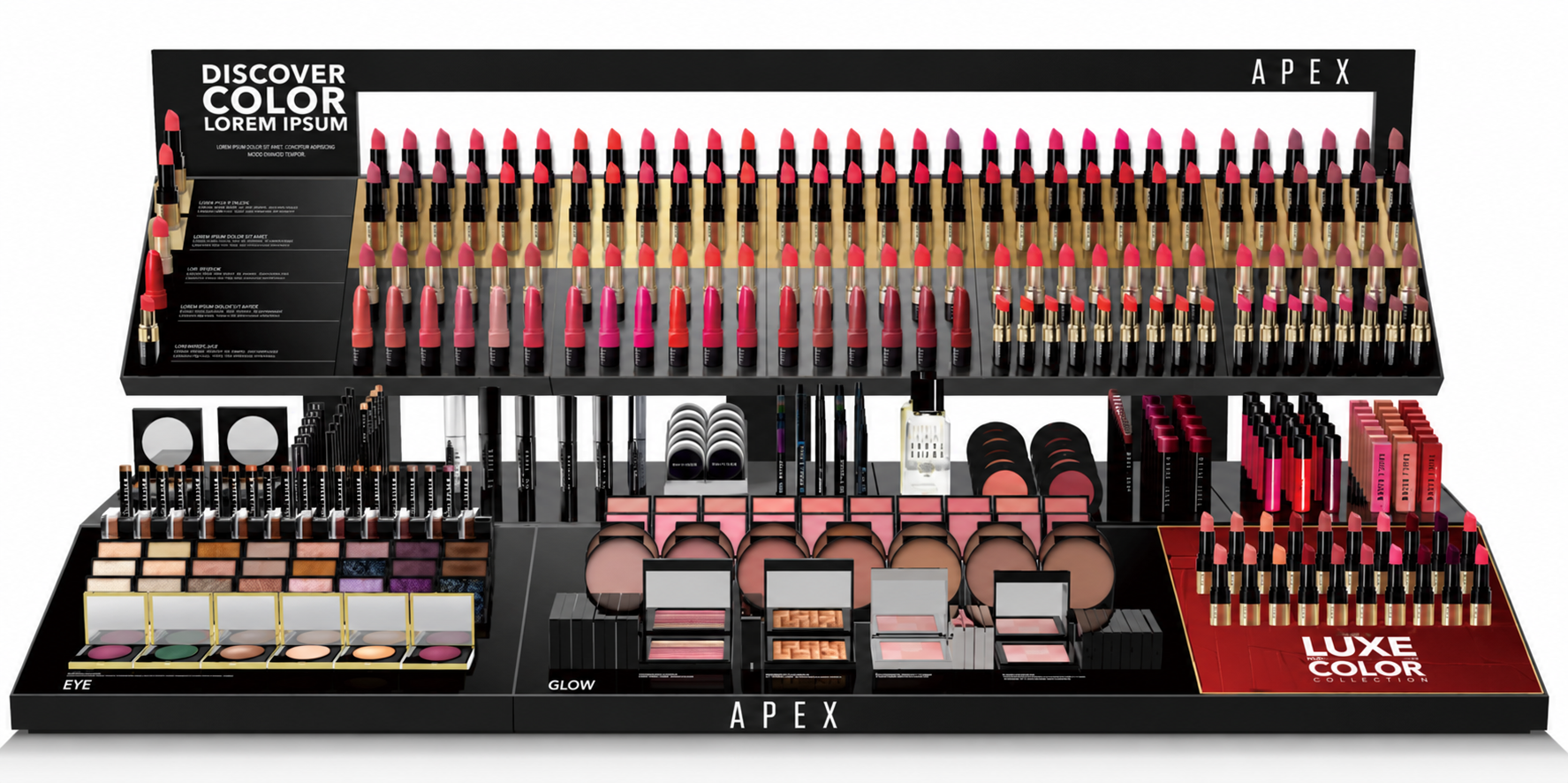
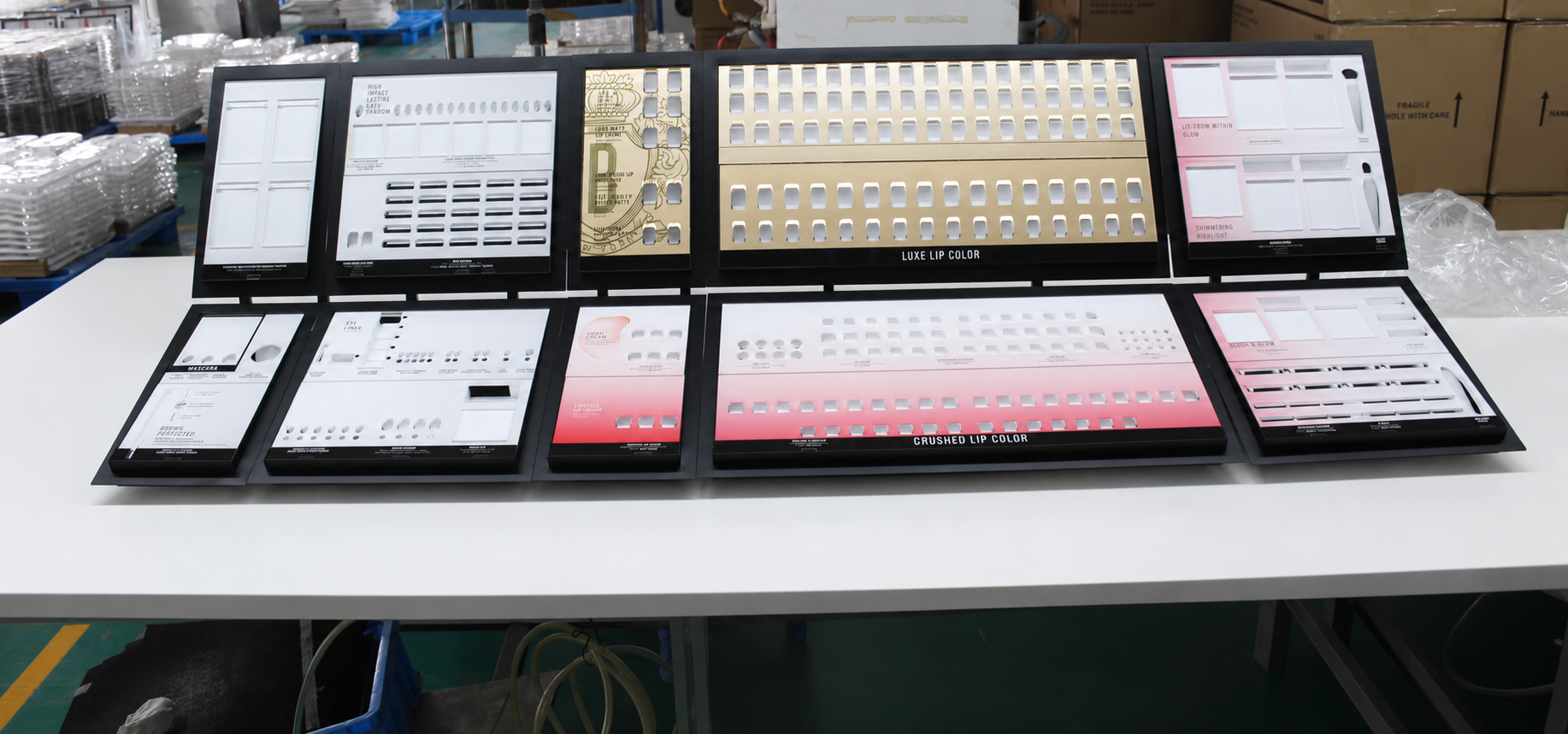
 

4. Beyond Manufacturing: What Value Can APEX Bring to Professional Retail Display Companies?

For specialized retail display solution providers, the value of a manufacturing partner goes beyond producing physical fixtures.

It also involves helping transform design concepts into consistent, repeatable, and manufacturable products.

This project focuses on structural optimization and multi-material manufacturing integration, with potential value in the following areas.

4.1 Improving the Manufacturability of Creative Designs

Engineering evaluation and structural optimization help identify potential processing and assembly challenges before production begins.

This allows design concepts to be better aligned with practical manufacturing requirements, reducing the risk of extensive adjustments later in the project.

4.2 Reducing Multi-Material Coordination Complexity

By considering metal structures, acrylic components, and lighting integration within one engineering framework, manufacturers can better manage component compatibility and assembly requirements.

This helps minimize problems caused by independently designed or manufactured components.

4.3 Supporting Consistent Quality in Volume Production

Standardized structures, critical dimensions, and assembly requirements provide a more consistent basis for manufacturing and quality inspection.

This is particularly valuable for clients planning to reproduce retail display concepts across multiple production batches or international markets.

4.4 Reducing Manufacturing Risks Across Simultaneous Projects

When multiple projects are progressing in parallel, effective engineering coordination and early manufacturability evaluation help identify potential technical issues before they affect production.

This can support more reliable project planning and reduce the risk of manufacturing-related delays.

4.5 Allowing Clients to Focus on Brand Design and Retail Solutions

For companies specializing in retail display design and project integration, a manufacturing partner with engineering and multi-material capabilities can provide valuable technical support.

By coordinating the structural and manufacturing aspects of display production, the manufacturing partner allows the client to devote more attention to brand requirements, creative development, and retail project management.

5. Project Outcomes: Engineering and Manufacturing Support for Premium Beauty Retail Displays

The core value of this project lies in the use of structural optimization and multi-material manufacturing coordination to improve the feasibility of complex retail display designs.

This approach provides a foundation for standardized manufacturing and potential international retail applications.

The relationship between the client’s requirements and the proposed manufacturing solutions can be summarized as follows:

Client RequirementAPEX Solution ApproachValue for the Client
Turning complex creative concepts into physical display productsStructural engineering and design for manufacturabilityReduced risk of design-to-production incompatibilities
Integrating metal, acrylic, LED lighting, and other componentsMulti-material manufacturing and functional integrationImproved coordination between different materials and components
Maintaining consistency across international retail projectsStandardized structures and assembly requirementsStronger foundation for repeatable volume production
Managing multiple projects under tight launch schedulesEngineering approvals, production coordination, and quality managementGreater predictability in manufacturing execution


6. Why Do Professional Beauty Retail Display Companies Need an Integrated Manufacturing Partner?

When a retail display project combines complex metal structures, acrylic components, branded decorative elements, and integrated lighting, manufacturing involves much more than processing individual materials.

Compatibility between manufacturing processes, structural manufacturability, and consistency across production batches can directly affect the finished product.

If a manufacturer specializes in only one process, the client may need to coordinate several suppliers and manage additional engineering and assembly requirements.

By contrast, an integrated manufacturing partner can approach the project as a complete system, coordinating structural design, materials, production processes, and functional components.

APEX combines design and engineering capabilities, multi-material manufacturing resources, and OEM/ODM customization services to support beauty brands, retailers, and professional retail display solution providers.

For companies translating creative retail concepts into physical installations across different markets, choosing the right manufacturing partner means more than selecting a fabrication supplier.

It means working with a team that can help resolve complex engineering and production challenges.

7. Frequently Asked Questions About Custom Beauty Retail Display Manufacturing

Q1: Why is structural optimization important in luxury beauty display manufacturing?

Structural optimization helps transform visually complex display concepts into products suitable for practical manufacturing, assembly, and volume production.

It addresses issues such as component connections, dimensional compatibility, assembly accessibility, and manufacturing repeatability while aiming to preserve the original design intent.

Q2: Can metal, acrylic, and LED lighting be integrated into one cosmetic display cabinet?

Yes. Metal, acrylic, and LED lighting can be integrated into a single cosmetic display cabinet, provided that structural requirements, material compatibility, and electrical integration are properly evaluated.

Metal is commonly used for structural frames and supporting components, acrylic for transparent display elements, and LED lighting for product illumination and branded visual effects.

Effective multi-material integration requires careful coordination of component dimensions, assembly methods, and installation requirements.

Q3: How can custom retail display fixtures be manufactured consistently for different countries and regions?

Consistent international retail display manufacturing requires standardized component specifications, clearly defined assembly requirements, and appropriate quality control procedures.

Manufacturers must also evaluate applicable material, electrical, installation, and regulatory requirements for each destination market.

Standardizing critical structures and manufacturing processes helps reduce variations between production batches and supports multi-region retail display programs.

Q4: How can manufacturers reduce delivery risks when developing multiple retail display projects simultaneously?

Manufacturers can reduce project risks by evaluating manufacturability early, coordinating engineering approvals, validating key production processes, and establishing clear quality and production milestones.

For complex displays involving multiple materials, communication between engineering, production, and project management teams is particularly important.

Q5: What services can APEX provide to professional retail display solution companies?

APEX provides custom retail display engineering and manufacturing support, including structural design evaluation, material selection, production process coordination, and functional integration.

Its manufacturing capabilities cover metal fabrication, woodworking, acrylic processing, plastic injection molding, printing, surface finishing, and LED lighting integration.

These capabilities support the development and manufacturing of different types of customized retail display fixtures.

8. Conclusion: Turning Creative Retail Concepts into Scalable Manufacturing Solutions

For professional retail display companies serving global luxury beauty brands, outstanding creative design is only one part of a successful project.

The ability to transform complex concepts into structurally sound, manufacturable, and consistently reproducible display fixtures is equally important.

In this collaboration, APEX’s manufacturing approach centered on structural optimization, supported by multi-material integration and engineering coordination, to address the client’s complex retail display requirements.

From design concepts to engineering development, and from material integration to standardized manufacturing, APEX focuses on helping clients reduce manufacturing complexity and improve the practicality of customized retail display solutions.

For professional display companies managing international projects, an engineering-oriented manufacturing partner can play an important role in bringing creative ideas into physical retail environments.

Partner with APEX to Bring Complex Retail Display Designs to Life

Are you a beauty brand, retail display design company, shopfitting contractor, or professional retail display solutions provider looking for a manufacturing partner with integrated engineering and multi-material capabilities?

APEX provides customized retail display manufacturing support based on your design concepts, structural requirements, materials, and production needs.

Whether your project involves complex display structures, multi-material assemblies, integrated lighting, or volume production, our team can help evaluate practical manufacturing solutions.

Contact APEX to discuss your project requirements and explore how our engineering and manufacturing capabilities can support your next retail display program.