News

From Original Design and Multi-Material Engineering to Custom Tooling and Mass Production
Gratitude Makes Every Step Meaningful.
From Design Concepts to Production-Ready Fixtures: How Prototyping Helps Luxury Brands Validate Materials, Engineering, Finishes, and Functionality Why Is Prototyping Important for Bespoke Luxury Retail Displays?
This article outlines how beauty brands can select a reliable lipstick display manufacturer. It covers display requirements, structural design, modular customization, lighting integration, manufacturing capabilities, quality control, delivery, and long-term support for retail display projects.
This article explains the main factors influencing custom lipstick display stand costs, from dimensions and structural design to product capacity, branding, lighting, and order quantity. It also covers sampling, packaging, shipping, and manufacturer selection to help cosmetics brands plan customized retail display projects.
Beyond Final Inspection: Engineering-Led Quality Prevention, Multi-Process Manufacturing Control, and Documented Product Verification How Does APEX Manage Quality in Custom Cosmetic Display Manufacturing?
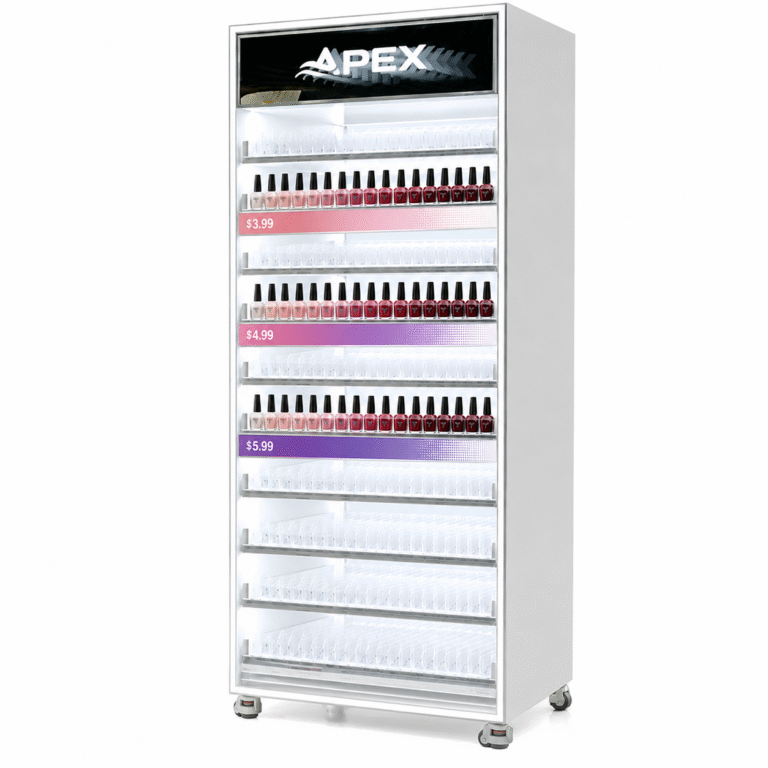
Building Brand Differentiation Through In-Store Identity, Consumer Experience, and Smarter Retail Presentation How Can Nail Polish Brands Differentiate Themselves in Beauty Retail?
This article explains how buyers can inspect perfume display fixtures before shipping. It covers structural stability, material integration, dimensional accuracy, modular assembly, lighting performance, branding, and packaging checks to help ensure product quality and consistent retail presentation.
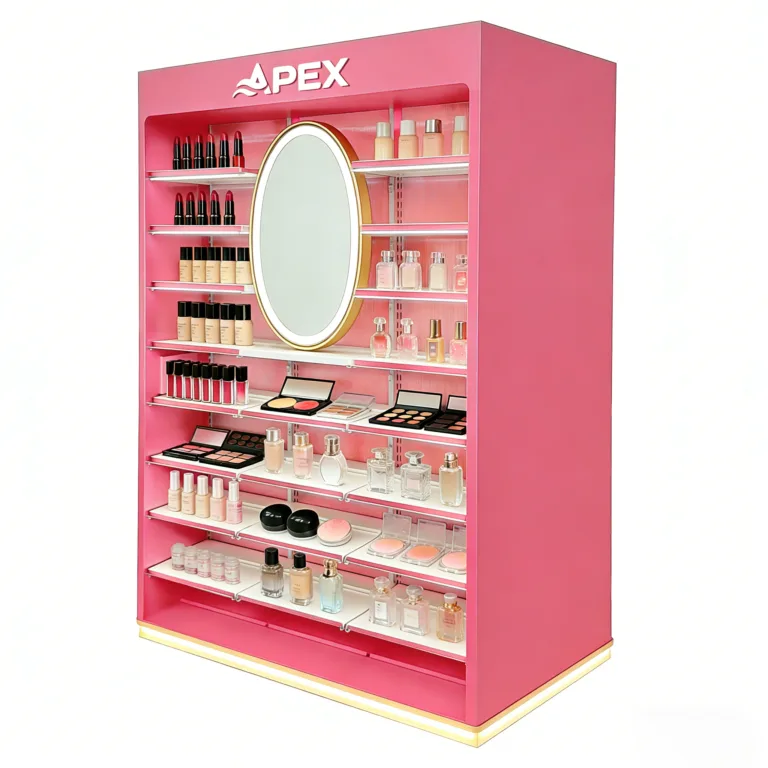
Multi-Material Engineering: Combining Metal, Acrylic, Wood, Glass, and Specialized Manufacturing Processes into One Complete Display Solution What Is Multi-Material Integration in Cosmetic Display Manufacturing? Multi-material integration is the process of engineering different materials, manufacturing methods, and functional components into one complete cosmetic display system. APEX combines metal, acrylic, wood, glass, plastic, decorative finishes, and integrated lighting to develop custom beauty retail displays according to each customer’s structural, visual, and merchandising requirements.
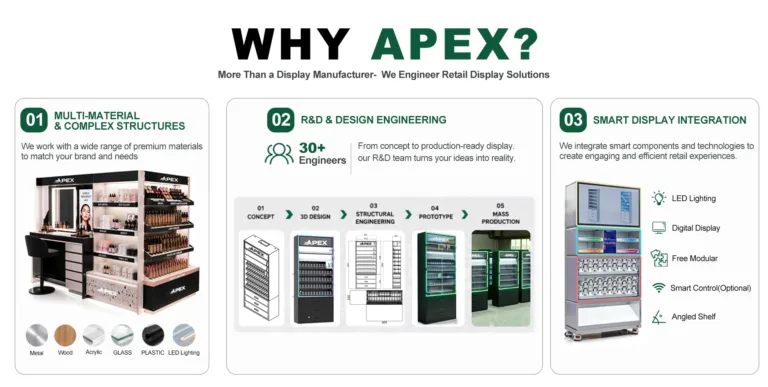
This article explains how to source reliable perfume display manufacturers from China, covering structural engineering, customization, lighting integration, factory capabilities, quality control, and international delivery for fragrance brands and retail chains.
Choosing between OEM and ODM affects how a cosmetic display is designed, customized, and produced. For beauty brands and retail chains, the key difference lies in who develops the design and how closely the final fixture can match project requirements. Understanding both models helps buyers select an approach that fits their brand and retail needs.
Choosing between China and Vietnam for cosmetic display manufacturing depends on the project’s design requirements, production capabilities, and sourcing priorities. For beauty brands and retail chains, the right manufacturing partner should support both individual fixtures and coordinated retail display programs.