Sourcing perfume display manufacturers from China requires more than comparing prices. For fragrance brands and retail chains, a suitable supplier should understand brand presentation, structural engineering, customization, and commercial retail requirements.
From floor-standing perfume displays to integrated retail showcases, buyers should evaluate a manufacturer’s design capabilities, production resources, and project management experience before placing an order.
Define Your Perfume Display Requirements
Identify the Display Format
Start by identifying where and how the displays will be used. Floor-standing perfume displays are suitable for showcasing fragrance collections, creating dedicated brand areas, and attracting attention in high-traffic retail spaces.
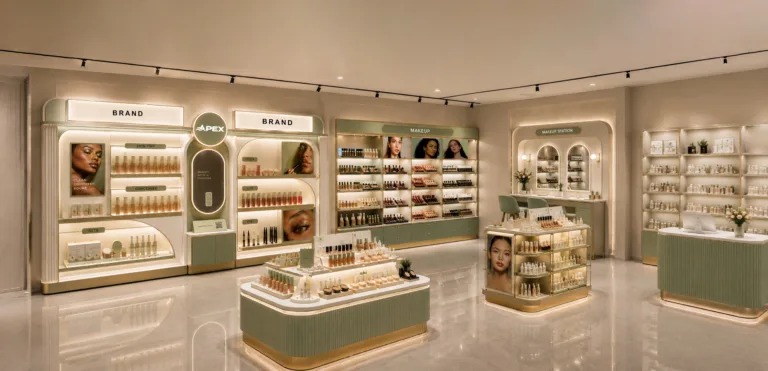
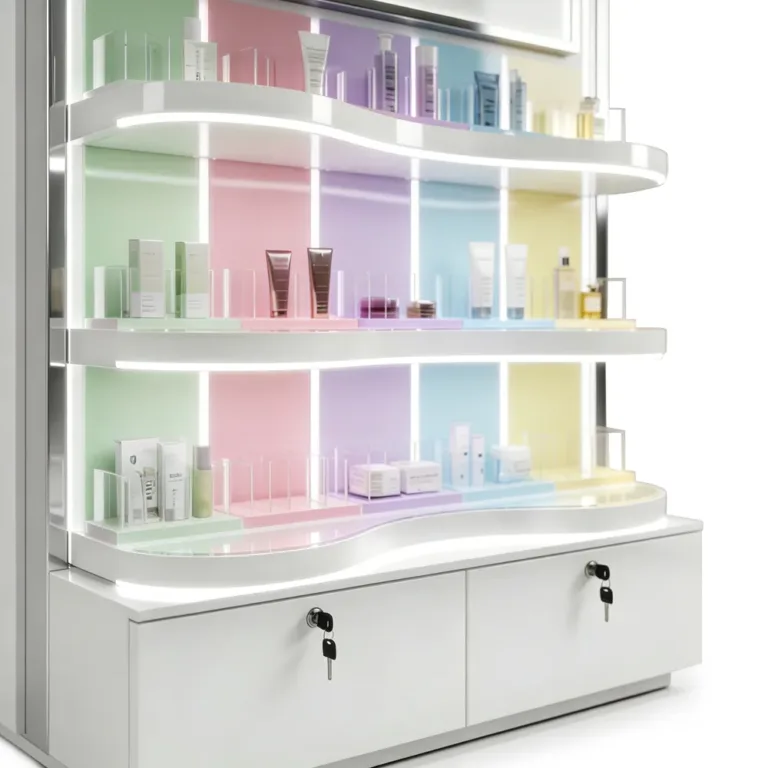
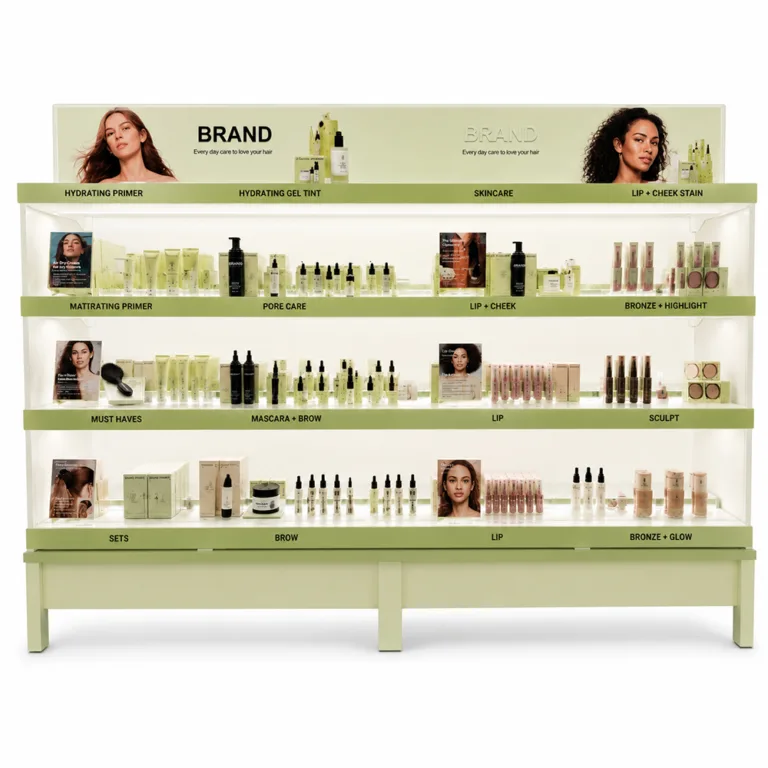
For premium fragrance products, retail display showcases can provide dedicated product presentation areas with integrated shelving, lighting, glass panels, and branded elements. Floor-standing modular display systems are also suitable for stores with specific space and merchandising requirements.
For multi-store projects, consider whether the display design can be adapted to different store layouts while maintaining a consistent brand image. Buyers can explore perfume display solutions when comparing configurations for different retail environments.

Prepare Technical Specifications
Before requesting quotations, prepare the main project requirements, including:
- Overall display dimensions and installation space
- Perfume bottle sizes and product quantities
- Structural design and load-bearing requirements
- Brand colors, logos, and surface finishes
- LED lighting and digital integration requirements
- Order quantity and delivery schedule
Store drawings, product photographs, and brand guidelines help manufacturers understand the project and reduce design revisions.
Evaluate the Manufacturer’s Engineering and Production Capabilities
Examine Metal Structure Engineering
Metal structures provide an important foundation for floor-standing retail display fixtures. Buyers should check whether a manufacturer can develop stable structures that support multiple shelves, branded panels, and lighting components.
Ask about metal cutting, laser processing, welding, structural assembly, and surface treatment. Coordinating different materials is equally important because perfume displays and showcases may combine metal frames with glass, wood, decorative panels, and other finishes.
For chain retailers, modular structural design can simplify transportation, installation, maintenance, and future store updates.
Evaluate Lighting Integration
Lighting enhances perfume visibility and creates a consistent retail atmosphere. Check whether the manufacturer can integrate LEDs into display frames, shelves, headers, and showcases.
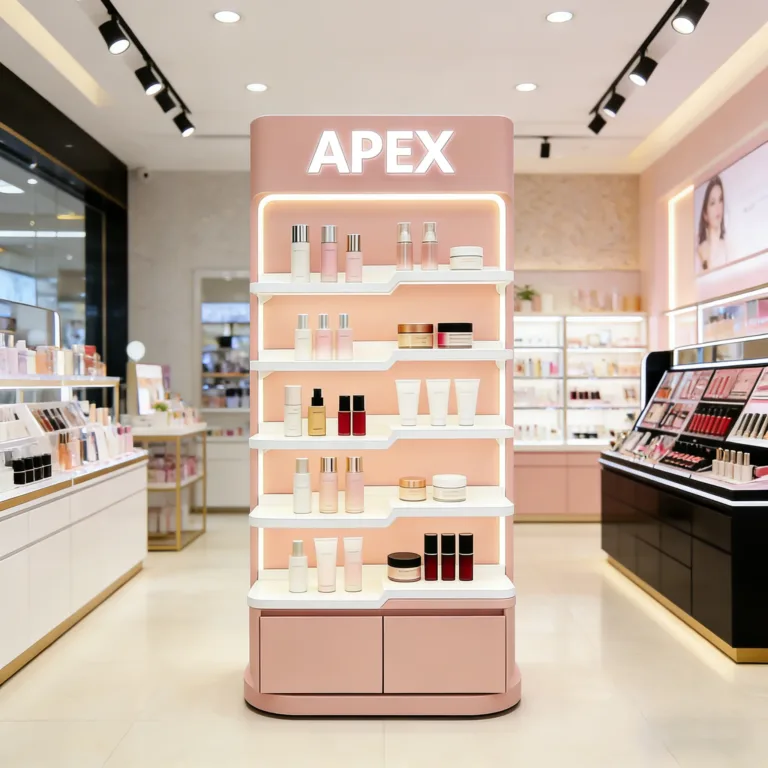
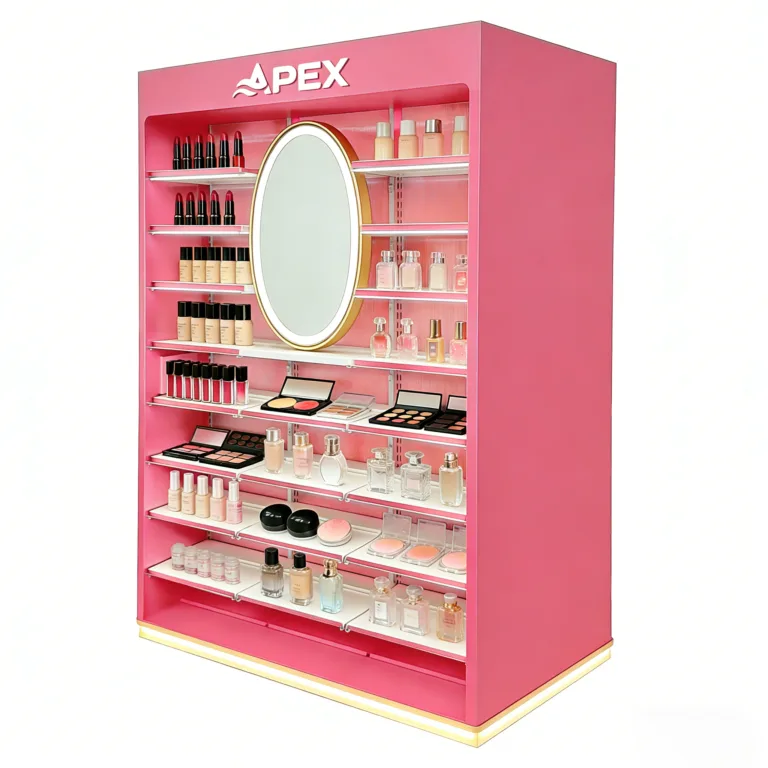
Confirm light positioning, cable routing, power supply placement, heat management, and maintenance access. For displays with digital screens or interactive features, verify installation space and electrical requirements. A custom beauty retail display system demonstrates how integrated LED lighting and adjustable shelves can support product presentation.

Assess Factory Production Capabilities
Factory infrastructure helps buyers determine whether a supplier can manage customized retail projects and larger production orders.
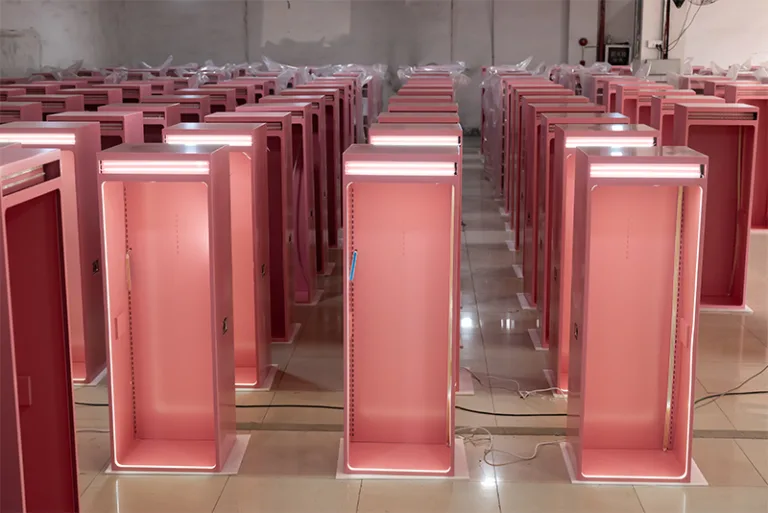
APEX operates manufacturing facilities in Shenzhen and Huizhou, covering over 25,000 square meters with more than 200 employees and 200 manufacturing equipment units. Its in-house processes include CNC machining, laser cutting, UV printing, electroplating, and hot stamping.
When evaluating a supplier, buyers should focus on the following capabilities:
| Evaluation Factor | What to Check | Why It Matters |
| Structural Manufacturing | Metal cutting, welding, and assembly | Supports display stability |
| Engineering Support | Technical drawings and structural design | Ensures workable display designs |
| Integrated Production | Component coordination and surface finishing | Supports customized appearances |
| Production Resources | Factory space and equipment | Indicates production capacity |
| Project Coordination | Production planning and quality management | Helps maintain delivery schedules |
Buyers can review the manufacturer’s Company Profile to understand its manufacturing resources and experience with customized retail projects.

Review the Customization Process Before Ordering
Request Technical Drawings
Ask the manufacturer to provide technical drawings and 3D renderings showing overall dimensions, structural components, display configurations, material combinations, and lighting positions.
For floor-standing perfume displays and showcases, pay particular attention to structural stability, shelf spacing, product accessibility, and installation requirements. Confirm these details against the store layout before approving production.
Approve a Physical Sample
A physical sample allows buyers to evaluate the actual structure, surface finishes, product placement, and lighting effects.
Check structural stability, assembly accuracy, component consistency, and brand graphics. For large retail projects, an approved sample also provides a reference for subsequent production batches.
Document any modifications and confirm the final specifications before mass production.
Clarify Customization Services
Clarify which stages the manufacturer handles, including concept development, structural engineering, display configuration, prototyping, and manufacturing.
For brands operating multiple stores, discuss whether standardized display modules can be adapted to different store dimensions and merchandising requirements.
APEX provides Custom Display Stand solutions for different retail applications, supporting customized structures, coordinated components, and brand presentation requirements.
Check Quality Control and International Delivery
Review Quality Inspection Procedures
Ask how the manufacturer checks structural dimensions, connection points, surface finishes, lighting functions, and final assembly.
Approved technical drawings and physical samples should serve as inspection references. For multi-store orders, standardized inspection procedures help maintain consistent quality and brand presentation.
Confirm Packaging and Delivery Arrangements
Large perfume displays and showcases may combine metal structures, shelves, lighting components, and decorative panels. Confirm suitable protective packaging, component labeling, assembly instructions, and transportation requirements before shipment.
For modular displays, components should be identified and packaged according to their installation sequence.
Also ask whether the manufacturer has experience with overseas retail projects, export documentation, phased deliveries, and multi-store rollouts.
Frequently Asked Questions
How Can Buyers Verify a Perfume Display Manufacturer in China?
Evaluate its engineering capabilities, factory resources, quality control procedures, and international project experience. Request technical drawings, physical samples, and previous project references before placing an order.
Can Manufacturers Customize Floor-Standing Perfume Displays?
Yes. Customization can include display dimensions, metal structures, shelf configurations, coordinated materials, brand graphics, surface finishes, LED lighting, and digital modules.
What Should a Perfume Display Manufacturing Quotation Include?
A quotation should specify structural design, materials, dimensions, finishes, lighting components, order quantity, sampling costs, packaging, and delivery terms. Compare suppliers using identical project requirements.
Conclusion
Choosing a perfume display manufacturer in China requires evaluating structural engineering, customization, production quality, and project management capabilities.
APEX Store Solutions provides customized retail display and store fixture solutions for brands and chain retailers. Contact the APEX team to discuss your perfume display and retail showcase requirements.