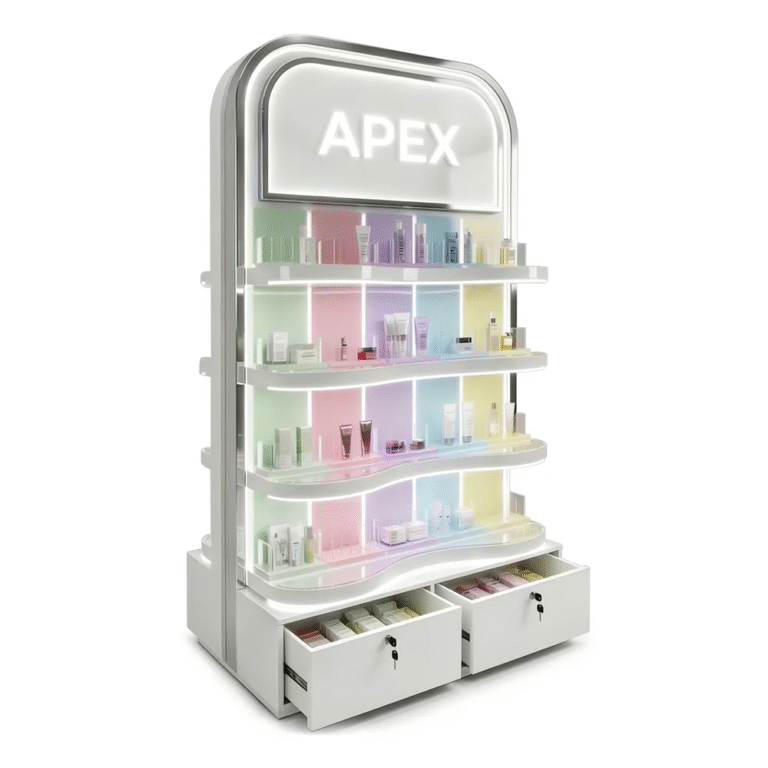
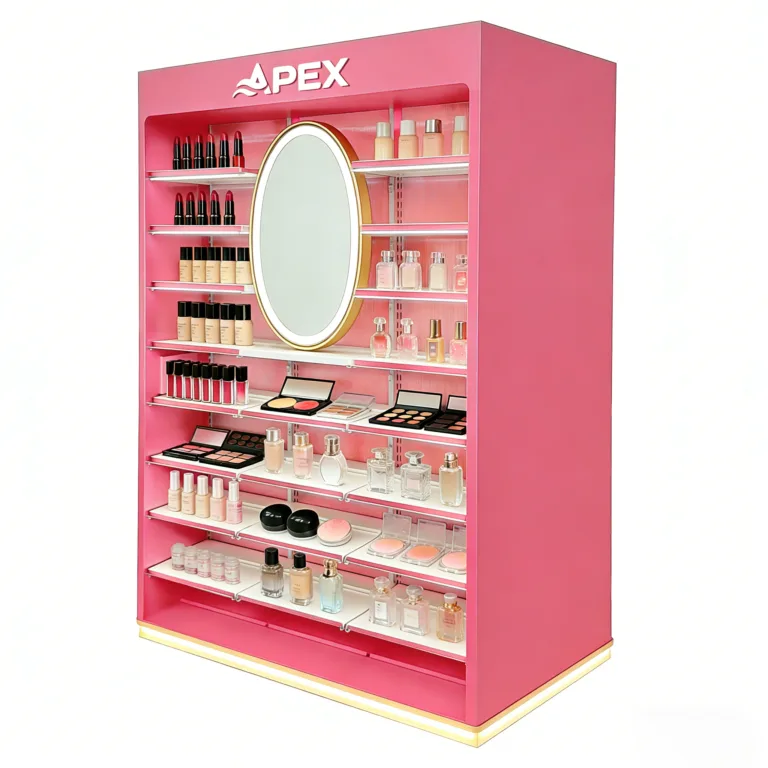
Beyond Final Inspection: Engineering-Led Quality Prevention, Multi-Process Manufacturing Control, and Documented Product Verification
How Does APEX Manage Quality in Custom Cosmetic Display Manufacturing?
APEX manages custom cosmetic display quality through engineering feasibility reviews, structural optimization, manufacturing partner coordination, prototype verification, production oversight, and finished-product inspections. Depending on project requirements, quality checks cover dimensional accuracy, material finishes, assembly compatibility, lighting functionality, surface adhesion, and export packaging.
For international beauty brands, quality is not simply about receiving an attractive display fixture.
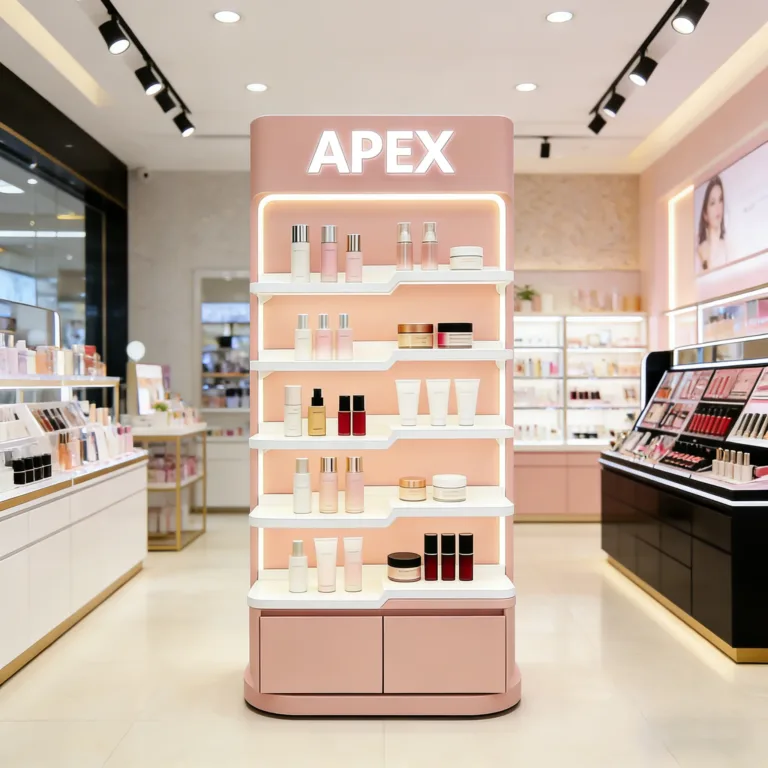
A custom cosmetic display must meet approved technical specifications, support the intended products, function correctly, and maintain a consistent appearance throughout the retail program.
These requirements become more complex when a display combines metal structures, acrylic components, glass panels, decorative finishes, integrated lighting, and specialized accessories.
A component may look acceptable individually but still create problems when assembled with other materials.
Likewise, a successful prototype does not automatically guarantee that every production unit will meet the same requirements.
At APEX, quality management begins with engineering and manufacturing planning—not just final inspection before shipment.
1. Why Is Quality Control Important for Custom Cosmetic Displays?
Unlike standard retail fixtures, customized beauty displays often involve unique structures, different materials, brand-specific finishes, and integrated functions.
These requirements introduce quality risks that must be addressed throughout development and production.
Structural and Dimensional Accuracy
Supporting frames, shelving systems, product holders, and connecting components must fit the approved design.
Dimensional inconsistencies can cause assembly difficulties, unstable components, or problems during store installation.
Multi-Material Compatibility
Metal, acrylic, wood-based panels, glass, and plastic components have different manufacturing characteristics.
Connections, surface finishes, and dimensional tolerances must be evaluated to support correct assembly and consistent appearance.
Brand Presentation
Cosmetic displays are part of a brand’s retail identity.
Visible scratches, inconsistent colors, poorly aligned graphics, or defective decorative finishes can compromise the intended presentation.
Functional Performance
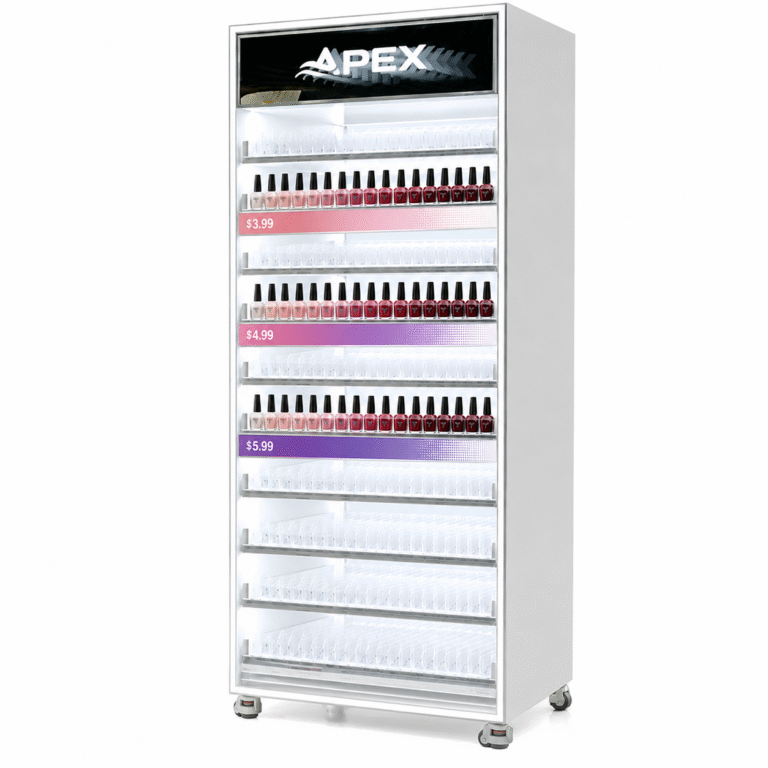
Integrated lighting, drawers, removable product holders, locking systems, and other functions must operate according to the approved requirements.
Repeat Production Consistency
For brands supplying multiple retail locations, production units must conform to the same approved specifications rather than relying on the appearance of a single successful prototype.
For these reasons, effective quality management requires both prevention and verification.
2. Quality Prevention Starts with Engineering and Manufacturing Feasibility
One of the most important stages of custom display quality management takes place before manufacturing begins.
Many international customers working with APEX already have their own design and engineering teams.
In these projects, APEX supports the transition from an approved creative concept or technical drawing to a practical manufacturing solution.
Our engineering coordination focuses on manufacturing feasibility, structural optimization, material and process selection, assembly requirements, and production considerations.
Reviewing Manufacturing Feasibility
An original display design may involve materials or structures that require special manufacturing methods.
Before production, the project team can evaluate component dimensions, material compatibility, processing requirements, and proposed connections.
This helps identify potential manufacturing challenges before components are produced.
Optimizing Structural Details
A custom beauty display may include multiple shelves, decorative panels, acrylic product trays, and lighting modules.
These components must be designed to work together without unnecessary assembly difficulties.
Structural optimization may involve reviewing connection methods, component positioning, installation arrangements, and manufacturing requirements.
Identifying Critical Quality Requirements
Different projects have different quality priorities.
For a cosmetic tester display, product-holder dimensions and accessibility may be essential.
For an illuminated wall display, electrical connections, component positioning, and lighting operation may require particular attention.
For a luxury cosmetic cabinet, visible finishes, alignment, and material compatibility may be especially important.
Identifying these priorities during engineering helps establish meaningful inspection requirements.
Preventing manufacturing problems during development is often more effective than relying on rework after production.
3. How Does APEX Coordinate Quality Across Multiple Manufacturing Processes?
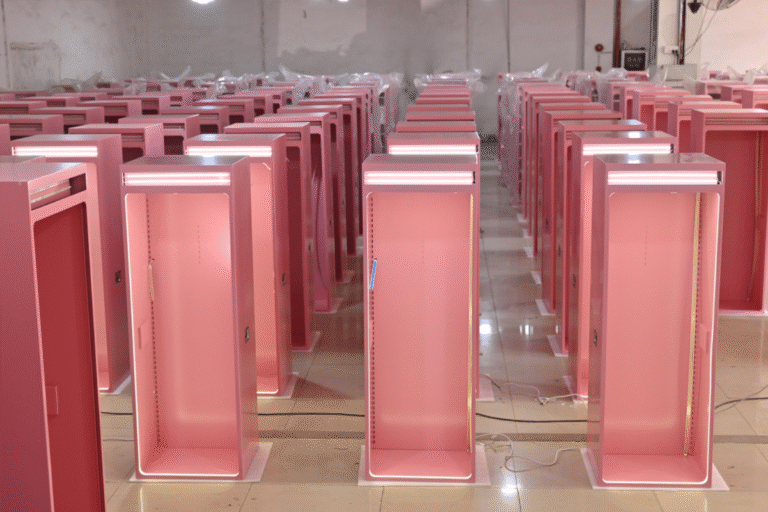
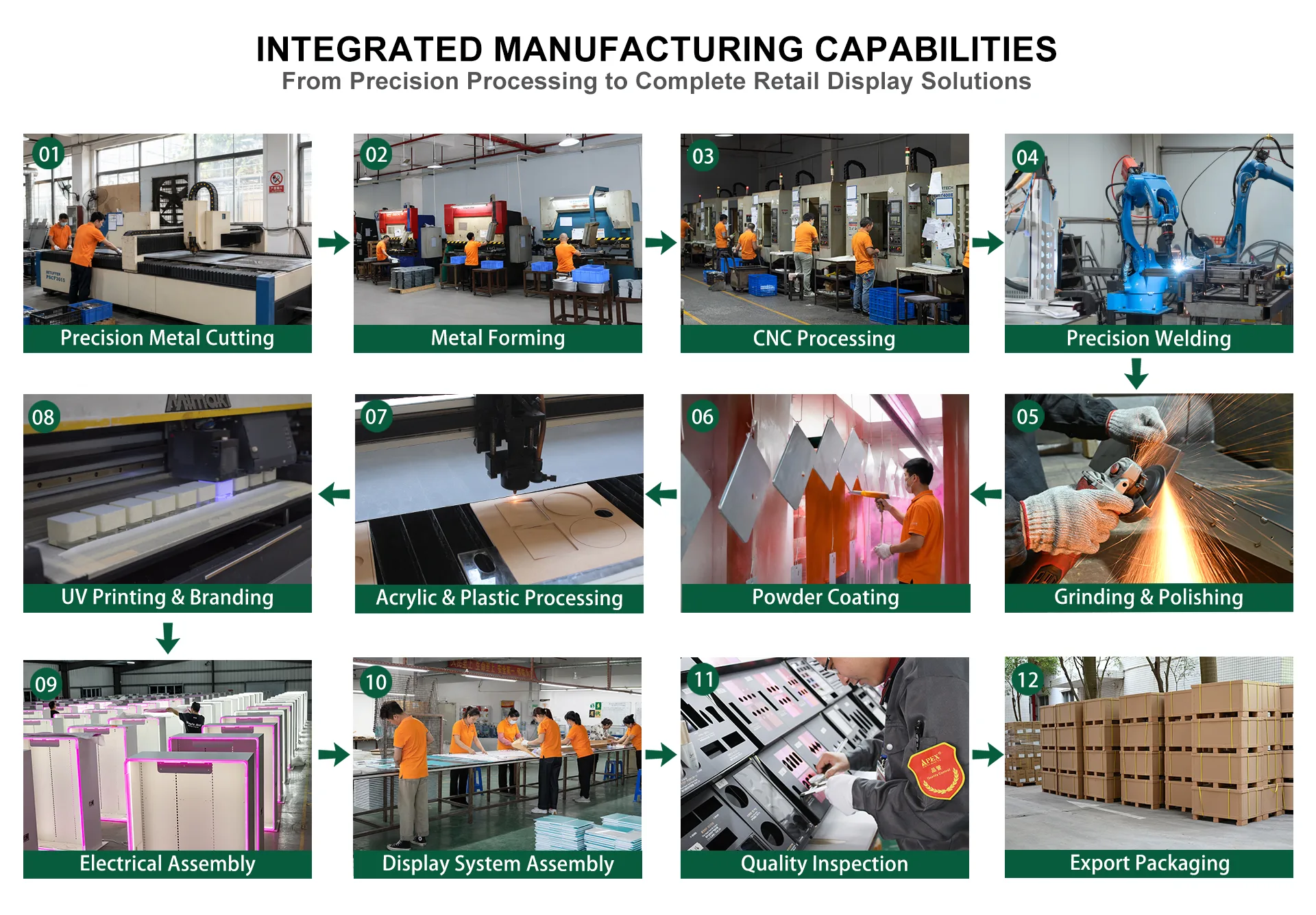
Custom cosmetic display production may involve metal fabrication, acrylic processing, woodworking, surface finishing, plastic components, and electrical integration.
APEX operates its own acrylic manufacturing facility, where acrylic fabrication processes are completed in-house.
Specialized processes such as metal fabrication, welding, powder coating, woodworking, injection molding, and selected surface treatments are coordinated through qualified manufacturing partners.
APEX remains responsible for engineering coordination, supplier management, production planning, quality oversight, and overall project delivery.
Centralized Engineering Requirements
The approved drawings, component specifications, material requirements, and finishing instructions provide the technical basis for the project.
These requirements must be communicated to the relevant manufacturing teams and partners.
Quality Coordination Between Processes
Each manufacturing process has its own potential quality issues.
For example, metal components require appropriate structural fabrication, acrylic parts require accurate dimensions and surface finishing, and decorative panels must match the approved appearance.
The different components must then fit together correctly during final assembly.
Manufacturing and Supplier Oversight
APEX coordinates specialized production resources according to the project requirements while maintaining responsibility for overall project management.
This approach allows customers to work through one manufacturing coordination partner rather than independently managing every component supplier.
Our multi-process manufacturing model is supported by centralized engineering coordination and project-level quality responsibility.
4. How Does APEX Verify Quality Before Mass Production?
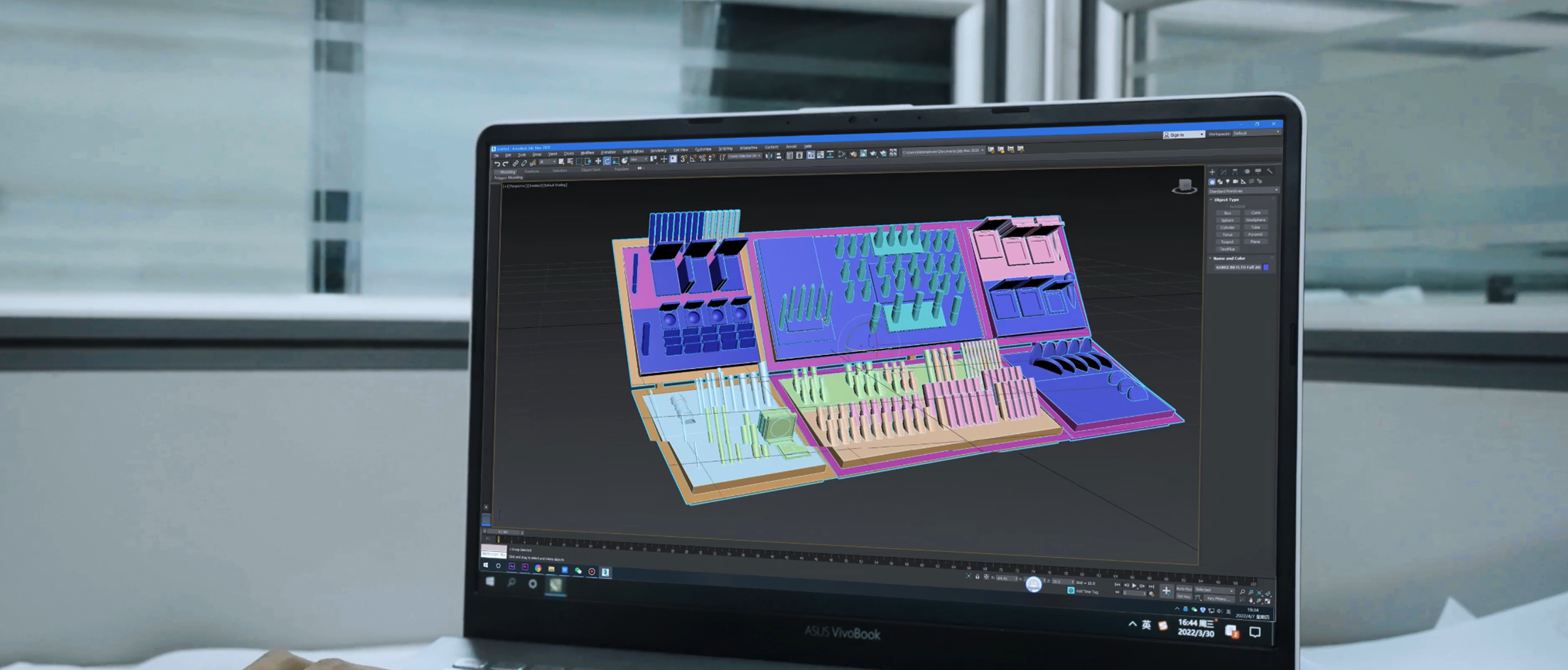
A custom display prototype is more than a visual demonstration.
It provides an opportunity to verify whether the design can be manufactured, assembled, and used according to the intended requirements.
Checking Material and Finish Samples
Before approving production, customers can review relevant materials, colors, textures, and surface finishes.
These references help define the expected appearance of the finished product.
Verifying Dimensions and Assembly
Prototype components can be checked against approved drawings.
Assembly verification helps identify problems involving holes, brackets, connecting structures, component alignment, or missing accessories.
Testing Relevant Functions
Depending on the project, functional checks may involve lighting, adjustable shelves, drawers, locks, specialized holders, and other features.
The testing scope should reflect the actual product specification.
Confirming the Approved Sample
Changes identified during sampling should be incorporated into the final approved specifications before production.
The confirmed sample and drawings then provide reference points for subsequent manufacturing and inspection.
A successful sample should establish clear production requirements—not simply demonstrate that one display can be built.
5. What Quality Checks Are Performed on Finished Cosmetic Displays?
Finished-product inspection is an important verification stage.
APEX’s documented beauty wall display inspection experience includes checks covering appearance, dimensions, assembly, functional installation, lighting, and surface adhesion.
Visual and Surface Inspection
Inspectors review the appearance of applicable components against approved requirements.
Checks may include scratches, contamination, deformation, color consistency, surface defects, and graphic positioning.
Dimensional and Assembly Inspection
Relevant dimensions and connections are checked against drawings and samples.
Components should assemble correctly, without missing parts, unacceptable misalignment, or unnecessary installation difficulties.
Functional Assembly and Lighting Inspection
For displays with integrated functions, inspectors can verify relevant component installation and operation.
The documented beauty wall display inspection included trial assembly and verification that the applicable lighting fixtures could be illuminated.
Surface Adhesion Testing
Surface decoration and finishing may require additional verification.
One documented APEX beauty display inspection included a 3M adhesive-tape test, which was recorded as passed.
Packaging Inspection
The inspection also considers packaging condition, carton markings, component protection, and shipment requirements where applicable.
For customized displays involving multiple materials, packaging protection is important to preserving the finished product during transportation.
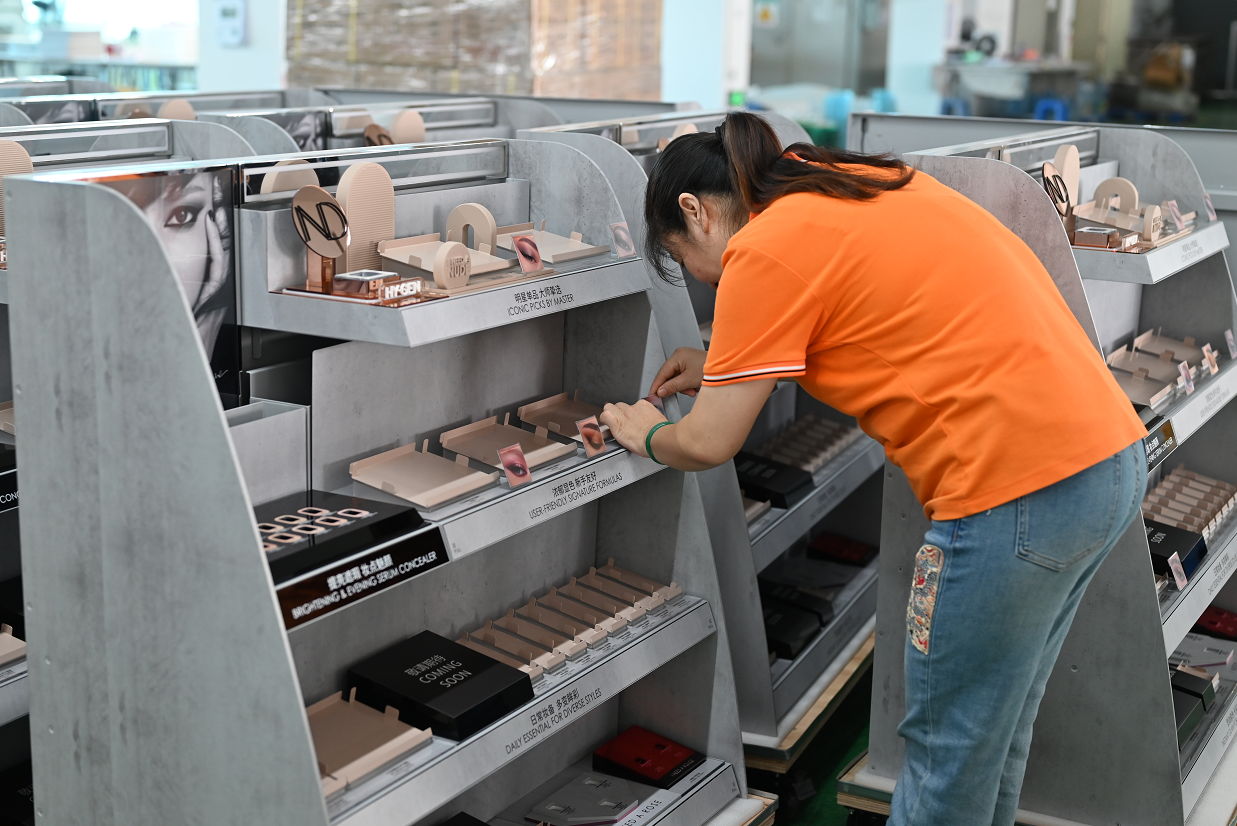
6. Real Inspection Evidence: APEX Beauty Wall Display Quality Verification
A finished-product inspection report dated November 4, 2023, provides documented evidence of quality verification for a custom beauty wall display program.
The inspection details recorded in the report are:
| Inspection Detail | Recorded Information |
|---|---|
| Product | Custom beauty wall display series |
| Order Quantity | 566 units |
| Sample Quantity | 80 units |
| Sampling Standard | MIL-STD-105E |
| Inspection Level | General Inspection Level II |
| Inspection Mode | Normal |
| Critical Defects | CR = 0 |
| Major Defect AQL | 2.5 |
| Minor Defect AQL | 4.0 |
| Inspection Date | November 4, 2023 |
| Final Inspection Result | Passed |
The report covers several quality verification activities.
Appearance Inspection: The finished products were checked for visible damage, contamination, deformation, and conformity with approved appearance requirements.
Dimensional and Assembly Inspection: Component fitting, assembly compatibility, and the completeness of relevant parts and wiring were checked.
Functional Verification: Selected components were trial-fitted, and lighting operation was verified.
Surface Adhesion Testing: The report recorded a passing result for the 3M adhesive-tape test.
Packaging Inspection: Packaging integrity, carton markings, and protective arrangements were included in the documented checks.
The report’s final disposition was passed.
This inspection record demonstrates the use of defined sampling parameters, specific inspection items, and documented acceptance results for an actual customized beauty display order.
It should not be interpreted as proof that every production unit was individually inspected or that all APEX orders have a zero-defect rate.
For international buyers, verifiable inspection records provide stronger evidence of manufacturing quality than general claims about strict quality control.
7. How Does APEX Maintain Quality from Prototype to Repeat Production?
One of the common concerns in custom display sourcing is whether mass-produced units will match the approved prototype.
A prototype confirms that a particular design can be manufactured.
Repeat production requires consistent execution of materials, dimensions, finishes, assembly methods, and functional requirements.
APEX supports this through engineering coordination, approved specifications, production planning, supplier management, and appropriate inspection activities.
Approved Design References
Final technical drawings and approved samples establish the intended product configuration and appearance.
Defined Material and Finish Requirements
Materials, colors, decorative finishes, and relevant component specifications are communicated according to the approved requirements.
Coordinated Manufacturing
Different processing stages must follow compatible specifications to support correct assembly and appearance.
Production Inspection
Inspections can be planned around relevant structural, visual, dimensional, and functional requirements.
For appropriate projects, agreed sampling inspection methods can be used to verify finished products.
Continuous Project Communication
Engineering, sampling, approval, production, and delivery milestones are coordinated through project timelines.
This helps keep manufacturing activities aligned with the customer’s confirmed requirements.
Production consistency depends on controlled specifications and coordinated execution—not on copying a prototype by appearance alone.
8. How Does APEX Handle Quality Issues and Product Claims?
Even with established inspection requirements, manufacturing or transportation issues may occasionally occur.
For international buyers, the way a supplier investigates and resolves quality concerns is an important part of the manufacturing relationship.
APEX’s supplier qualification materials describe an issue-handling approach based on supporting evidence and agreed responsibility.
Reviewing the Reported Issue
Customers may provide photographs, videos, quantities, and relevant details of the reported problem.
This information helps identify the affected components and understand the issue.
Evaluating the Cause and Responsibility
The reported defect is reviewed against the approved product specifications, available inspection information, and relevant project circumstances.
The objective is to establish a practical basis for determining the appropriate resolution.
Agreeing on Corrective Measures
Where a defect is confirmed to be attributable to APEX, the proposed resolution may include repair, rework, or replacement components, according to the agreed commercial arrangements.
Coordinating Follow-Up Actions
Related shipment costs and implementation arrangements are handled according to confirmed responsibility and the project agreement.
For situations involving exceptionally high transportation costs, the parties can discuss a practical solution.
A reliable manufacturing relationship requires clear communication and responsible problem resolution—not simply a successful final inspection.
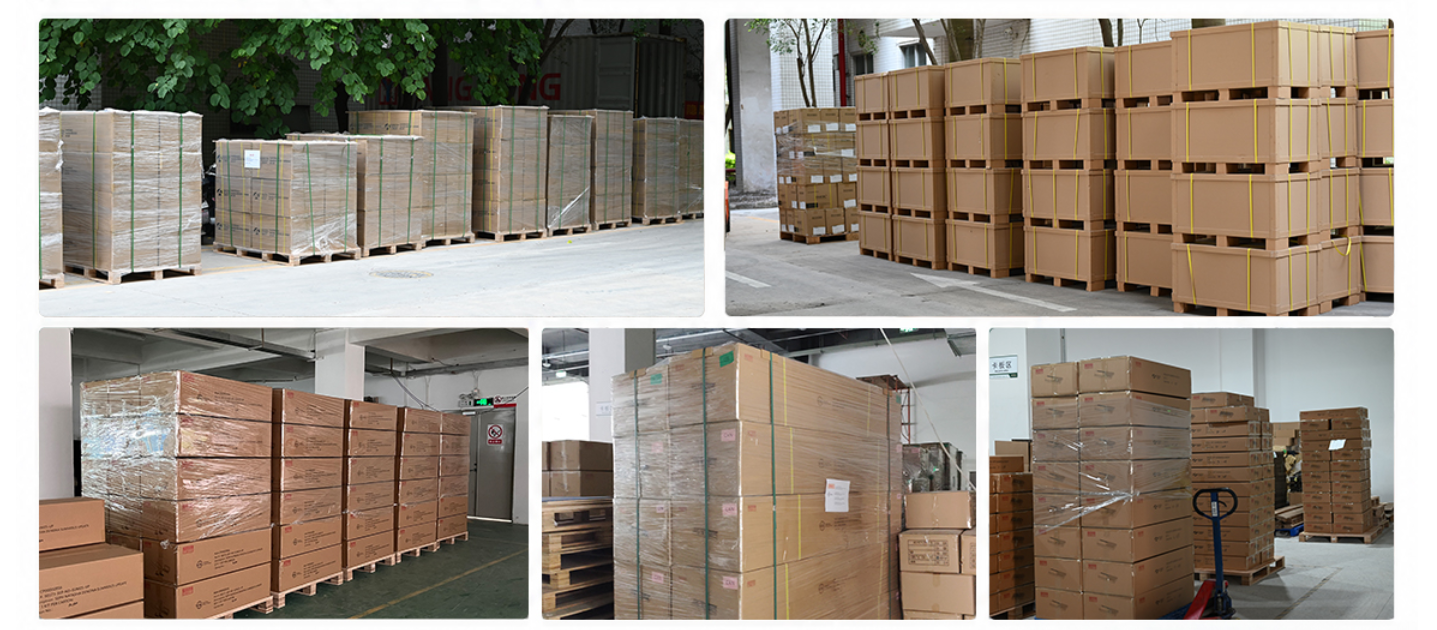
9. How Does APEX Protect Product Quality During International Delivery?
Quality management should continue through packaging and shipment preparation.
Customized beauty displays may contain metal frames, acrylic trays, glass components, surface-finished panels, LED modules, and removable accessories.
These components may require different protection and handling methods.
Component-Specific Protection
Protective materials and separation methods can be selected according to the component’s characteristics and surface requirements.
Complete Packing Verification
Packaging checks should confirm the required parts, wiring, accessories, and assembly components are included.
Clear Identification
For modular or multi-store display programs, component labels and packing information can help support installation and distribution.
Export Coordination
APEX supports international shipment requirements, including export packaging, palletization, container loading, and applicable shipping documents.
The exact packaging and delivery arrangements depend on the product design and agreed commercial requirements.
Protecting the finished display during transportation is part of delivering the quality approved before shipment.
10. International Quality Qualifications and Supplier Evaluation
Beauty brands and international retail fixture buyers may require quality management documentation and supplier qualification information before placing an order.
APEX’s qualification materials identify ISO 9001 and Sedex/SMETA documentation, together with experience involving customer-specific assessments for L’Oréal and Disney.
Certain qualified manufacturing partners also hold applicable FSC or UL certifications or approvals, depending on the relevant process and product scope.
Certificate ownership, validity, and coverage should be verified through the appropriate supporting documents.
APEX-held quality management documentation must be distinguished from qualifications held by manufacturing partners.
Similarly, a customer-specific assessment should not be described as a product certification.
For new procurement programs, buyers can discuss applicable documentation, inspection requirements, and manufacturing arrangements during supplier qualification.
11.Frequently Asked Questions About APEX Quality Control
How does APEX ensure quality in custom cosmetic display manufacturing?
APEX manages quality through engineering review, structural optimization, manufacturing partner coordination, prototype verification, production oversight, and finished-product inspection. The inspection scope depends on the approved product requirements.
Does APEX use AQL sampling inspections?
APEX has documented experience using AQL-based inspections. A 2023 beauty wall display report used MIL-STD-105E, General Inspection Level II, with normal sampling of 80 units from a 566-unit order.
What quality checks are performed on cosmetic displays with LED lighting?
Checks may cover appearance, component dimensions, assembly fit, wiring completeness, lighting operation, and other approved functional requirements.
How does APEX manage quality when specialized processes are outsourced?
APEX coordinates qualified manufacturing partners while remaining responsible for engineering communication, production planning, supplier management, quality oversight, and overall project delivery.
How does APEX maintain consistency between samples and mass production?
Approved drawings, material specifications, finish references, prototype confirmation, coordinated manufacturing, and agreed inspection requirements provide the basis for repeat production.
What happens if a customer reports a quality problem?
APEX reviews supporting evidence and the relevant project requirements. Depending on the confirmed cause, responsibility, and agreed terms, the resolution may involve repair, rework, or replacement components.
Can customers request quality inspection records?
Customers can discuss applicable inspection requirements and supporting documentation during project planning or supplier qualification. Availability may depend on the project, inspection scope, and confidentiality arrangements.
Conclusion: Quality Is Engineered, Coordinated, Inspected, and Verified
For custom cosmetic display manufacturing, quality is not defined by appearance alone.
It depends on how effectively a manufacturer translates customer designs into production requirements, coordinates different materials and suppliers, verifies functional performance, and manages the finished product through delivery.
At APEX, our approach combines engineering-led quality prevention, centralized multi-process manufacturing coordination, prototype verification, documented inspections, and responsible project management.
Our actual inspection records demonstrate practical checks covering product appearance, dimensional accuracy, assembly compatibility, lighting operation, surface adhesion, and packaging.
Beyond Final Inspection — Quality Management Throughout Custom Display Manufacturing.
Looking for a reliable manufacturing partner for your custom cosmetic display project?
Share your technical drawings, product specifications, quality requirements, or supplier qualification needs with APEX.
Contact APEX to Discuss Your Custom Display Manufacturing and Quality Requirements.