Building Brand Differentiation Through In-Store Identity, Consumer Experience, and Smarter Retail Presentation
How Can Nail Polish Brands Differentiate Themselves in Beauty Retail?
Nail polish brands can stand out in competitive beauty retail stores by building a recognizable brand identity, simplifying shade selection, communicating clear product value, and delivering a consistent shopping experience across retail locations. Effective in-store branding helps customers recognize products, compare colors, understand collections, and connect the physical retail experience with the brand’s wider marketing strategy.
In a beauty store, shoppers may encounter dozens of nail polish brands offering similar colors, finishes, and price points.
For a brand, launching attractive nail polish shades is only part of the challenge. The other challenge is making those products recognizable, understandable, and memorable in a crowded retail environment.
A successful retail strategy should address both product appeal and the way customers experience the brand at the point of purchase.
This makes in-store branding an important part of nail polish brand differentiation.
1. Why Is Brand Differentiation Becoming More Important in Beauty Retail?
The beauty industry is increasingly competitive, with established brands, emerging labels, and digitally driven businesses competing for consumer attention.
According to McKinsey’s 2026 beauty industry analysis, brands and retailers face changing shopping behaviors, expanding digital discovery channels, and growing pressure to create distinctive consumer experiences.
However, online exposure does not automatically translate into strong recognition inside a physical store.
A customer who discovers a nail polish collection through social media must still be able to recognize it when browsing a retail shelf.
Similarly, a customer who has never encountered the brand online needs a reason to notice it among competing products.
For nail polish brands, this creates three important challenges:
- Visibility: Helping shoppers notice the brand in a crowded beauty retail environment.
- Recognition: Creating a distinctive identity that remains consistent across marketing channels.
- Consideration: Communicating enough useful product information for shoppers to evaluate the collection.
Brand differentiation therefore requires more than attractive packaging or promotional pricing.
It requires a coordinated retail experience that reflects what makes the brand relevant to its target customers.
2. What Makes Consumers Notice a Nail Polish Brand in Stores?
The first interaction with a nail polish brand often happens before a customer picks up a bottle.
Visual identity, color presentation, product arrangement, and brand messaging can influence what shoppers notice and how easily they understand a collection.
Build a Recognizable Visual Identity
A brand’s visual identity should extend beyond the product label.
Consistent colors, typography, graphic styles, and messaging can make a brand easier to recognize across different retail environments.
For example, a premium nail polish brand may favor a restrained color palette and minimalist presentation, while a trend-driven brand may use expressive graphics and seasonal campaign themes.
Neither approach is inherently better.
The important consideration is whether the retail presentation accurately reflects the brand’s intended position.
Make Product Collections Easy to Understand
Nail polish shoppers often compare multiple shades before selecting a product.
When colors are presented without a clear classification system, customers may have difficulty distinguishing similar shades or identifying their preferred finish.
Brands can improve shade navigation by organizing collections according to:
- Color families, such as nude, pink, red, and deep tones
- Finish types, including cream, shimmer, glitter, and metallic
- Seasonal collections or limited-edition releases
- Product benefits or collection themes
Clear shade names, product codes, and understandable category labels can support a more convenient shopping experience.
Communicate Brand Personality
A retail presentation should communicate more than the brand name.
It can reinforce the personality and positioning that customers associate with the products.
For example, a nail polish brand focused on professional salon use may emphasize product performance and shade consistency.
A fashion-oriented brand may focus on creativity, seasonal colors, and individual expression.
The objective is to create a coherent identity that shoppers can recognize and remember.
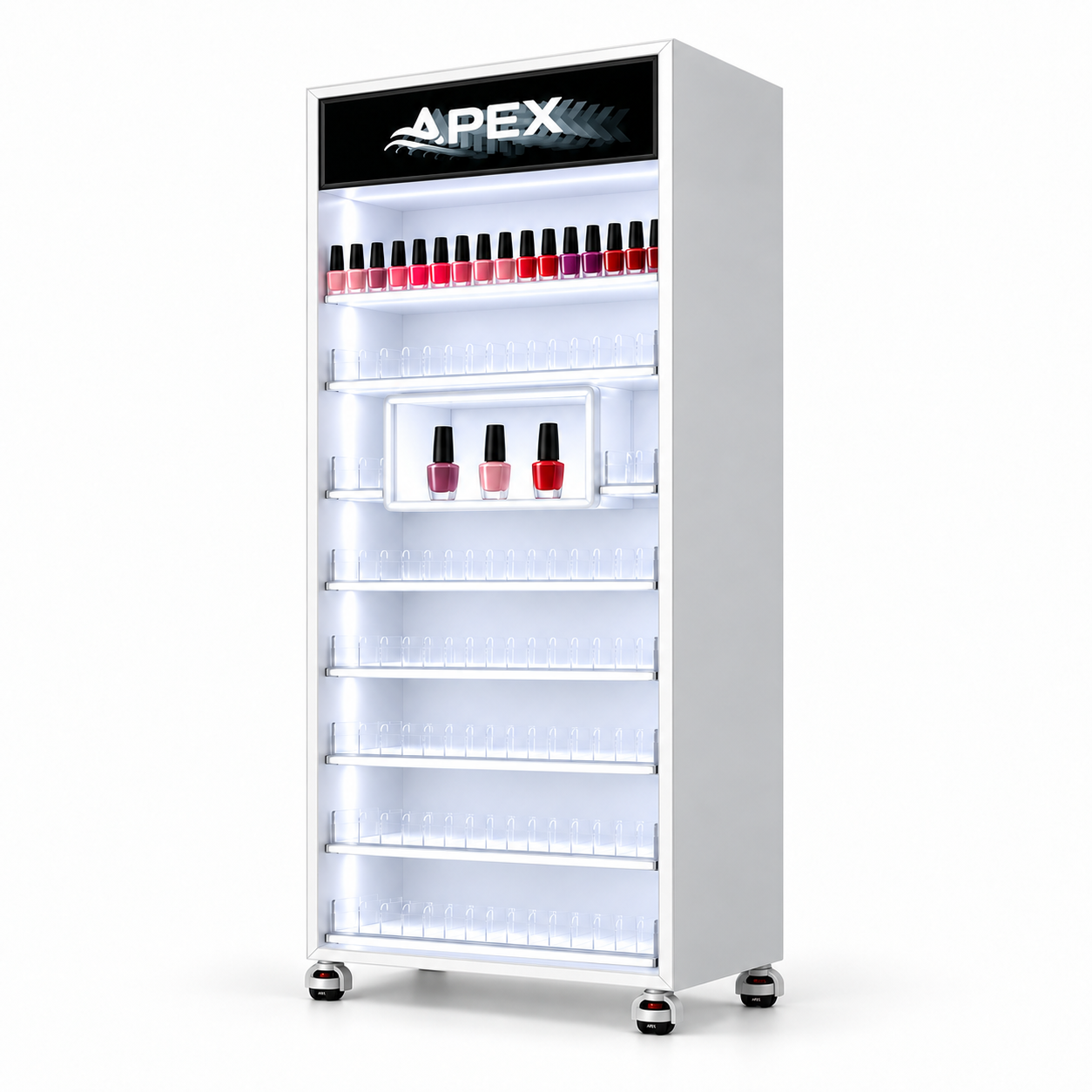
3. How Does the In-Store Shopping Experience Influence Nail Polish Purchases?
For nail polish, color selection is a central part of the buying experience.
Customers may want to compare subtle differences between shades, check the appearance of different finishes, or understand how a collection fits their personal preferences.
A well-planned retail environment should make these decisions easier.
Support Easier Shade Discovery
Clear shade grouping and accurate product identification help shoppers locate specific colors and compare alternatives.
Brands should also consider how visual presentation affects color perception.
Lighting conditions, background colors, reflective materials, and product packaging can all influence how nail polish shades appear in a store.
Lighting should support product visibility without unnecessarily distorting the perceived colors.
Where practical, brands can use representative shade references or approved swatches to help customers compare products.
Reduce Unnecessary Shopping Friction
Customers should be able to understand a collection without relying entirely on assistance from store employees.
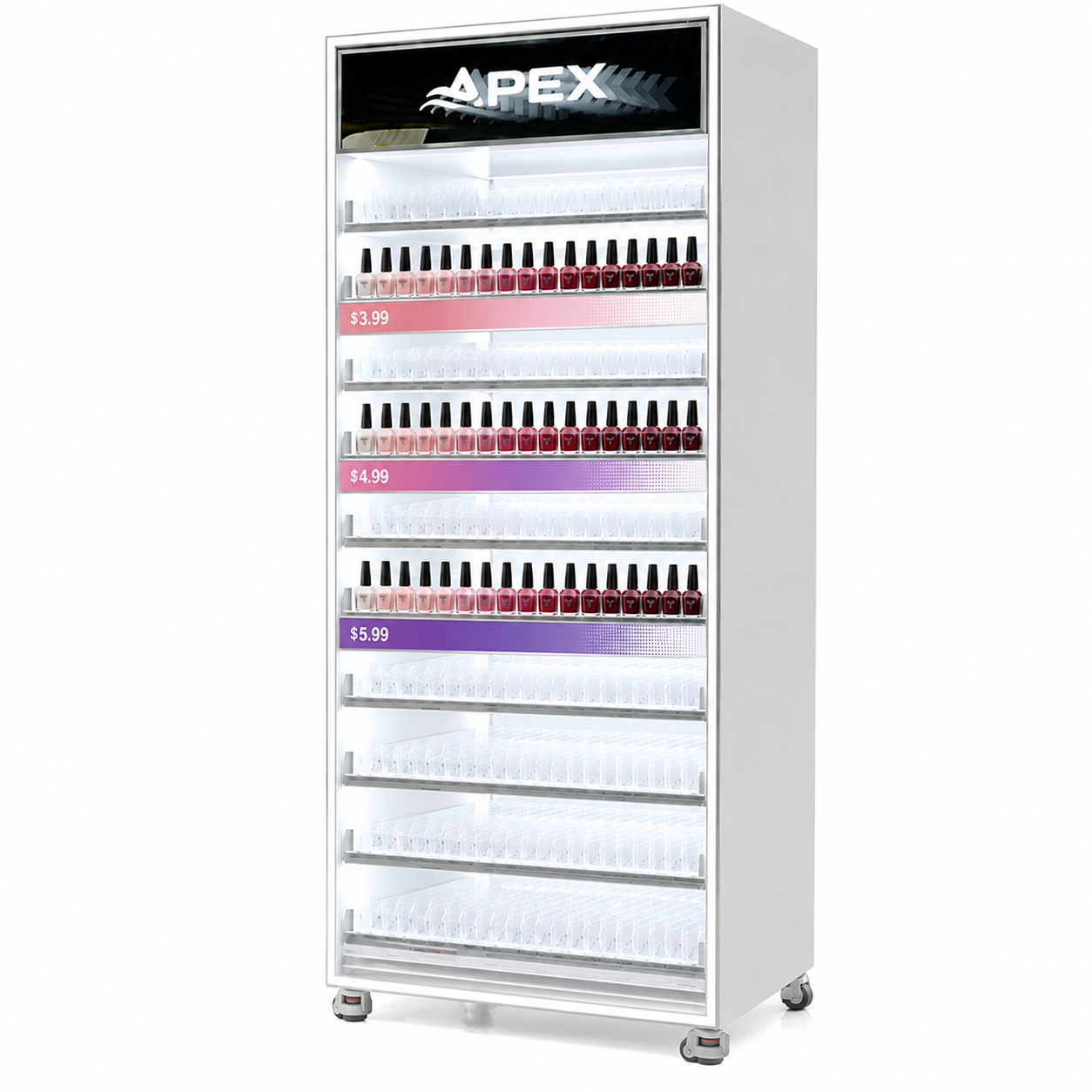
Clear pricing, product names, finish classifications, and collection information can make the shopping process more straightforward.
Where testers are permitted, their presentation and maintenance should follow the retailer’s hygiene and product-handling policies.
Convenience is particularly important when a brand offers many similar-looking shades or regularly introduces new collections.
Create a More Memorable Experience
Retail presentation also contributes to the atmosphere surrounding the brand.
A visually coherent shopping environment can reinforce whether a collection feels professional, playful, premium, or trend-focused.
The objective is not simply to attract attention for a moment, but to create a recognizable experience that customers can associate with the brand over time.
4. How Can Nail Polish Brands Communicate Value Beyond Price?
Competing primarily through discounts can make it difficult for a brand to establish a distinctive position.
Retail presentation offers an opportunity to communicate why a collection may be relevant to a particular customer.
Depending on the product, this may involve explaining verified performance attributes, finish options, application characteristics, or intended use.
For example, a brand might differentiate collections according to:
Shade Variety
Helping customers discover colors suited to different styles, occasions, and preferences.
Finish Selection
Explaining the differences between cream, glossy, shimmer, glitter, metallic, or other available finishes.
Product Performance
Presenting substantiated information about application, coverage, drying characteristics, or wear performance where supported by product testing.
Brand Positioning
Communicating the collection’s intended aesthetic, professional application, or fashion inspiration.
Product claims should be accurate, specific, and supported by the brand’s own evidence.
For beauty retailers, clear communication can help shoppers evaluate products beyond appearance or price alone.
5. Why Is Consistent In-Store Branding Important Across Retail Chains?
A nail polish brand may be available through specialty beauty retailers, department stores, supermarkets, pharmacies, or independent cosmetic stores.
Each retail channel has different space constraints, visual environments, and merchandising rules.
Without a coordinated approach, the same brand can appear inconsistent across locations.
One store may present collections according to color families, while another may organize products differently or use outdated promotional materials.
This can make the brand harder for returning customers to recognize.
Establish a Consistent Brand Language
Core visual elements such as brand colors, typography, collection identification, and messaging should remain recognizable.
Adapt to Different Retail Environments
Consistency does not require every store to use an identical display format.
Brands can maintain a shared visual identity while adapting the presentation to available space and retailer requirements.
Support International Market Expansion
For brands entering new markets, retail execution must also consider local language, currency, product assortment, and retailer-specific guidelines.
A well-defined retail identity can make these adjustments easier to manage without losing the brand’s overall character.
The goal is consistent brand recognition, not identical store layouts.
6. How Can Seasonal Collections and New Product Launches Strengthen Brand Differentiation?
Nail polish is closely connected to fashion, personal expression, and seasonal color preferences.
New collections can provide opportunities to attract attention and encourage customers to explore unfamiliar shades.
However, successful product launches require more than adding new bottles to existing retail space.
Brands should consider how a seasonal collection will be introduced, explained, and connected to their overall identity.
An effective launch plan may include coordinated campaign graphics, clearly identified new shades, consistent naming, and updated collection information.
The presentation should also help shoppers distinguish new releases from permanent product ranges.
For brands operating across multiple stores, launch timing and material updates are important to maintaining a consistent customer experience.
Rather than treating every launch as an isolated promotion, brands can use seasonal collections to reinforce a recognizable visual language.
7. How Can Brands Connect Online Marketing with Physical Retail?
Consumers may discover nail polish products through social platforms, creator content, online reviews, and brand websites before visiting a physical retailer.
This creates an opportunity to connect digital campaigns with the in-store experience.
A customer who sees a particular shade online should be able to identify the same product in a store through consistent packaging, shade names, collection graphics, and product codes.
Brands can support this connection through:
Consistent Campaign Visuals
Maintaining recognizable graphics and collection identities across digital and physical channels.
Clear Product Identification
Using accurate shade names, product codes, and collection labels.
Coordinated Launch Messaging
Aligning promotional content, product availability, and collection presentation where possible.
Relevant Product Information
Making it easy for shoppers to verify finish types, product characteristics, and intended applications.
This continuity can reduce confusion between online discovery and physical shopping.
8. How Should Nail Polish Brands Evaluate Their In-Store Branding Strategy?
A visually attractive retail presentation does not automatically guarantee improved sales.
Brands should evaluate their retail strategy against practical objectives and measurable results.
Useful indicators may include:
| Retail Objective | Potential Measurement |
|---|---|
| Improve brand visibility | Shopper observations or brand recognition research |
| Simplify shade selection | Customer feedback and product-finding assessments |
| Support new collection launches | New-product sell-through and sales by collection |
| Maintain store consistency | Retail merchandising compliance audits |
| Improve product availability | On-shelf availability and out-of-stock rates |
| Evaluate overall effectiveness | Sales per store, SKU, or retail space |
The appropriate measurements depend on the brand’s distribution model, retailer access, and available data.
By combining visual consistency with meaningful retail performance indicators, brands can identify opportunities for improvement rather than relying solely on subjective design preferences.
9. How Can Custom Retail Display Solutions Support Brand Differentiation?
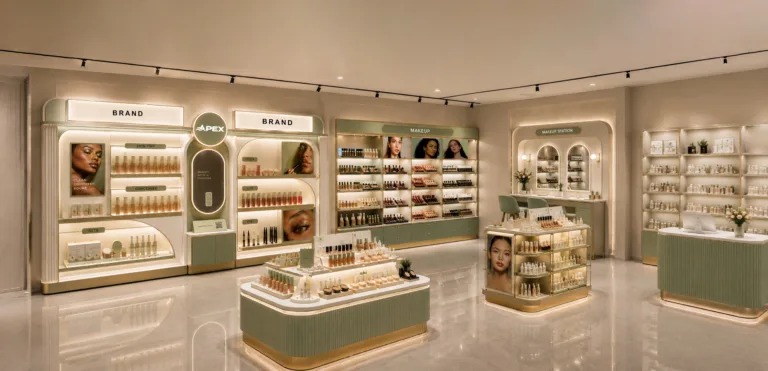
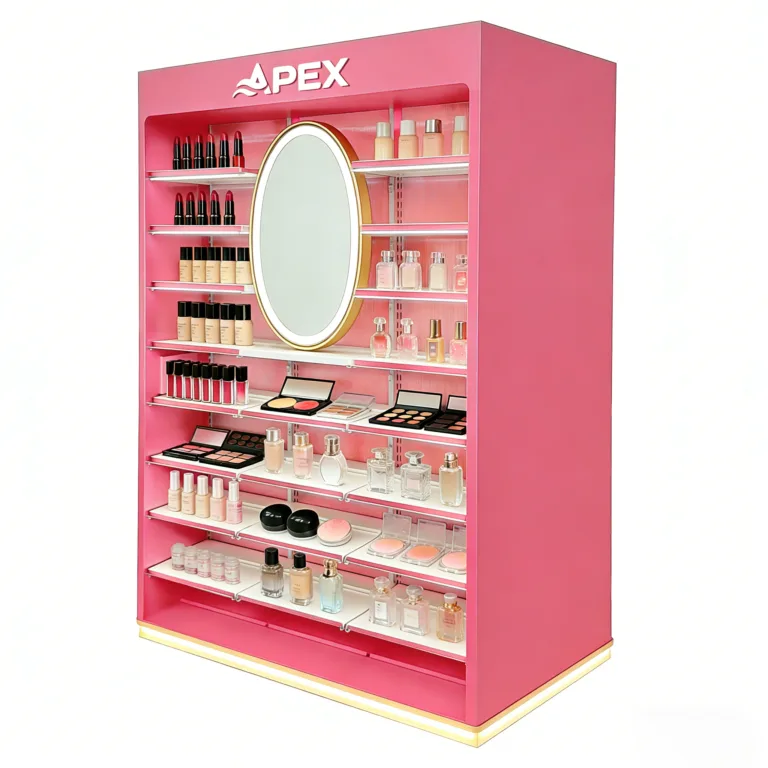
For brands looking to establish a distinctive in-store identity, customized retail display solutions can help translate brand strategy into a consistent physical presentation.
The value of customization is not simply choosing a different cabinet shape or adding a logo.
It is developing a retail presentation that reflects the brand’s positioning, product portfolio, merchandising priorities, and store environment.
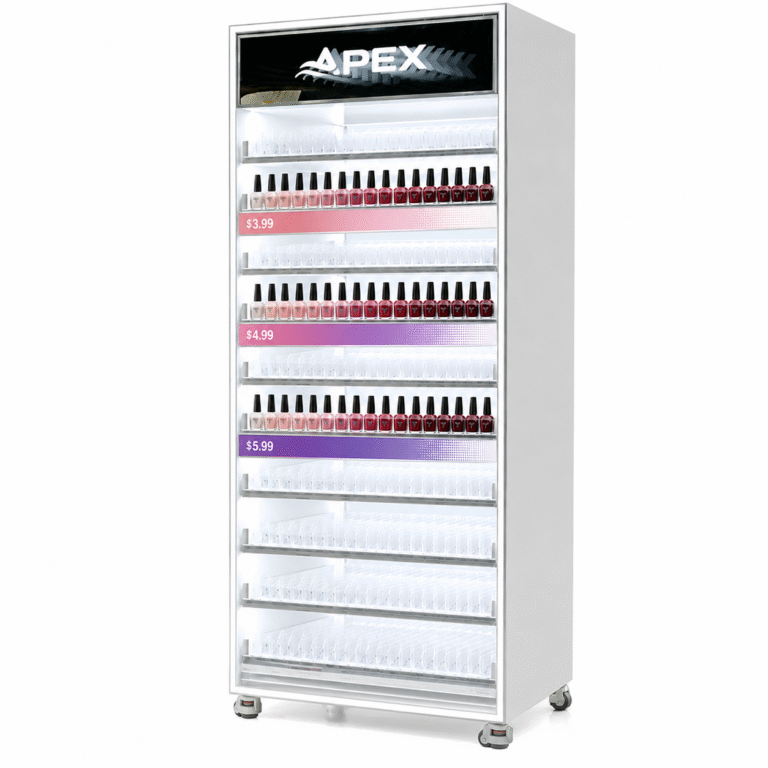
For example, a brand preparing to launch a broad nail polish collection may need clear shade navigation and consistent product identification.
A brand entering multiple retail chains may prioritize a recognizable visual identity that can adapt to different store formats.
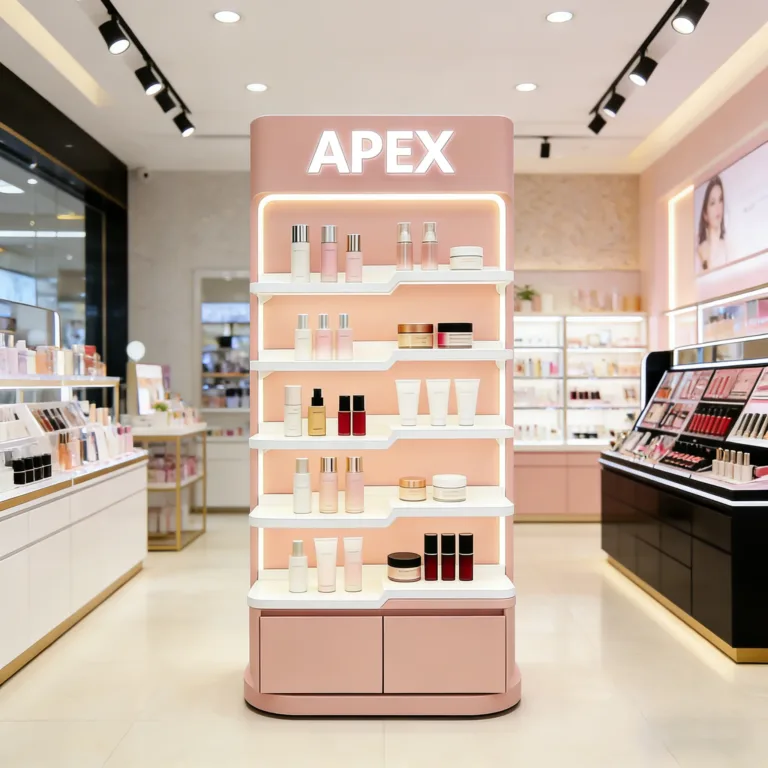
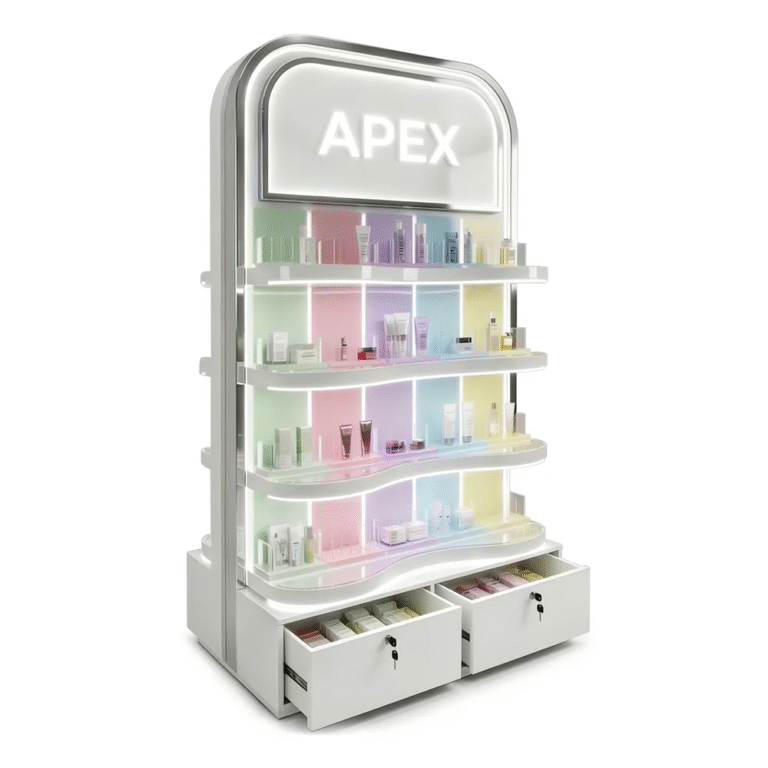
A premium beauty brand may place greater emphasis on refined finishes, integrated lighting, and coordinated branding.
These requirements can influence the development of a tailored retail display program.
The right solution begins with understanding the brand’s retail objectives rather than selecting a standard display from an existing catalog.
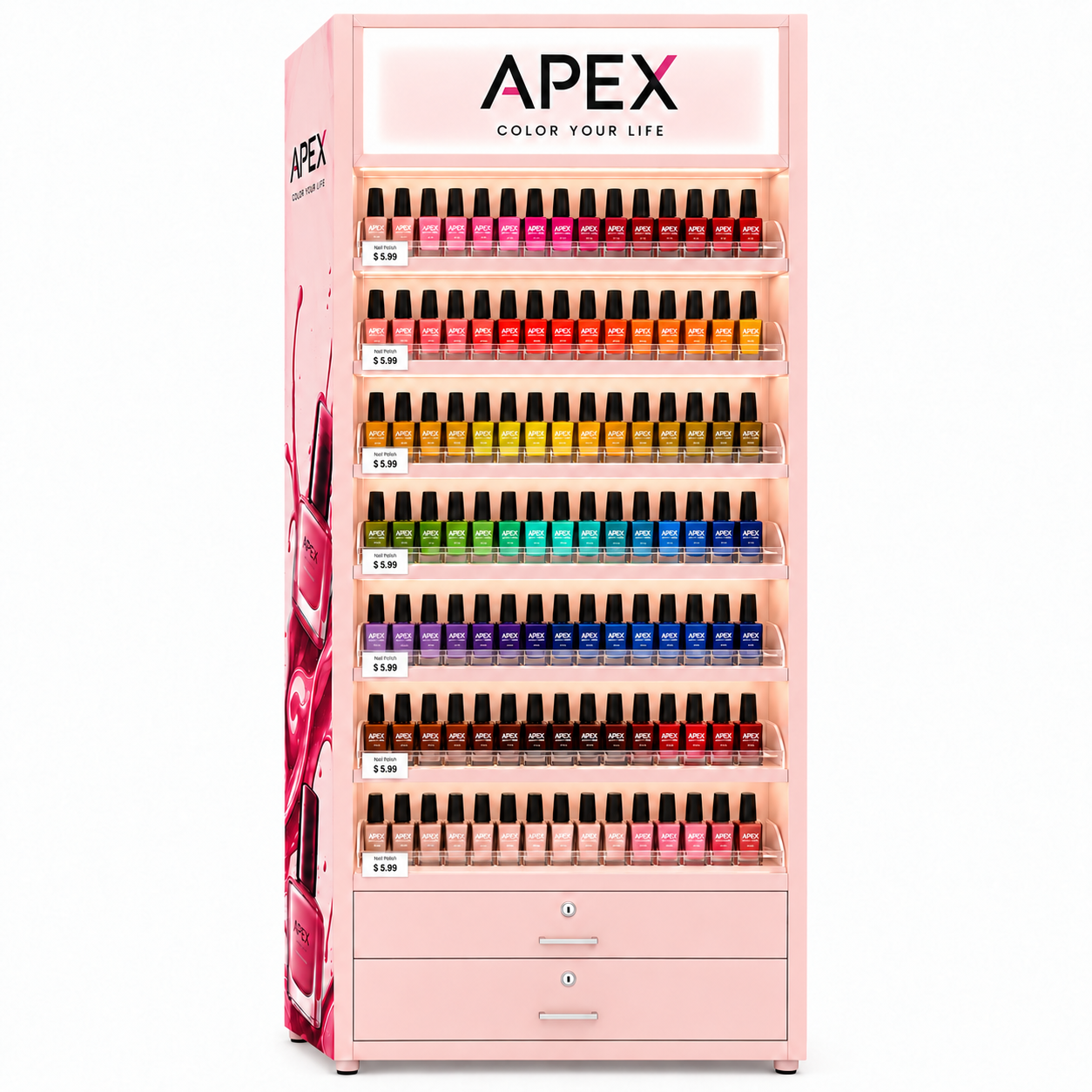
10. How Does APEX Support Nail Polish Brands and Beauty Retailers?
APEX is a China-based custom retail display manufacturing partner supporting beauty brands, retail fixture companies, and international retail programs.
We work with customers that have their own design teams as well as those requiring support with original concepts and product development.
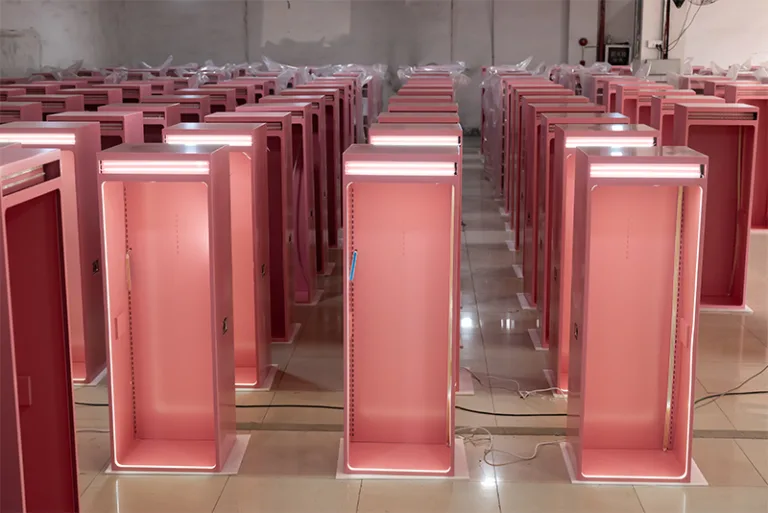
Our capabilities include engineering review, structural optimization, material and manufacturing process selection, custom components, prototyping, production coordination, quality oversight, and delivery management.
For beauty display projects, APEX coordinates materials such as acrylic, metal, wood-based panels, plastics, glass, decorative graphics, and lighting systems according to the approved design.
Rather than limiting customers to existing display templates, we help evaluate manufacturing solutions based on their specific retail requirements.
Our role is to help turn a brand’s in-store presentation strategy into a practical, manufacturable retail display solution.
11.Frequently Asked Questions
How can a nail polish brand stand out in a crowded beauty store?
A nail polish brand can strengthen differentiation through recognizable branding, clear shade organization, meaningful product information, consistent collection presentation, and a convenient shopping experience.
Why is visual merchandising important for nail polish brands?
Visual merchandising helps shoppers recognize the brand, navigate color collections, compare available products, and understand the intended presentation of each collection.
What information should a nail polish brand display in stores?
Useful information includes shade names, product codes, finish types, collection names, prices, and substantiated product characteristics. The exact information depends on the retailer and local requirements.
How can brands improve the shopping experience for customers choosing nail polish colors?
Brands can group shades logically, provide accurate color references, use suitable lighting, maintain clear labels, and make products easy to identify and compare.
Should nail polish branding remain the same across different retail chains?
Core identity elements should remain recognizable, but the physical presentation can be adapted to different store formats, local markets, and retailer requirements.
Can customized retail displays help beauty brands differentiate themselves?
Yes. Custom displays can support distinctive brand presentation, shade navigation, promotional campaigns, and consistent retail execution. Their commercial impact should be evaluated using relevant store performance data.
Can APEX develop custom nail polish displays based on a brand’s own concept?
Yes. APEX supports OEM and ODM retail display development, including engineering evaluation, material selection, prototyping, coordinated manufacturing, and production according to approved requirements.
Conclusion: Strong Retail Differentiation Begins with a Recognizable Brand Experience
For nail polish brands, standing out in beauty retail requires more than offering attractive colors or competitive prices.
Brands must consider how shoppers discover products, compare shades, recognize collections, and experience the brand across different retail channels.
A distinctive visual identity, clear product communication, convenient shade discovery, and consistent retail execution can help create a stronger brand experience.
Custom retail display solutions can support these goals by translating brand positioning and merchandising requirements into practical in-store presentation systems.
At APEX, we work with beauty brands and retail partners to turn their display concepts into customized manufacturing solutions.
Your Brand Should Be Recognized — Not Lost Among the Shelves.
Looking to develop a distinctive retail presentation for your nail polish collection?
Contact APEX to Explore Custom Beauty Retail Display Solutions.