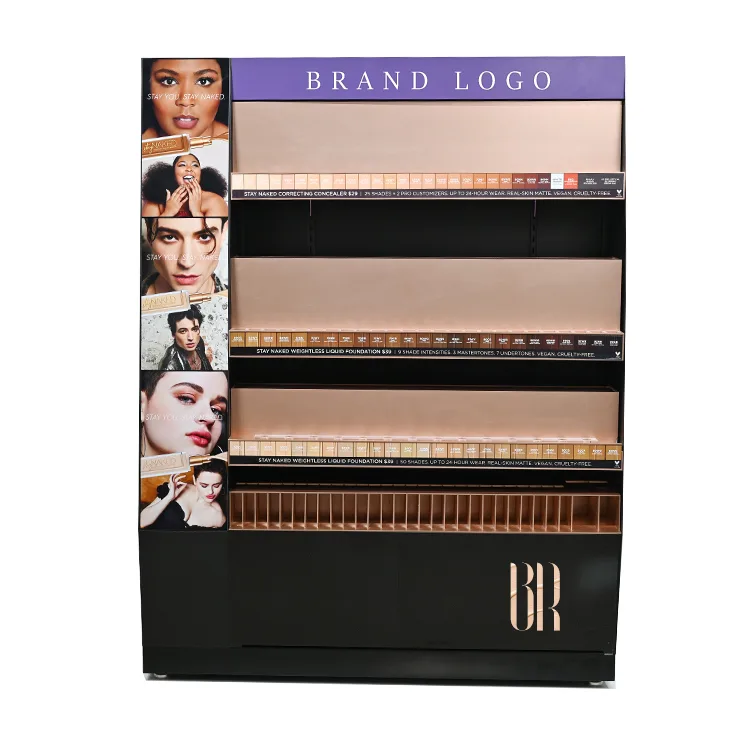
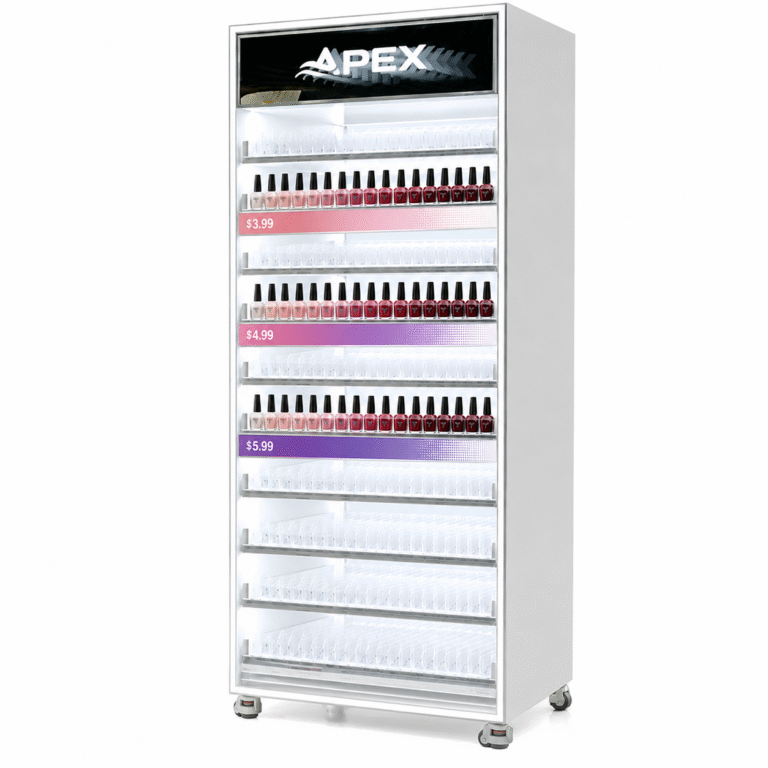
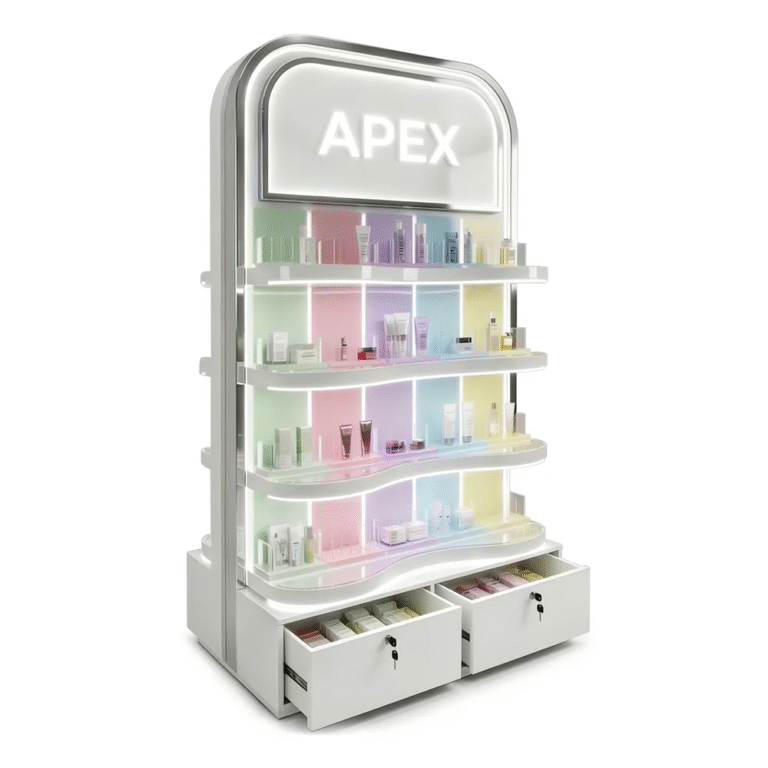
Choosing a reliable lipstick display manufacturer involves more than comparing designs and quotations. Beauty brands need a supplier that understands retail merchandising, supports customized display development, and maintains consistent quality across different projects.
The right manufacturing partner should be able to turn branding and product requirements into practical display structures while coordinating production, inspection, and delivery.
Define Your Lipstick Display Requirements
Identify the Display Format
Start by determining where the display will be placed and how customers will interact with it. Countertop units suit checkout areas and compact merchandising spaces, while floor-standing displays provide greater capacity for larger lipstick collections. Wall-mounted fixtures can help stores make better use of limited floor space.
The format should reflect the store layout, product range, and expected customer traffic. Buyers can compare different lipstick display solutions to identify suitable configurations before requesting a customized design.
Plan the Product Layout
A display should make products easy to browse, compare, and replenish. Buyers need to consider lipstick dimensions, shade quantities, tester placement, shelf spacing, and promotional information.
For brands with frequent product launches, replaceable graphic panels and adaptable product holders can simplify future updates. A well-planned layout also helps maintain a consistent presentation across retail locations.
Evaluate Engineering and Customization Capabilities
Examine Structural Design
A capable manufacturer should translate design concepts into stable and practical display structures. This involves planning metal supporting structures, load-bearing components, shelves, panels, and product holders.
Other materials can be integrated according to the project’s appearance and functional requirements. Buyers should review engineering drawings or prototypes to check dimensions, product accessibility, assembly methods, and structural stability.
Assess Modular Design Capabilities
Modular design helps brands maintain consistent merchandising across stores with different layouts. Adjustable shelves, interchangeable components, and replaceable graphic panels allow displays to adapt when product collections or campaigns change.
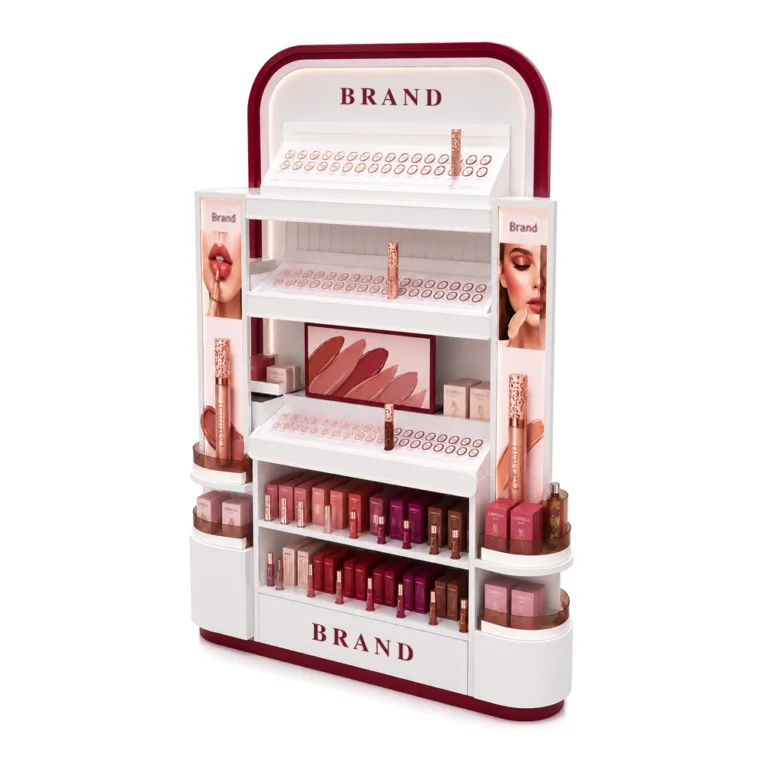
For example, a floor-standing lipstick display with tester shelves needs to accommodate customer interaction while keeping packaged products organized. Buyers can review this custom lipstick display stand to assess how merchandising functions can be incorporated into a customized structure.
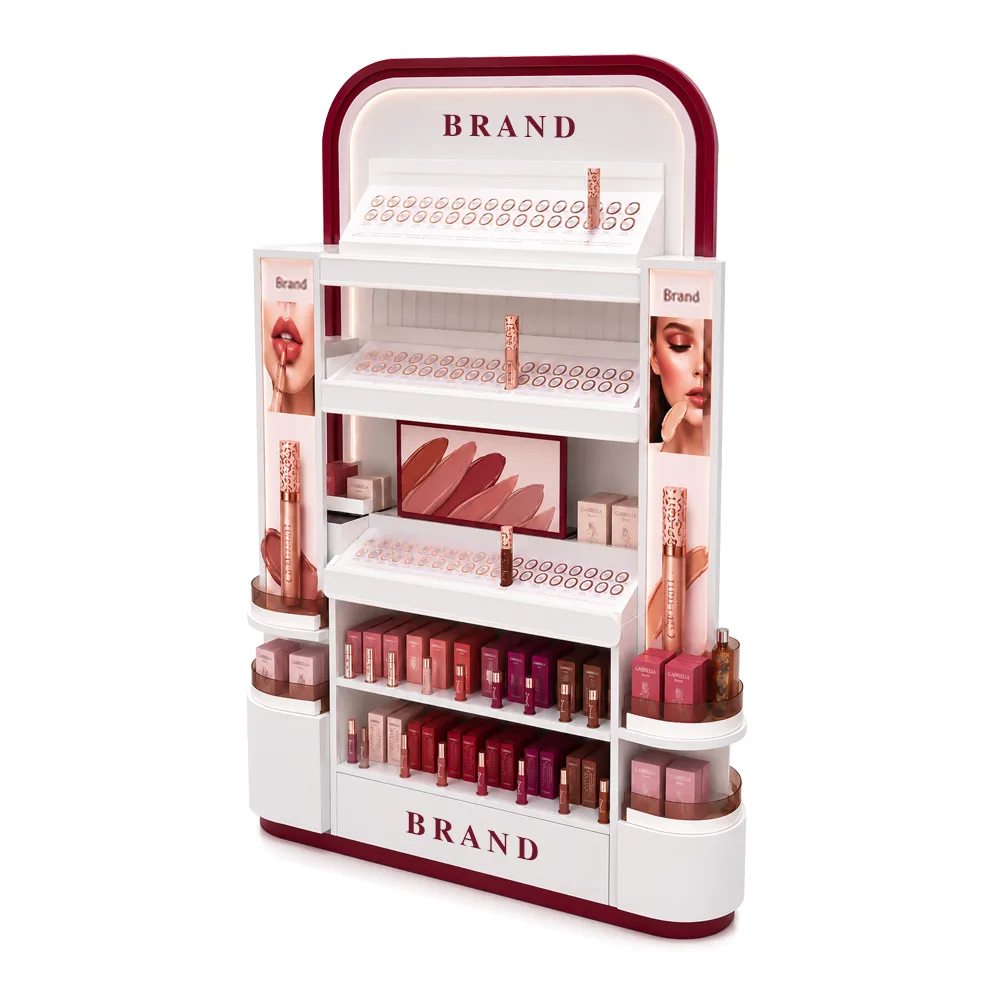
Check Lighting Integration
Lighting can improve product visibility and highlight selected display areas. Buyers should check whether the manufacturer can integrate LED components without affecting product access, appearance, or maintenance.
Power connections and wiring arrangements should be considered during the design stage. Some projects may also require digital screens or interactive modules, which need to be coordinated with the overall structure.
Review Manufacturing Resources and Quality Control
Verify Production Capabilities
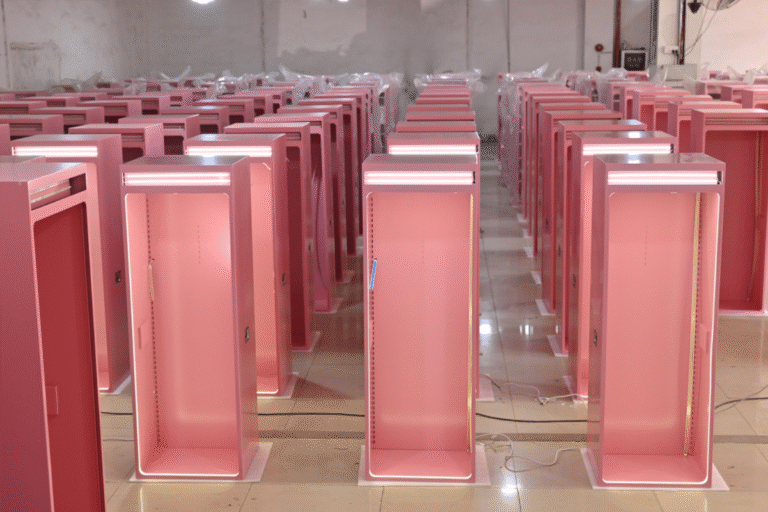
A manufacturer’s facilities, equipment, workforce, and processing experience indicate whether it can manage customized orders and larger retail projects.
Buyers should examine its ability to coordinate processes such as metal fabrication, CNC machining, laser cutting, surface finishing, printing, and assembly.
| Evaluation Factor | What to Check | Why It Matters |
| Engineering | Drawings and prototypes | Supports practical design development |
| Production | Facilities and equipment | Indicates manufacturing capacity |
| Component processing | Metal structures and surface finishing | Supports integrated production |
| Quality control | Inspection and sample approval | Maintains product consistency |
| Project experience | Similar retail projects | Demonstrates application knowledge |
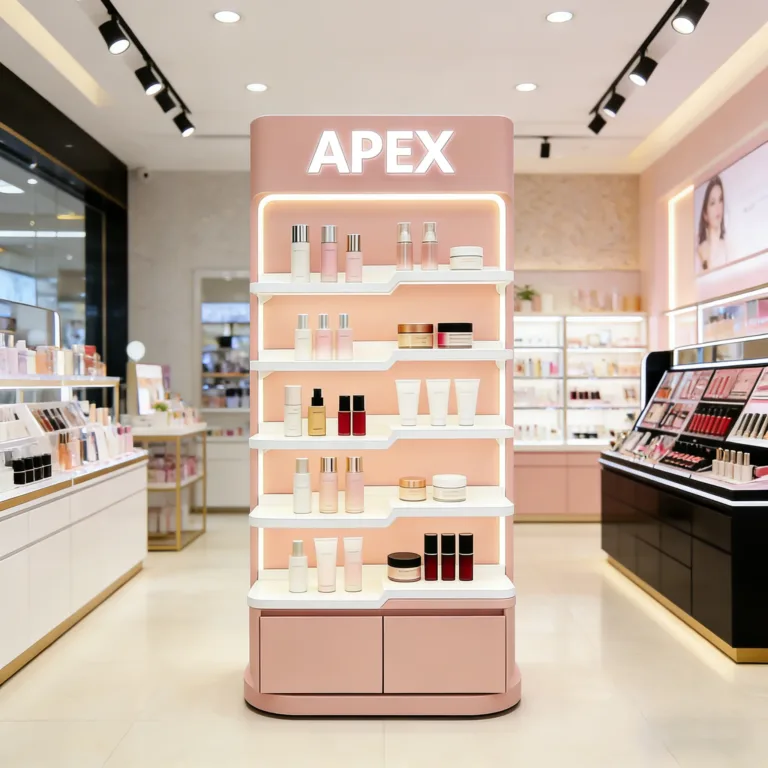
Buyers can review the APEX company profile to understand its manufacturing resources, retail display experience, and customization capabilities.
Request a Pre-Production Sample
A prototype allows buyers to verify dimensions, structural details, branding, and overall appearance before approving mass production. It also helps identify issues with product spacing, structural stability, or component compatibility.
Once approved, the sample should serve as a reference for subsequent production. Any design or material changes should be confirmed before manufacturing begins.
Review Inspection Procedures
Quality control should cover incoming materials, component dimensions, surface finishing, assembly, and functional features. Buyers should ask how the manufacturer identifies defects and handles products that fail to meet approved specifications.
For larger orders, confirm whether pre-shipment inspections, photographs, and inspection reports are available. Consistent inspection standards are especially important for displays supplied to multiple stores.

Assess Delivery and Project Management
Confirm Production Lead Times
Before ordering, confirm sampling schedules, mass production timelines, and estimated delivery dates. Buyers should also understand how the supplier manages design revisions, material changes, and production delays.
Clear milestones help coordinate approvals and prepare for store installation or promotional launches.
Evaluate Packaging and Communication
Displays may contain metal frames, decorative panels, and lighting components that require different levels of protection. Packaging should prevent scratches, deformation, and impact damage during transportation.
For modular structures, clear labels and assembly instructions can simplify installation, particularly in multi-store projects. Buyers should also establish communication responsibilities and approval procedures before production starts.
Compare Quotations and Long-Term Support
Evaluate the Complete Project Cost
Use the same technical specifications when comparing manufacturer quotations. Consider dimensions, structural design, materials, branding, lighting, sampling, packaging, and delivery terms.
A lower quotation may exclude important components or use different material specifications. Buyers should confirm exactly what is included rather than comparing unit prices alone.
Consider Future Display Requirements
Brands operating multiple stores may need replacement parts, updated graphics, or additional display units as product ranges change. A manufacturer with established custom display manufacturing capabilities can help coordinate these updates and maintain consistency across retail locations.
Frequently Asked Questions
What makes a reliable lipstick display manufacturer?
Look for retail display experience, engineering and customization capabilities, established quality control procedures, and the resources to manage production and delivery.
Can lipstick displays be customized for different store layouts?
Yes. Dimensions, structures, product holders, shelves, branding, and lighting can be adjusted to suit different retail environments and merchandising requirements.
Why request a sample before mass production?
A pre-production sample helps verify dimensions, materials, assembly, and appearance. It reduces the risk of costly changes after mass production begins.
Conclusion
Choosing a reliable lipstick display manufacturer requires evaluating engineering capabilities, customization resources, quality control, and project coordination. A supplier experienced in integrated retail display solutions can help beauty brands create functional displays for different store environments. To discuss your requirements, contact the APEX team.