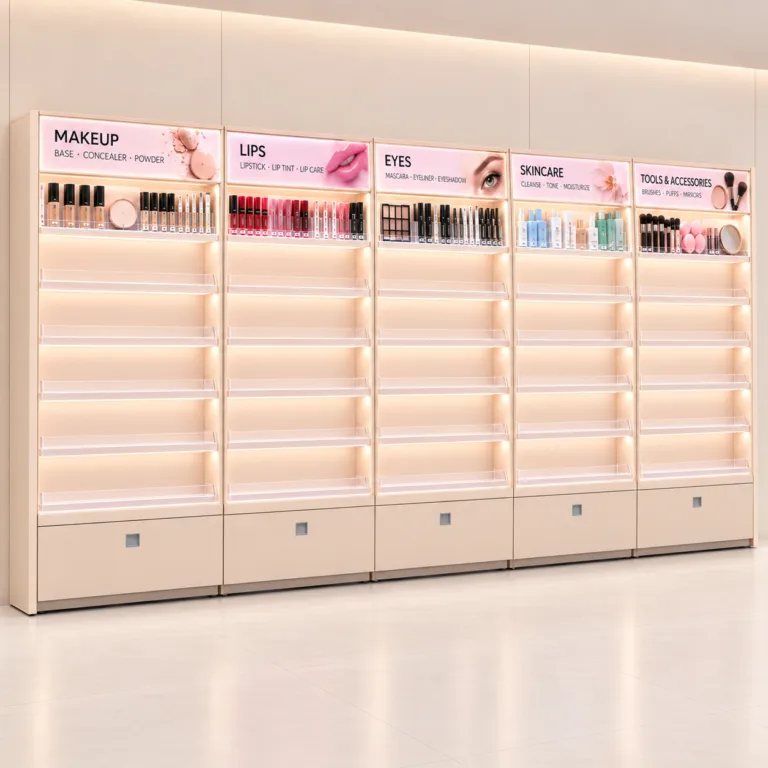
In high-traffic beauty stores, every inch of retail counter space dictates your brand’s ROI. Visual merchandisers often struggle to balance extensive shade selections with a limited horizontal footprint. As a dedicated acrylic manufacturer, APEX understands that choosing between low-profile flat trays and a dynamic tiered lipstick holder is critical. Optimizing your countertop cosmetic display layout isn’t just about aesthetics—it’s about maximizing SKU visibility to drive immediate impulse purchases.
Deep Dive: Maximizing Space with Custom Lipstick Displays
To make an informed decision for your retail rollout, it is essential to understand how different layout configurations within our Lipstick Display category impact consumer behaviour and store efficiency. Depending on your brand positioning and store foot traffic, custom-built display fixtures generally fall into two strategic design architectures.
| Merchandising Dimension | Low-Profile Lipstick Trays | Multi-Layer Lipstick Display Stands |
| Spatial Footprint | High horizontal footprint; consumes significant counter surface. | Minimal footprint; maximizes vertical space up to 300%. |
| SKU Density Capacity | Low; ideal for limited selections or curated premium collections. | High; accommodates extensive shade ranges and bulk inventories. |
| Visual Merchandising Role | Creates an exclusive, minimalist, and “experiential” luxury feel. | Drives high-volume product exposure and structural organization. |
| Restocking Frequency | High; requires retail staff to replenish stock frequently during peak hours. | Low; holds deep backup stock directly within the presentation rows. |
Low-Profile Lipstick Trays: The “Minimalist Luxury” Approach
Within our makeup organizer collections, low-profile, single-layer trays are designed to showcase product exclusivity rather than high volume. Crafted by APEX from thick, diamond-polished premium clear acrylic, these trays present lipsticks flat or slightly angled in a single plane.
By sitting low on the beauty counter, they create an open, uncluttered aesthetic that naturally invites shoppers to touch and try the testers. This configuration is the gold standard for luxury perfume launches or a makeup brand’s flagship lipstick trilogy. However, the trade-off is spatial efficiency; single-layer trays present fewer SKUs per square inch, making them less practical for high-turnover mass retail.
Multi-Layer Lipstick Display Stands: The “High-Efficiency Volume” Powerhouse
When a cosmetics line features dozens of distinct shades—ranging from nudes and pinks to deep mattes and glosses—countertop space quickly runs out. This is where our multi-layer lipstick display stands become indispensable for high-traffic retail.、
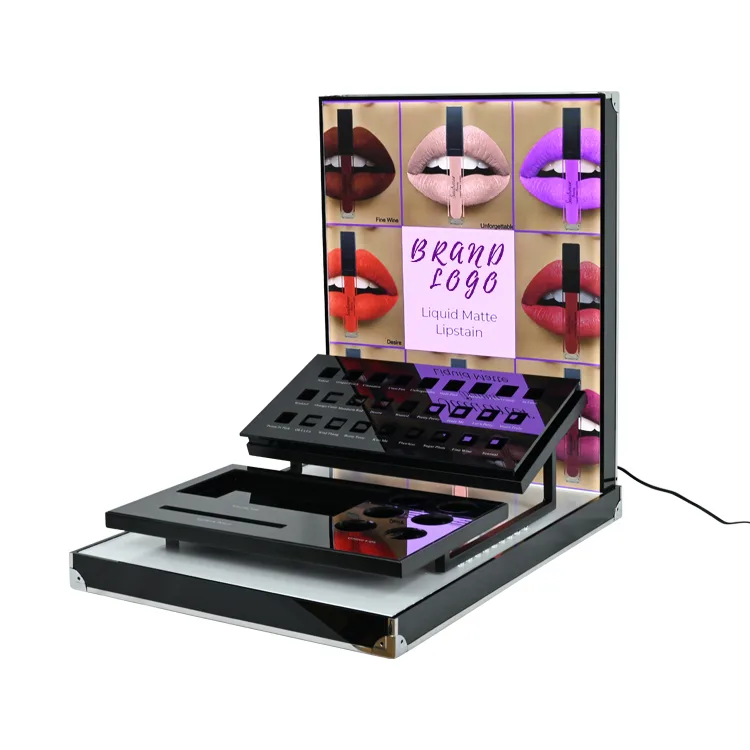
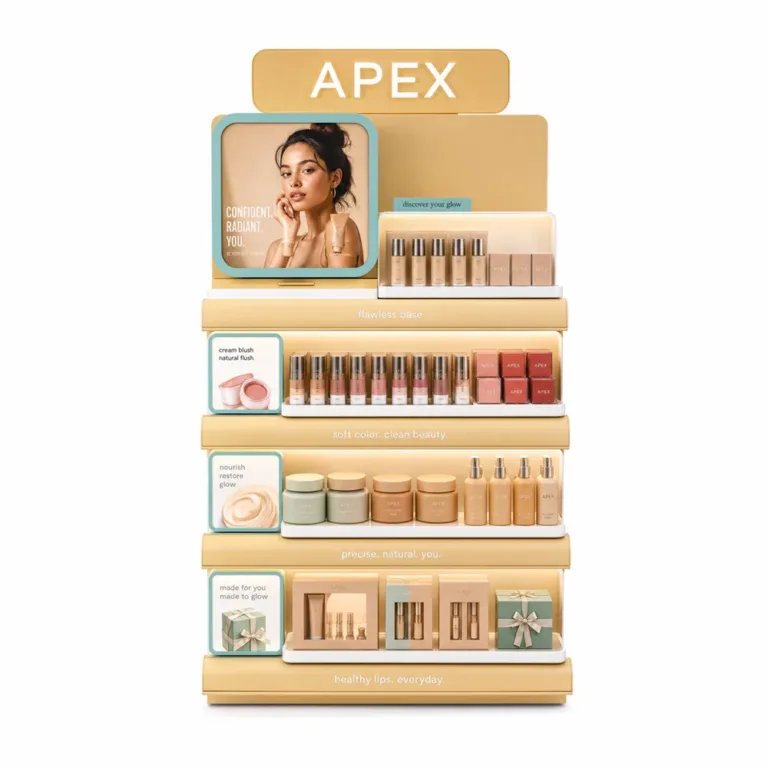
By utilizing a stepped, vertical architecture, these acrylic fixtures elevate products upward. This structural approach allows brands to multiply their SKU density on the exact same countertop footprint. Multi-layer configurations are the ultimate workhorses for fast-paced retail environments like beauty islands and checkout counters. They ensure that a massive inventory remains highly organized, instantly accessible, and visually striking to passing shoppers.
The Science of Visibility: Why Tier Height and Clearance Matter
In cosmetics retail, a beautifully crafted display means nothing if it compromises SKU visibility. When brands invest in a multi-row lipstick display, they frequently fall into the “dead stock” trap. This occurs when the top caps or front rows of products completely block the shade labels of the lipsticks positioned behind them. In high-traffic retail environments, if a customer cannot instantly identify a specific shade or color label, that SKU remains unselected, directly hurting store inventory turnover.
At APEX, our visual merchandising engineers solve this spatial blind spot through precise structural calculation. When designing a custom lipstick display stand, we apply a strict manufacturing standard: a precise 1.5 cm to 2.5 cm vertical drop per tier, combined with a subtle 5° to 10° backward tilt angle.
This specific configuration satisfies two critical retail requirements:
Unobstructed Shade Identification:
A 1.5 cm – 2.5 cm vertical tier clearance ensures that the upper portion of every back-row lipstick—where color codes, branding, and shade labels are traditionally printed—remains 100% visible to passing shoppers at a standard 45-degree viewing angle.
Ergonomic Gravity Alignment:
The 5° to 10° backward tilt leverages natural gravity. This prevents lipsticks from shifting, wobbling, or tipping forward when thousands of customers are rapidly pulling out and slamming back testers throughout peak retail hours.
By integrating these technical parameters into your custom makeup organizer solutions, you ensure that every product placement works as a high-conversion sales tool, turning casual walk-ins into immediate buyers.
Structural Engineering and Durability Standards for Commercial Retail
A brilliant visual layout is only half the battle; structural resilience is what ultimately protects your merchandising investment. In busy beauty retail environments, a makeup organizer or heavy perfume display stand must withstand rigorous, near-constant daily handling. Between hundreds of shoppers testing formulations and retail staff conducting rapid shift cleanups, low-grade fixtures will quickly degrade.
To ensure your lipstick display maintains a pristine, luxury brand image over years of service, your structural specifications should focus on three critical engineering pillars:
High-Grade Material Integrity (100% Virgin Acrylic):
To survive intense store LED spotlights without degradation, fixtures must be constructed from 100% premium virgin acrylic (PMMA). Unlike cheap recycled plastics or extruded sheets that scratch easily, crack under stress, and turn a dull yellow within months, cell-cast virgin acrylic provides museum-grade optical clarity and superior surface hardness. This material choice guarantees that the presentation stage amplifies, rather than compromises, your product’s premium perception.
Lowered Center of Gravity for Stability:
Cosmetics counters are dynamic, and top-heavy displays are prone to shifting or tipping over when multiple shoppers interact with them simultaneously. Incorporating a thickened, heavy-duty acrylic base plate lowers the total center of gravity of the display fixture. This structural reinforcement ensures the stand remains securely rooted, even when fully loaded with dense, high-volume inventory.
Industrial-Grade Micro-Protections:
Frequent movement during retail re-merchandising can scratch both the counter surface and the display base. Integrating discreet, industrial-grade anti-slip silicone pads into the bottom of the display serves a dual purpose. It significantly minimizes friction damage and prevents accidental sliding during peak foot traffic hours, helping maintain an organized, premium counter presentation from opening to closing.
When to Choose: Designing Your Strategy
Selecting the right layout configuration ultimately comes down to your brand’s immediate space constraints and merchandising goals. To streamline your next rollout, consider this practical decision framework:
When to choose low-profile trays:
If you need to introduce an exclusive, limited-edition collection or showcase a high-end fragrance line, a single-layer arrangement is ideal. This low-profile setup is best reserved for curated beauty islands or experiential pop-up shops where creating an intimate, premium shopper interaction matters more than displaying high volume.
When to choose multi-layer stands:
If you need to manage a vast shade range or maximize spatial efficiency at busy checkout lanes and department store walls, vertical stepped structures are the standard choice. This architecture prevents counter clutter and ensures that deep inventory remains organized and highly visible to passing traffic.
Conclusion
Ultimately, your structural layout dictates how effectively merchandise sells itself. Maximizing high-traffic counter space requires a strategic balance of material purity, calculated visibility, and spatial efficiency. Investing in precise manufacturing standards ensures your countertop remains a high-conversion retail touchpoint. If you need professional guidance on balancing visibility with space constraints, our engineering team is ready to help.