Introduction: The Shift Toward Multi-Material Store Fixtures
In high-traffic luxury retail, single-material fixtures often lack the visual depth required to elevate prestige products. Integrating contrasting textures is now the standard for premium store rollouts. However, combining metal, acrylic, and wood in modern retail displays requires rigorous structural engineering. Without unified manufacturing tolerances, multi-material designs face severe assembly misalignment and material cracking under shifting retail environments.
Aesthetic & Functional Roles: Slicing the Countertop Architecture
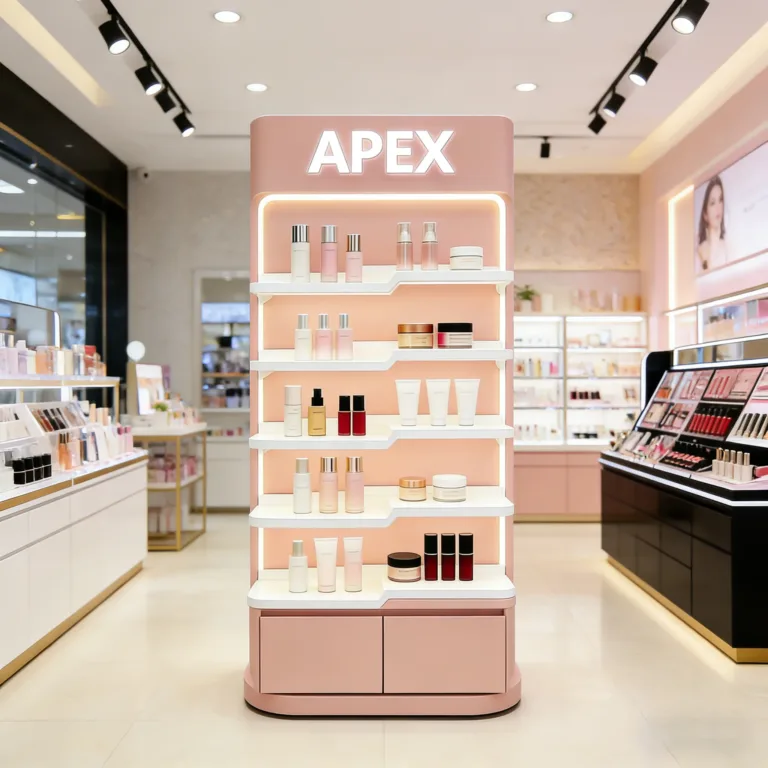
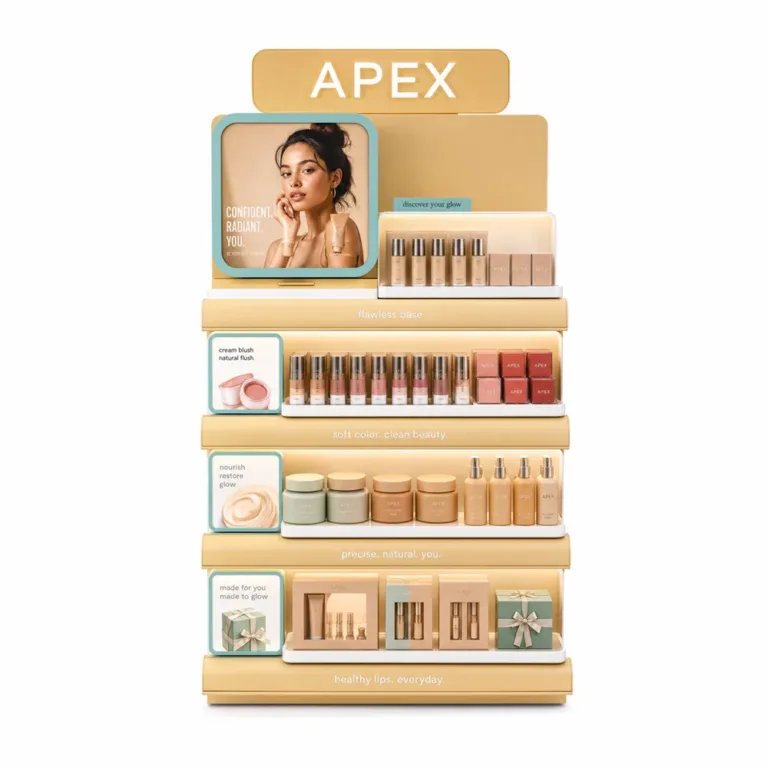
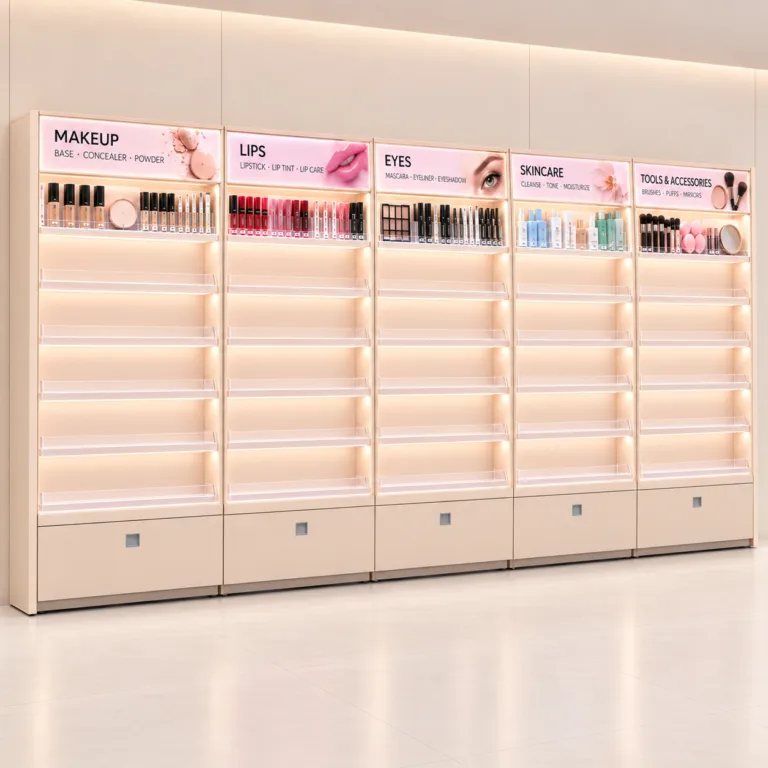
Successfully executed multi-material custom display stands do not rely on materials arbitrarily; instead, they treat each substrate as a distinct functional layer within the retail retail footprint. When designing for fast-paced cosmetics environment, understanding the precise engineering synergy between acrylic, metal, and wood is the key to balancing visual premiumization with structural durability.
Premium Acrylic (PMMA): The Optical Stage
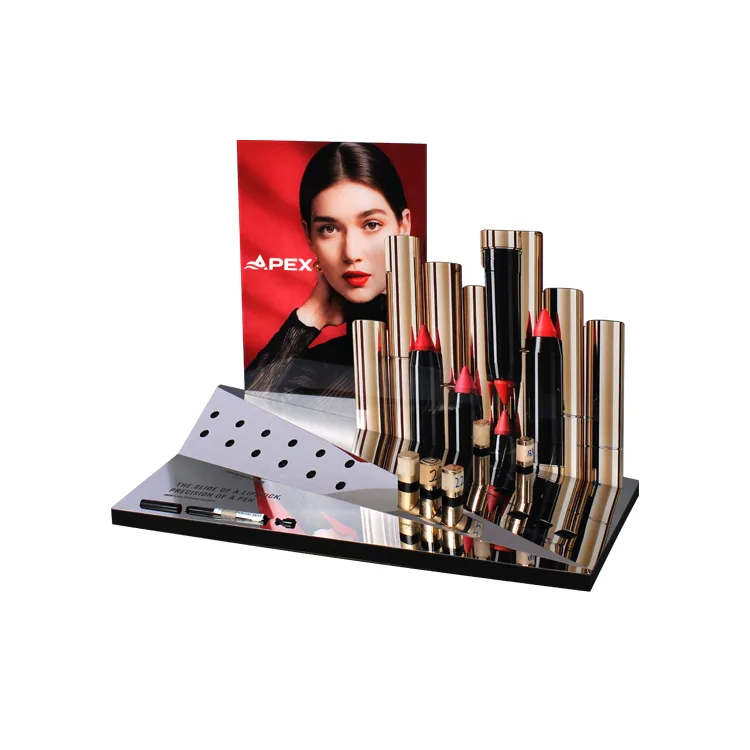
High-grade acrylic remains the undisputed standard for product-facing surfaces. Because of its 92% light transmission rate and diamond-polished edges, it acts as an optical amplifier, channeling ambient store lighting directly onto merchandise. This makes it non-negotiable for the intricate tiered inserts of lipstick displays and the crystal-clear backdrops of perfume display stands, where product clarity and flawless color accuracy drive the consumer’s impulse purchasing.

Structural Metal: The Load-Bearing Backbone
While acrylic manages the optics, precision-engineered metal provides the architectural integrity. Heavy-duty metal framing—whether finished in matte black powder coating or brushed electroplated gold—prevents the structural sagging that typically plagues pure plastic fixtures over time. Metal handles the high-stress anchoring points and heavy load distribution required for high-capacity floor fixtures and multi-tiered retail setups, ensuring the display remains perfectly square under constant shopper interaction.
Natural Wood: The Grounding Identity
Wood introduces a premium tactile weight and organic warmth that synthetic materials cannot replicate. Typically utilized for the exterior shrouds, heavy base platforms, or side panels, premium wood finishes ground the display architecture. For skincare and prestige fragrance brands, wood establishes an immediate visual narrative of sustainability and heritage, transforming a standard retail counter into an exclusive brand boutique.
The Sourcing Trap: Hidden Engineering Tolerances in Multi-Material Procurement
For many global procurement managers, the greatest failure in executing complex store fixtures occurs during the vendor selection phase. To minimize upfront piece-price costs, brands frequently fall into the trap of split-sourcing: commissioning the metal frame from a steel fabricator, ordering the precision inserts from an acrylic shop, and purchasing the heavy base from a commercial wood workshop.
While this fragmented approach looks acceptable on a spreadsheet, it introduces a severe compounding risk on the retail floor: mismatched engineering tolerances.
Every independent factory operates under its own distinct mechanical tolerance standards. A metal fabrication plant might consider a +1.0mm variance acceptable for welded joints, whereas high-speed CNC acrylic machining requires a precision tolerance of less than ±0.1mm to ensure a secure, flush fit. When these unaligned components arrive at a retail storefront for local assembly, the micro-gaps compound.
The result is a cascading logistical nightmare: tiered shelves that rattle, acrylic slots that refuse to snap into their metal tracks, and misaligned cosmetic display fixtures that compromise the premium brand image. In high-traffic retail, even a 0.5mm structural discrepancy can cause an entire multi-material cosmetics display rollout to wobble, sag, or fail completely under daily shopper interaction.
Structural Engineering: Overcoming Material Fusion Challenges
Merging wood, acrylic, and metal is a complex engineering task. Because each material responds differently to mall environments, advanced fabrication must address three critical integration challenges:
The Expansion Gap:
Wood expands with retail humidity, while acrylic and metal remain static. Engineers must calculate precise CNC expansion tracks to prevent the acrylic from cracking or the wood from warping.
The Bonding Defect:
Low-grade glues cause “crazing”—microscopic cracks and cloudy white residues on clear acrylic. Premium cosmetic display fixtures require specialized, invisible UV-cured adhesives to maintain an unblemished, luxury look.
The Hidden Fastening:
To support heavy tester products without exposing ugly screws, structures rely on hidden mechanical joints and blind threaded inserts embedded inside the wood and metal framing.
The In-House Production Advantage: Eliminating Assembly Discrepancies
Integrating multiple materials is primarily a challenge of supply chain alignment. Selecting a manufacturer with localized, in-house facilities across all three material categories reduces the logistical and engineering discrepancies that typically arise in split-sourcing:
Aligned Tolerances:
Having dedicated acrylic, metal, and wood engineering wings within a single campus allows blueprints to be co-reviewed from day one. This synchronizes the cutting and fabrication variances across different machinery, reducing fitting errors before mass production begins.
Streamlined Pre-Assembly:
Prior to international shipping, multi-material units undergo factory staging. Technicians verify mechanical joints and structural fits, allowing any necessary micro-adjustments to be made at the production level rather than on the retail floor.
Unified Quality Inspection:
A single, consistent quality control protocol governs the entire production line. Whether evaluating precision metal welding or the finish of an acrylic shelf, compliance is monitored under a centralized management system, ensuring consistent structural integrity.
Conclusion: Engineering Longevity From the Drawing Board
Successful multi-material integration requires unified engineering from day one. At Apex, we bridge the gap between complex design concepts and flawless in-store execution. Ready to bring your next storefront rollout to life? Contact us today to turn your multi-material blueprints into technical reality.