Introduction: The Silent Ambassador of Fragrance
In high-end visual merchandising, a fragrance is visually defined long before it is ambiently experienced. Crafting an exceptional perfume display stand requires more than balancing brand aesthetics; it demands solving technical engineering challenges, from ensuring material chemical resistance to integrating heat-free retail lighting. For luxury fragrance brands, custom structural execution remains the decisive factor in flawless counter rollouts.
Material Chemistry: Preventing Solvent and Acrylic Degradation
In luxury fragrance merchandising, materials face an environmental stressor unique to the industry: constant exposure to volatile solvents. Premium perfumes contain high concentrations of alcohol and essential oils, which inevitably leak or vaporize onto counter surfaces during consumer testing. For standard fixtures, this exposure leads to rapid material failure.
A professional manufacturing framework addresses this through strict material selection and chemical-resistant engineering:
Eliminating Tensile Stress and Crazing:
When low-grade plastics or improperly annealed materials come into contact with perfume mist, they experience “crazing”—a chemical reaction that creates thousands of microscopic fractures, destroying material clarity. Utilizing optical-grade cell-cast acrylic combined with secondary thermal annealing post-fabrication relieves internal material stress, ensuring the structure remains perfectly transparent even under heavy daily testing.
Corrosion-Resistant Metal Substrates:
Standard anodized metals can tarnish or discolor when exposed to acidic or alkaline fragrance compounds over time. To prevent this, structural metal components are treated with specialized powder coatings or electroplated with non-reactive sealants, isolating the core substrate from liquid damage.
Non-Reactive Organic Sealing:
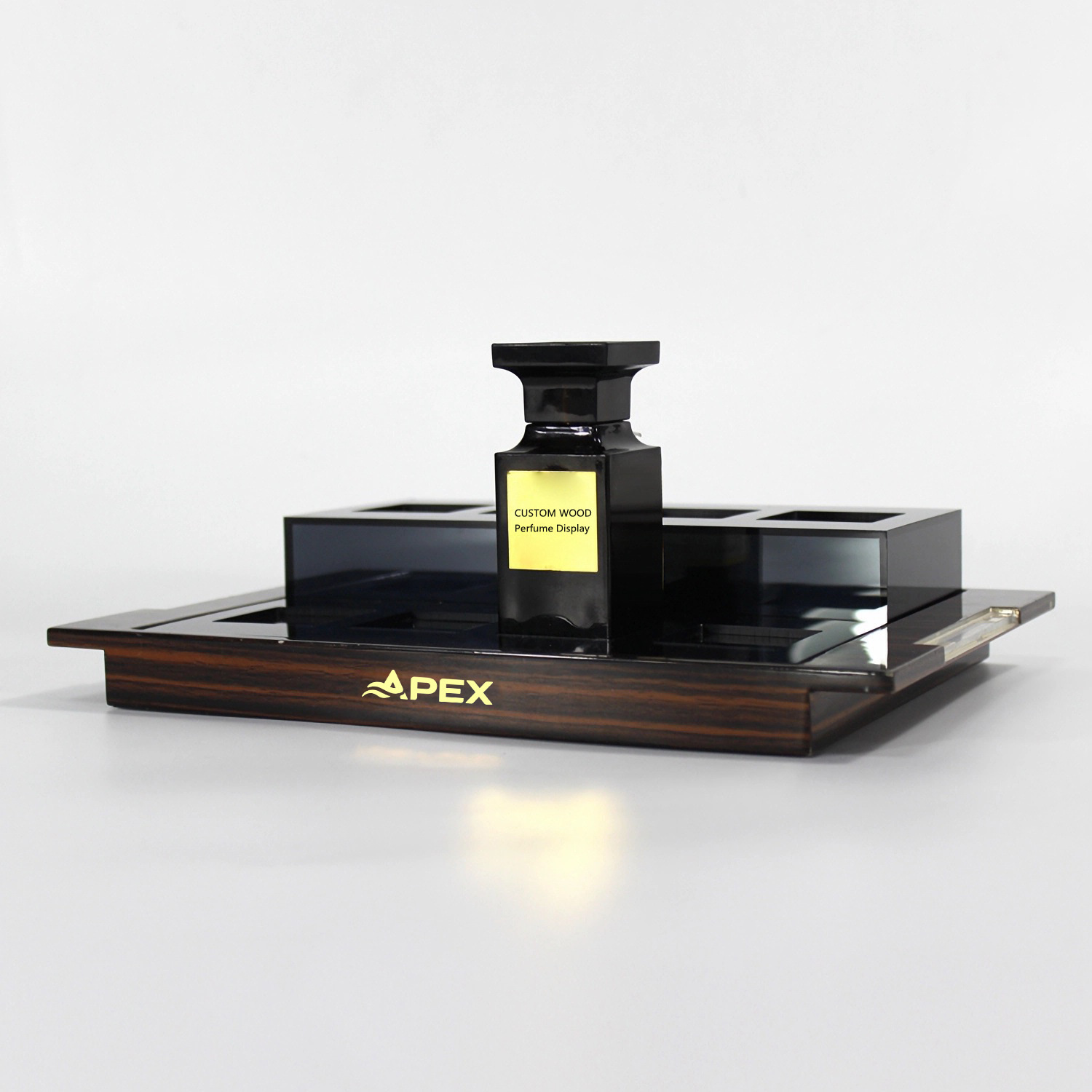
If wood accents are integrated into the design, standard lacquers will soften and become sticky when exposed to alcohol. Advanced fabrication utilizes polyurethane or UV-cured topcoats that form an inert, cross-linked barrier, preserving the natural wood grain while preventing the absorption of fragrance oils.
Lighting Engineering: Thermal Management and High CRI Accuracy
Visual presentation in the fragrance sector relies heavily on backlighting to showcase the liquid clarity and multifaceted glass of the bottles. However, improper lighting integration introduces thermal risks that directly threaten product inventory. Traditional or poorly managed LED systems generate localized heat trapped within the shelving, which can accelerate perfume evaporation, destabilize delicate top notes, and discolor the liquid.
An engineered approach to luxury illumination balances thermal protection with visual precision:
Conductive Heat Dissipation:
To isolate the product from thermal buildup, high-efficiency, low-voltage LED linear strips are mounted onto hidden aluminum extrusion channels. These channels act as dedicated heat sinks, drawing thermal energy away from the acrylic or wood shelves and venting it through concealed rear airflow gaps before it reaches the perfume bottles.
Color Rendering Index (CRI) Fidelity:
True luxury retail requires absolute color accuracy, ensuring that both the liquid formulations and the brand packaging appear exactly as intended. Utilizing premium diodes with a rating of CRI 90+ prevents the washed-out or color-shifted appearance common with standard commercial lighting, delivering a vibrant, high-fidelity presentation.
Diffused Beam Calibration:
Direct, harsh light spots create unwanted glare on reflective glass containers. Integrating frosted PMMA optical diffusers over the light channels softens the output into an even, continuous glow. This diffusion eliminates harsh hot spots while maintaining the optimal lux level required to emphasize the premium nature of the collection.
Structural Integrity: Load Distribution and Anti-Slip Mechanics
Luxury perfume packaging heavily features thick-walled glass bottles that carry substantial physical weight. When multi-tiered fixtures lack proper structural engineering, this constant load causes permanent sagging, warping, and visual misalignment over time.
To eliminate structural bowing, all horizontal shelving requires built-in reinforcement. We achieve this by embedding concealed steel tension bars within wood panels, or by optimizing the thickness-to-span ratio of premium cell-cast acrylic. This targeted deflection management ensures critical retail display lines stay perfectly straight under heavy product loads.
Furthermore, material joints must avoid standard adhesives or basic wood screws. Advanced fabrication utilizes blind threaded inserts embedded directly into the components. This metal-to-metal interlocking system distributes shearing forces evenly, keeping the overall framework rigid during rapid in-store restocking or customer impacts.
Finally, floor vibrations in high-traffic boutiques can cause fragile glass containers to shift or tip. To prevent this, custom structural recesses are precision-milled directly into the display surfaces via CNC machinery. These subtle rings discreetly cradle the base of each bottle, ensuring absolute alignment without obstructing the container design.
The Centralized Advantage: Synchronized Tolerances Under One Roof
Translating a bespoke luxury concept into a physical display requires a highly adaptable customization process. When a perfume display design combines wood, metal, and acrylic, standard engineering methods often struggle with unpredictable material behavior. True customization must bridge the gap between creative design blueprints and rigid manufacturing tolerances.
A centralized manufacturing approach solves this complexity through a structured, multi-material custom development cycle:
Cross-Synchronized Custom Tolerances:
Engineering teams review the 3D blueprints together to align material-specific tolerances before production. This simultaneous synchronization ensures that laser-cut acrylic, CNC-milled wood, and welded metal components fit seamlessly without unexpected gaps.
Rapid Multi-Material Prototyping:
A dedicated custom shop fabricates full-scale physical samples to evaluate light transmission, joint strength, and material finishes. Any necessary design modifications or engineering refinements are executed instantly at the factory level, maintaining the original brand aesthetics.
Unified Quality Governance:
Instead of managing fragmented quality standards across multiple third-party vendors, a single centralized protocol inspects the complete, fully assembled unit. This streamlined workflow guarantees consistent structural durability and exact visual precision across every retail environment.
Conclusion
A premium perfume display stand is where brand aesthetics meets rigid retail engineering. At Apex, we transform your design concepts into high-performance retail realities. By managing wood, metal, and acrylic fabrication under one roof, we eliminate supply chain fragmentation and guarantee synchronized tolerances. Send us your 3D blueprints today, and let’s bring your next project to life.