Choosing a cosmetic display manufacturer means finding a partner that understands the demands of beauty retail. The right partner should be able to translate brand requirements into practical display solutions that support product presentation, store operations, and long-term retail growth.
Key Capabilities to Look for in a Cosmetic Display Manufacturer
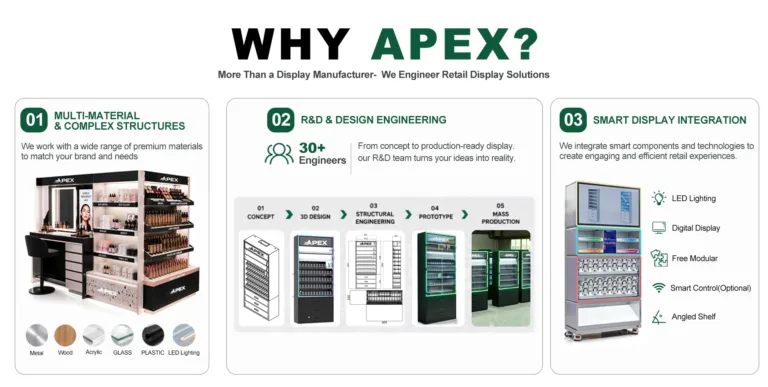
Evaluate Design Capabilities
A cosmetic display should reflect the brand identity while making products easy to browse and access. When evaluating a manufacturer, consider how it translates product assortments, store layouts, and merchandising goals into practical fixture designs.
Ask whether technical drawings are available for review and how design revisions are managed before production. Clear communication helps align the proposed layout with product dimensions, customer access, and installation conditions.
Assess Customization Capabilities
Beauty brands may need dedicated spaces for testers, promotional products, new launches, or different product categories. Customization should address these merchandising needs rather than focus only on colors and logos.
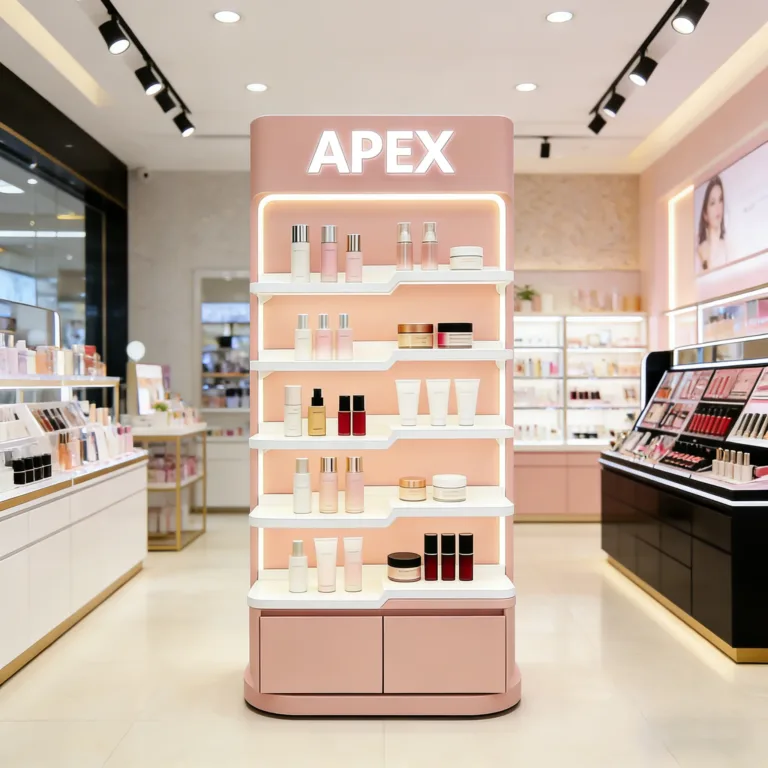
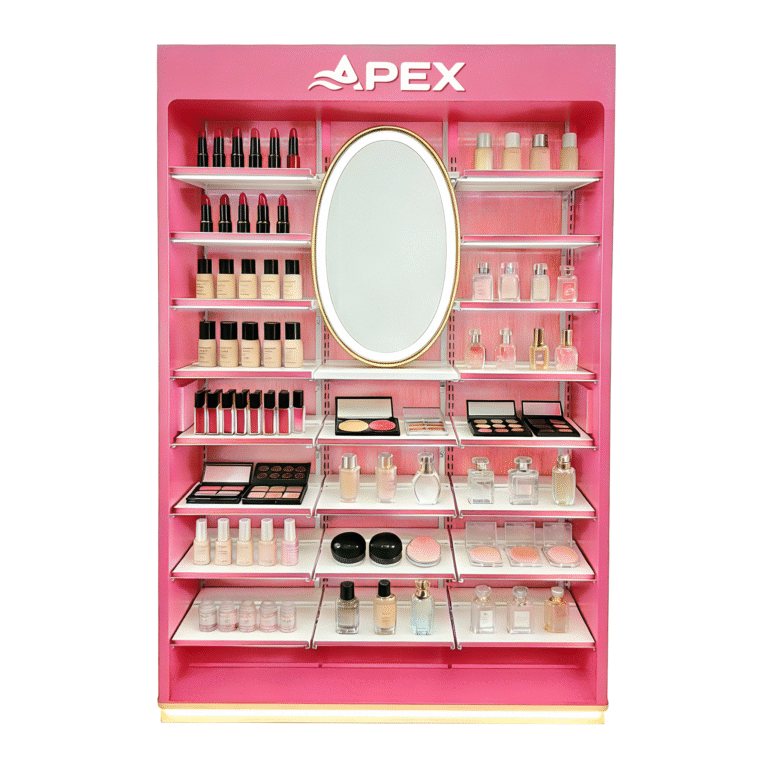
The Custom LED Cosmetic Store Display provides an example of how a metal structure, integrated lighting, organized shelving, and storage can work together in a retail fixture.
Before selecting a manufacturer, confirm how the display configuration, branding, lighting, and storage can be adapted to your project requirements.

Technical Considerations for Custom Cosmetic Displays
Confirm Structural Requirements
The fixture structure should accommodate the intended products, expected shelf loads, and installation environment. Provide product dimensions, approximate weights, quantities per shelf, and any special requirements for testers or frequently accessed items.
Wall-mounted displays require appropriate mounting provisions, while freestanding fixtures need a suitable footprint and stable construction. Confirming these details during engineering helps reduce design changes and supports reliable assembly.
Coordinate Lighting Requirements
Lighting should improve product visibility and support the intended retail atmosphere. LED placement, wiring routes, power access, and maintenance provisions need to be coordinated with the fixture layout from the beginning.
For displays with illuminated branding or multiple lit shelves, confirm the lighting configuration and its integration with the structure before approving the design. Early coordination helps avoid unnecessary modifications during production or installation.
Modular Display Systems for Retail Expansion
Adapt Fixtures to Store Layouts
Beauty retailers may operate stores with different dimensions, floor plans, and product assortments. Modular display systems can accommodate these differences through configurable sections, shelving arrangements, and storage options.
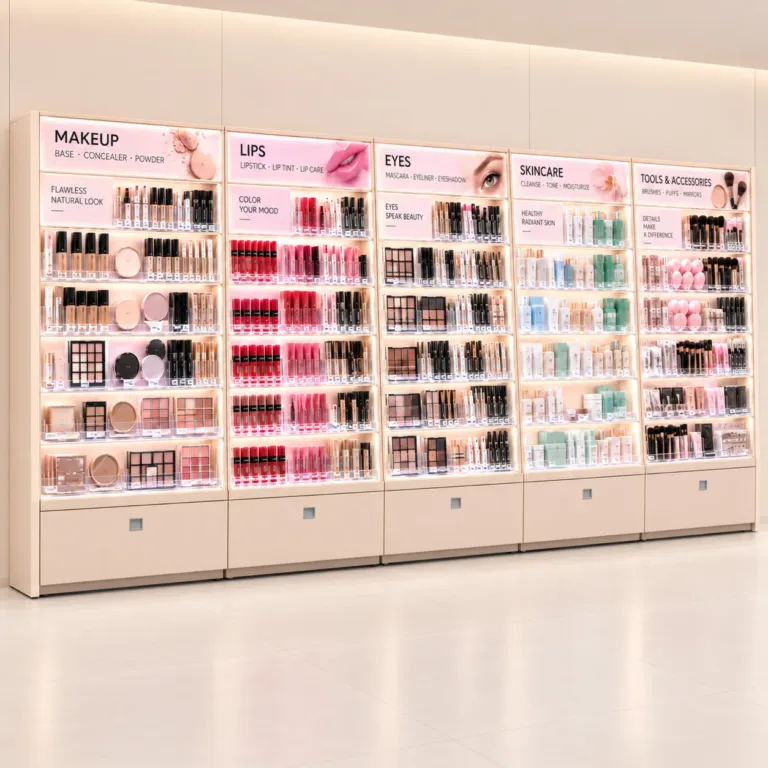
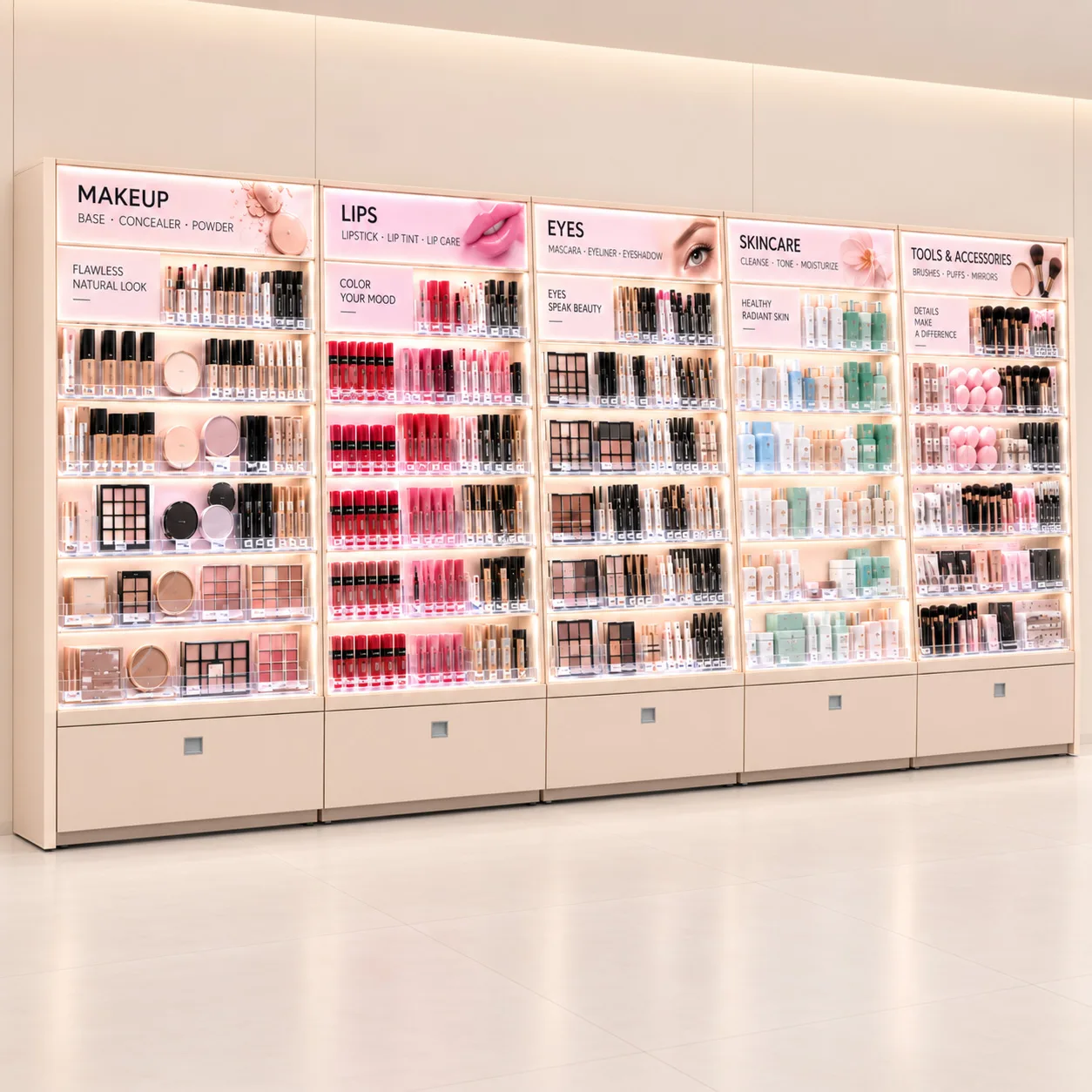
The Modular Cosmetic Wall Display illustrates how display sections, illuminated shelves, category signage, and lower cabinets can be combined within a coordinated retail layout.
When planning a modular system, determine which elements should remain consistent across locations and which need to change to suit individual stores. This helps balance flexibility with efficient project coordination.
Maintain Brand Consistency
For brands expanding across multiple retail locations, consistent fixture specifications help preserve a recognizable in-store identity. Display proportions, graphics, lighting, shelving arrangements, and finishes should follow agreed design standards.
Documenting these requirements gives purchasing and installation teams a shared reference for future orders. It also allows individual store layouts to be adjusted without losing the overall visual identity.
Production Quality and Cost Control
Approve Specifications Before Production
Clear specifications help prevent misunderstandings between the buyer and manufacturer. Before mass production, confirm the approved dimensions, fixture configuration, finishes, graphics, lighting requirements, assembly details, order quantities, and delivery destinations.
For customized displays, consider reviewing a prototype or sample when appearance, component fit, or functional details need to be verified. Any revisions should be recorded in the final specifications before production approval.
Check Quality Before Delivery
Inspection should reflect the approved design and intended use. Depending on the project, checks may cover structural assembly, surface finishes, graphic placement, lighting operation, and component fit.
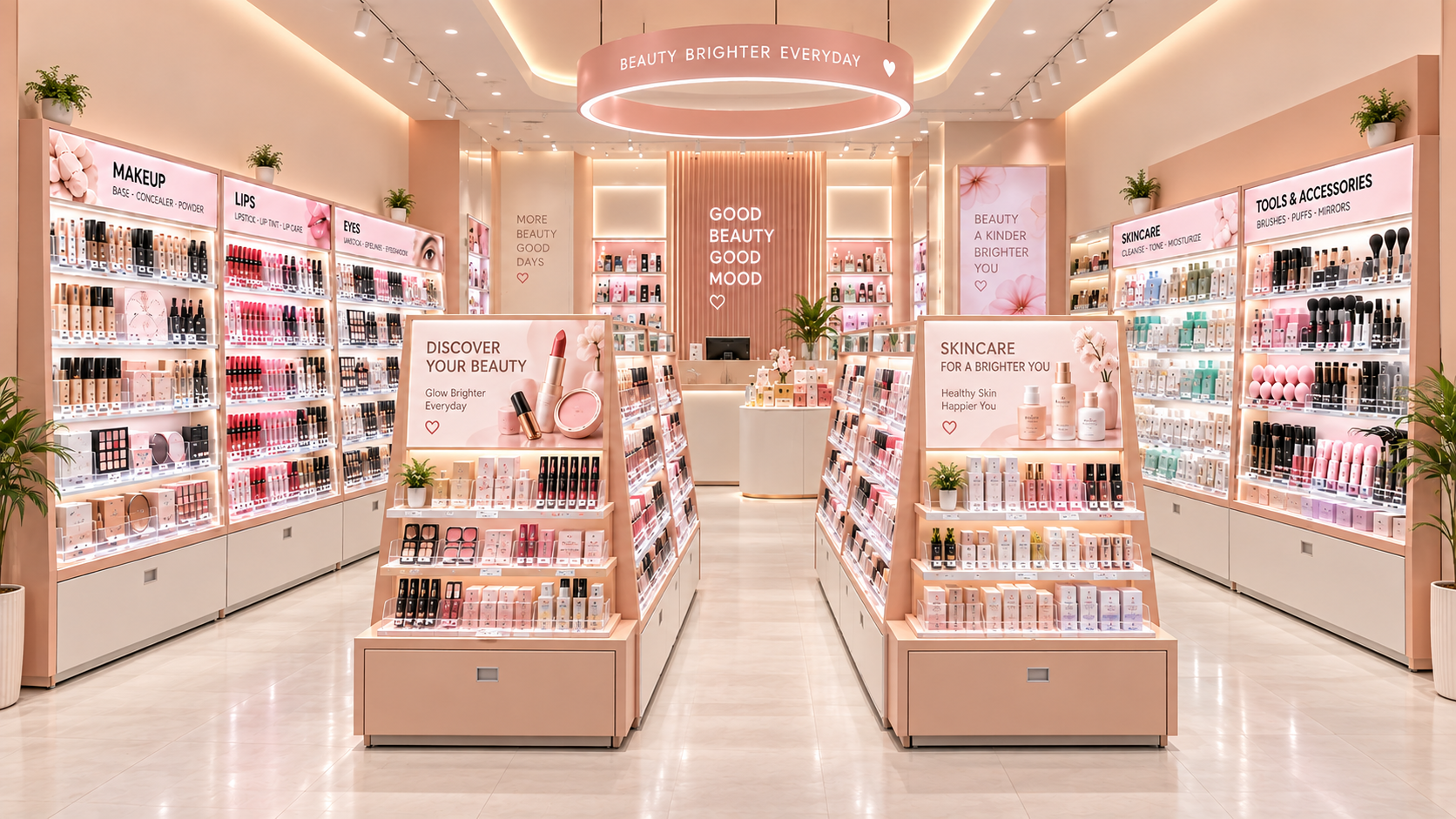
Packaging, shipment quantities, delivery schedules, and installation responsibilities should also be confirmed before dispatch. For projects involving several fixture types, Custom Cosmetic Store Fixtures provide an example of how wall displays, island units, illuminated shelving, and storage can be coordinated within a complete beauty retail environment.
Frequently Asked Questions
What Information Is Needed for a Quote?
Prepare product dimensions, approximate quantities, store layouts, brand guidelines, preferred fixture configurations, lighting requirements, and delivery destinations. Reference images or preliminary drawings can help clarify the project scope.
Can One Display System Serve Multiple Stores?
Yes, depending on the design and site requirements. Modular configurations, graphics, shelving, and fixture dimensions can be adapted to different locations while maintaining consistent brand standards.
When Should You Approve a Sample?
Sample approval is useful when a project involves custom dimensions, integrated lighting, distinctive finishes, or complex assembly. Reviewing a sample before mass production helps identify potential issues before the full order proceeds.
Conclusion
The right cosmetic display manufacturer should understand your merchandising goals and retail expansion plans. Contact APEX to discuss a customized display solution for your retail environment.