Choosing between OEM and ODM affects how a cosmetic display is designed, customized, and produced. For beauty brands and retail chains, the key difference lies in who develops the design and how closely the final fixture can match project requirements. Understanding both models helps buyers select an approach that fits their brand and retail needs.
How Cosmetic Display OEM and ODM Differ
OEM for Custom Cosmetic Displays
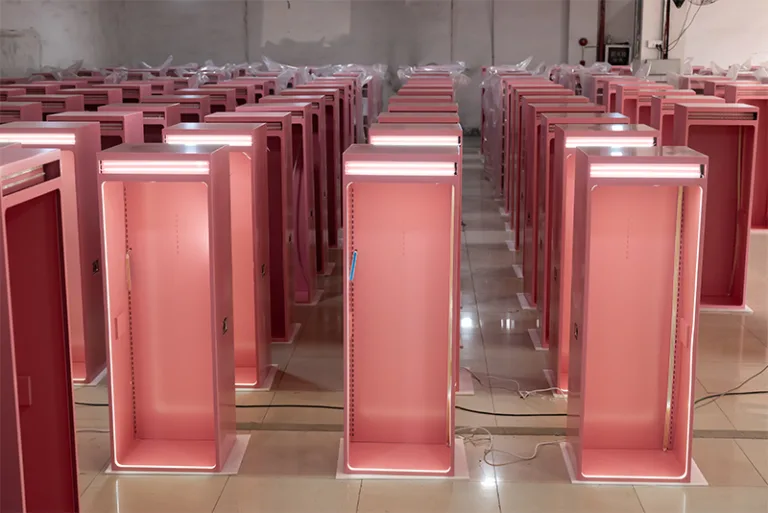
Original Equipment Manufacturing (OEM) generally means the buyer defines the display requirements, and the manufacturer produces the fixture according to the agreed specifications. The buyer may provide technical drawings, dimensions, brand guidelines, or an initial concept that requires further engineering.
OEM suits projects requiring specific structures, shelf arrangements, lighting configurations, or brand presentation. The manufacturer develops the design for production based on the buyer’s requirements. The amount of engineering work depends on how complete the initial specifications are.
ODM for Manufacturer Developed Displays
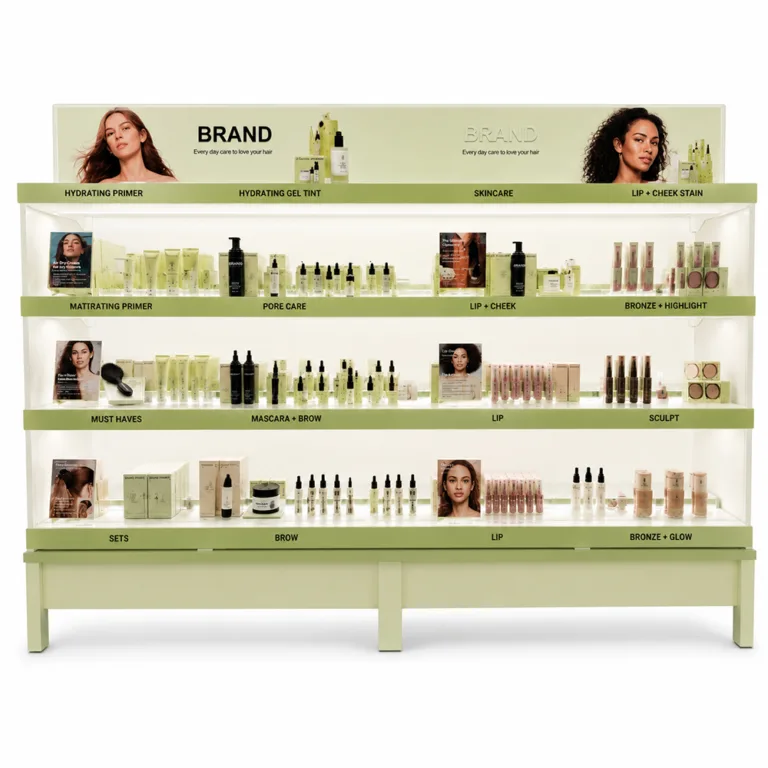
Original Design Manufacturing (ODM) generally starts with a design developed by the manufacturer. The buyer selects a suitable solution and requests modifications to meet project requirements.
This approach may reduce initial design work when an existing design already meets most needs. Adjustments may still be necessary for dimensions, graphics, lighting, or shelf layouts. Buyers should confirm customization options, design responsibilities, and the rights to reuse approved designs for future orders.
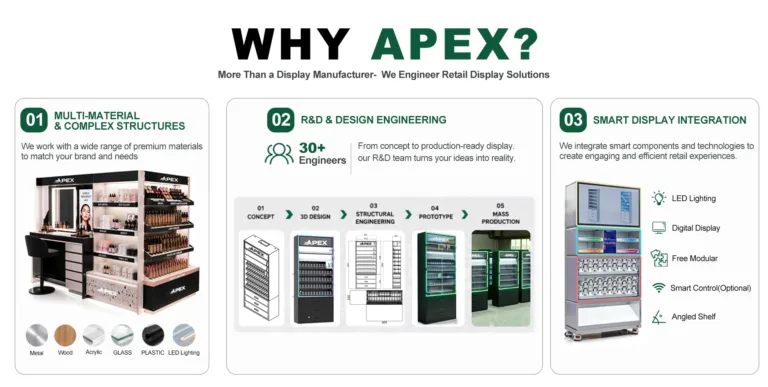
APEX offers custom display solutions for projects requiring tailored designs or modifications to existing display concepts.
What Affects Cosmetic Display Costs
Design Development Costs
The cost of a cosmetic display depends on its specifications and production requirements, not simply on whether it uses OEM or ODM. A new structure may require more engineering and sampling than a design that already fits the application.
Key cost factors include:
- Design work: Technical drawings, engineering reviews, and revisions.
- Structure: Frame construction, shelf configuration, and assembly complexity.
- Finishes: Coatings, colors, graphics, and decorative details.
- Lighting: LED components, wiring, and installation requirements.
- Production preparation: Tooling where necessary, sampling, and packaging.
ODM may reduce some initial design work, but it does not automatically mean a lower total cost. The final quotation depends on the design, components, order quantity, and production scope.
Costs for Repeat Orders
Approved drawings and established specifications help maintain consistency across repeat orders. However, unit costs still depend on order quantity, material availability, production requirements, and design changes.
When comparing OEM and ODM quotations, buyers should check that both proposals cover equivalent specifications, packaging, and delivery requirements. A lower price may reflect fewer customized features or excluded services.
How Customization Meets Retail Requirements
Structural Design for Product Presentation
Cosmetic displays must accommodate product dimensions, shelf spacing, customer access, storage, and available retail space. Makeup, skincare, and fragrance products may require different display arrangements.
OEM allows buyers to define specific structural requirements, while ODM depends on how closely an existing design fits the application. In either case, the fixture should support the product range and fit the store layout.
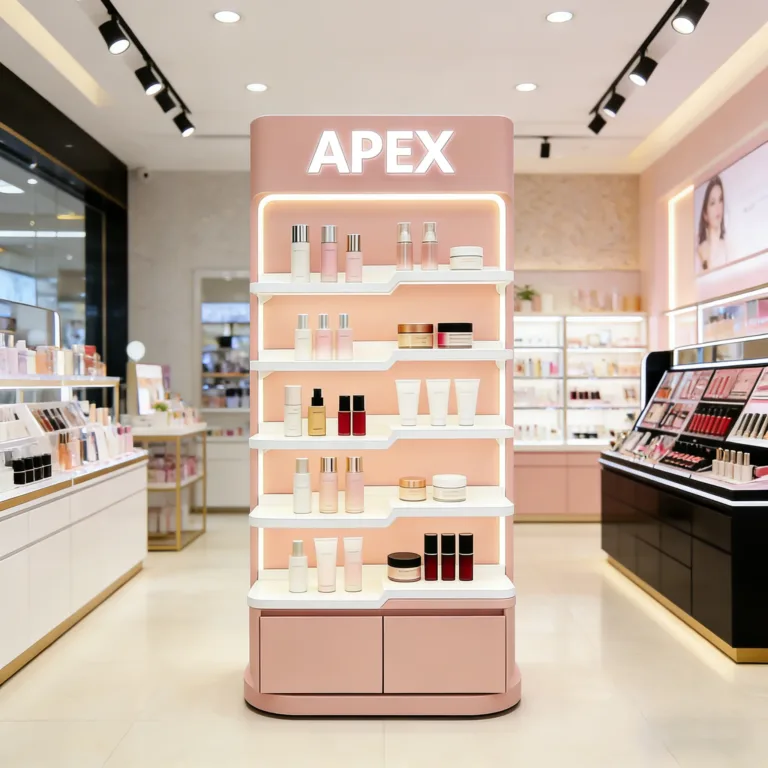
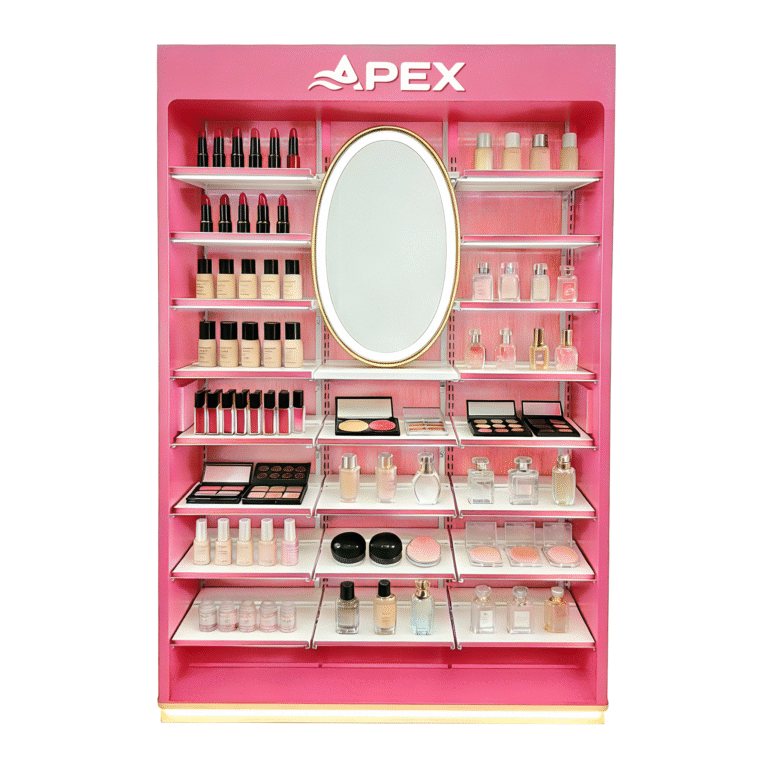
A complete cosmetic store fixture solution illustrates how display structures and product presentation can be coordinated to meet specific retail requirements.

Brand Presentation Through Lighting
Lighting, graphics, colors, and shelf arrangements contribute to the overall retail experience. Buyers should confirm that these features can be delivered within the proposed design and production scope.
Metal can provide the main supporting structure, while other materials may be used for shelves, panels, and decorative details. Material choices should follow the fixture’s functional and visual requirements. Lighting placement, wiring, and maintenance access should also be reviewed during design development.
The difference between OEM and ODM is not the material itself, but how design requirements are defined and developed. Both approaches may support customization, depending on the manufacturer’s capabilities and the agreed specifications.
Choosing Between OEM and ODM for Your Project
| Buyer priority | OEM | ODM |
| Unique display structure | Suitable for project specific designs | Depends on design flexibility |
| Greater design control | Buyer defines key specifications | Limited by available options |
| Existing design meets requirements | May require additional development | Often a practical option |
| Specific brand presentation | Defined through project specifications | Depends on available customization |
| Future design changes | Can follow revised specifications | Depends on modification options |
The right model depends on how closely an existing design meets project requirements. Buyers should compare customization options, design responsibilities, and production scope before making a decision.
How OEM and ODM Affect Production Planning
Design Approval Before Production
A clear project brief helps the manufacturer assess requirements before production begins. Buyers should prepare product dimensions, estimated quantities, brand guidelines, store layout information, and available drawings or reference images.
The process may include design review, drawing approval, prototype evaluation, and confirmation of production specifications. Before mass production, both parties should agree on dimensions, finishes, graphics, assembly requirements, and quality criteria.
OEM may require more engineering when a project begins as a concept. ODM may need less initial development when the selected design already fits the requirements. Both models require clear specifications and approval.
Planning for Multiple Stores
Beauty brands and retail chains often need consistent displays across multiple locations. Approved drawings, material specifications, color references, and component lists help maintain consistency during repeat production.
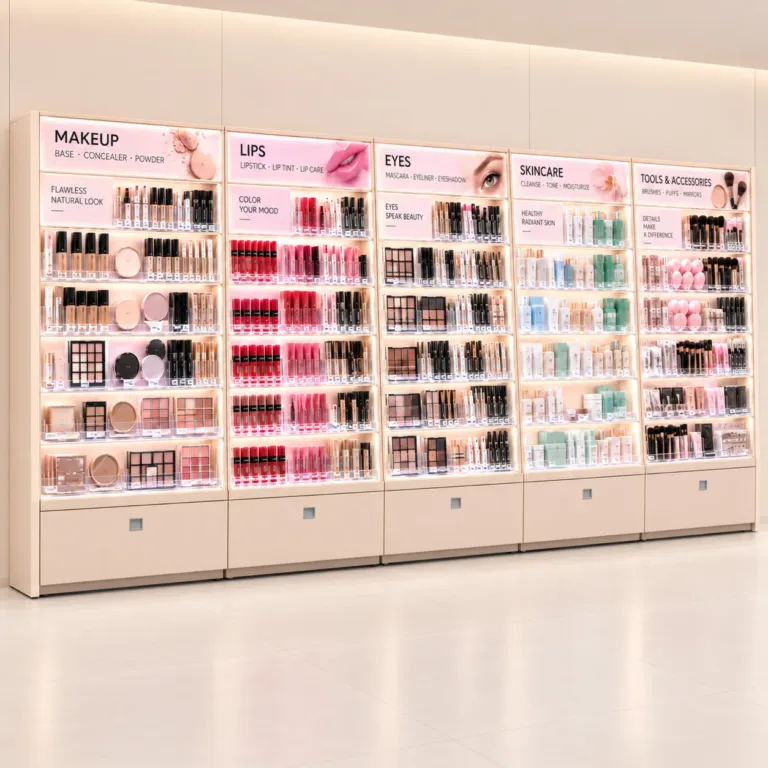
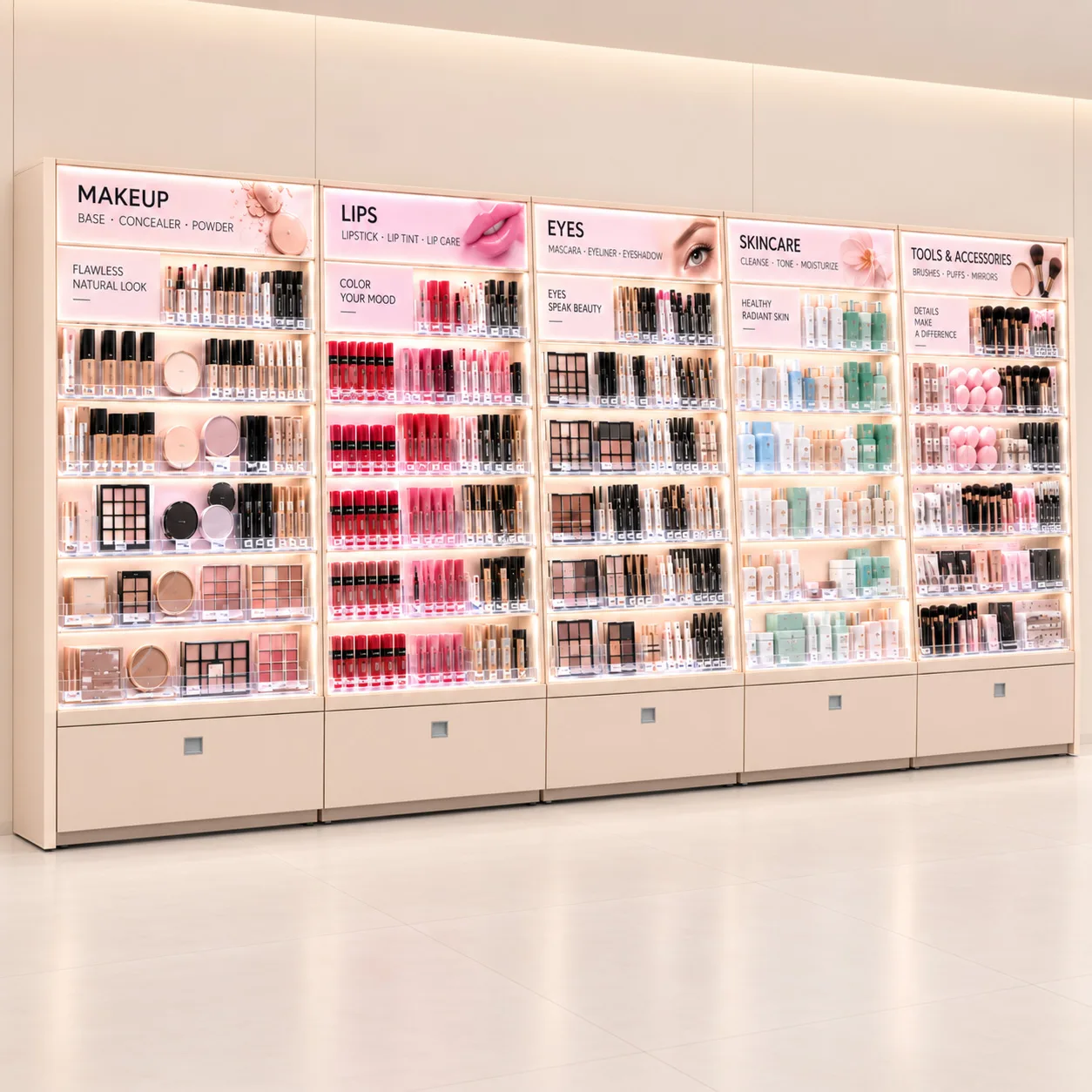
Buyers should also consider different store layouts and future product changes. A modular cosmetic wall display provides an example of a system that can be configured around available wall space, product categories, lighting, and storage requirements.
Neither OEM nor ODM automatically guarantees a shorter production schedule. Confirm the expected timing for design approval, sampling, production, and delivery based on the actual project.
Frequently Asked Questions
What should buyers prepare before requesting a quotation?
Prepare product dimensions, estimated quantities, brand guidelines, store layout information, and available design references. Include lighting, storage, packaging, and delivery requirements where relevant.
Can ODM displays still be customized for a brand?
Yes, depending on the manufacturer’s capabilities and the selected design. Possible adjustments include dimensions, graphics, colors, shelf layouts, and lighting. Confirm the available options before choosing an existing design.
What factors influence the price of a custom cosmetic display?
Price depends on dimensions, structural complexity, finishes, lighting, graphics, tooling where applicable, order quantity, packaging, and delivery scope. Design development and sampling may also affect the initial investment.
Choosing the Right Manufacturing Model
OEM generally suits projects requiring greater design control, while ODM may work well when a manufacturer developed solution meets most requirements. The right choice depends on customization needs, development work, and production scope.
Define your display requirements before comparing proposals. To discuss your project or request a quotation, contact the APEX team.