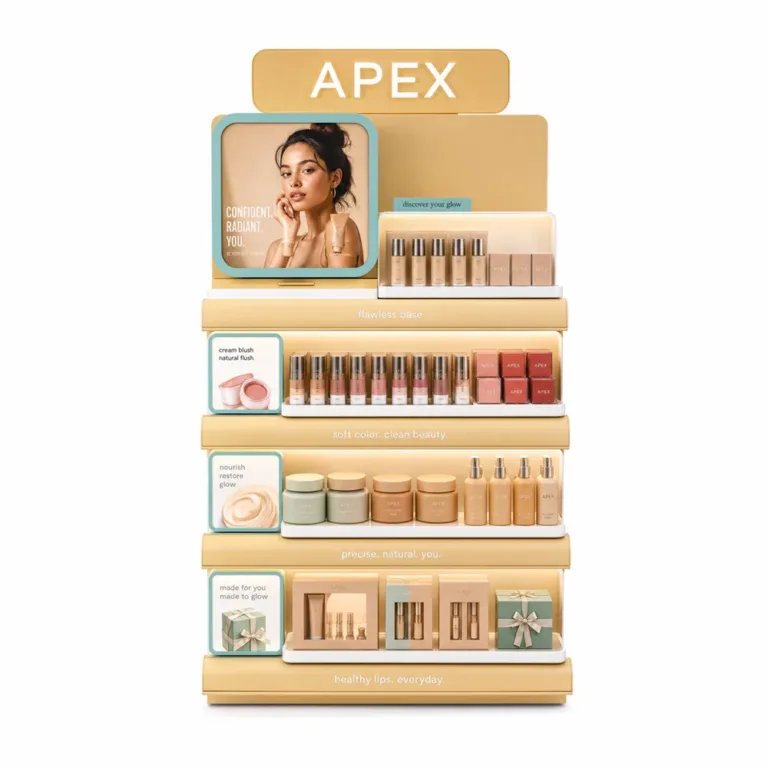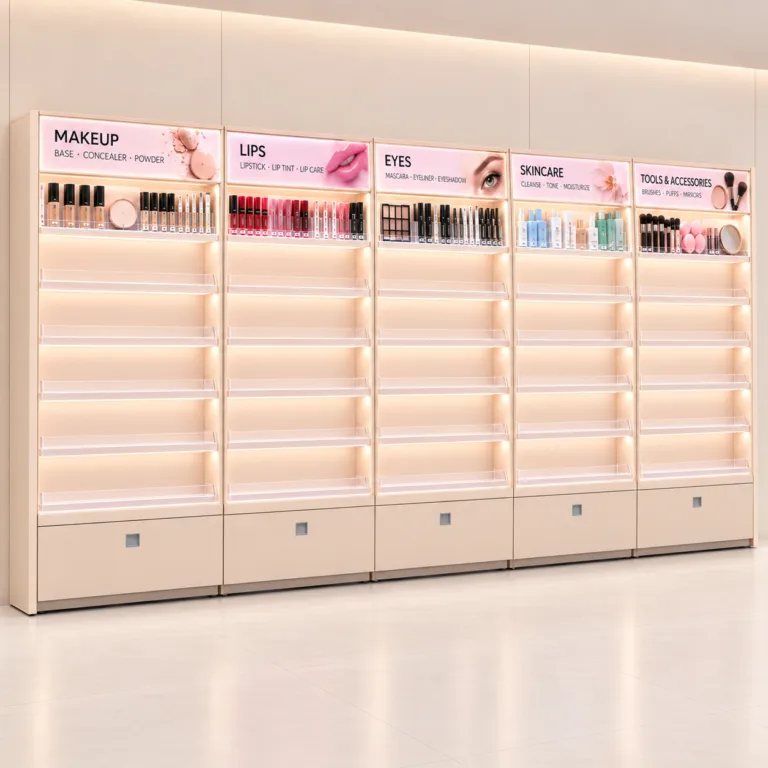
Expanding a cosmetic brand into chain stores requires a display system that can work beyond a single retail location. As the number of stores increases, display requirements become more closely connected to store formats, merchandising needs, brand presentation, and production scalability.
A suitable display solution should provide a consistent foundation while allowing individual configurations to respond to the conditions of different retail locations.
How Can Cosmetic Displays Adapt to Chain Store Expansion?
Scalable Display Structures
A display designed for a boutique or flagship store can be tailored to one specific space and merchandising concept. As a cosmetic brand expands into chain stores, the display system needs to support repeated use across locations with different retail conditions.
A standardized structural foundation provides a consistent starting point for different display configurations. It can accommodate product presentation, branding, lighting, and other functional elements while allowing the overall design to scale with the retail network.
Consistent Brand Presentation
A cosmetic brand needs its physical retail presence to remain recognizable across different locations. Variations in display proportions, finishes, lighting, signage, and product organization can influence how customers perceive the brand.
A consistent visual language helps maintain brand recognition while allowing individual displays to respond to specific store requirements. The objective is not to make every store identical, but to maintain a recognizable brand experience across different retail environments.
Adaptable Store Configurations
Chain stores can differ significantly in available floor, wall, and counter space. Display solutions therefore need to accommodate different retail layouts without losing the overall design direction.
A flexible display system can support floor standing fixtures, wall displays, counters, endcaps, and other configurations. This allows brands to adjust the display according to each location while retaining common structural and visual elements.
How Can Modular Displays Support Multiple Store Locations?
Standardized Structural Systems
Modular display systems allow the main structural elements to remain consistent while selected components can be configured according to the requirements of individual stores.
This approach can simplify the development of multiple display formats from a common design foundation. Shelving, product holders, branding elements, lighting, and other modules can be incorporated according to the merchandising requirements of each project.
APEX develops modular retail display systems with reconfigurable structures and components designed to support changing retail requirements and multi store applications.
Flexible Merchandising Modules
Cosmetic product ranges can change frequently as brands introduce new collections, seasonal products, and promotional campaigns.
Adjustable merchandising elements can make it easier to reorganize products without replacing the entire structural system. Different product sections can therefore be configured according to the assortment and presentation requirements of each store.
Integrated Lighting and Digital Modules
Lighting and digital elements can be incorporated into the display structure to support product presentation and customer engagement.
LED lighting can highlight key product areas and branding elements, while LCD screens or other digital modules can provide space for product information, tutorials, promotional content, or campaign messaging.
How Can Cosmetic Displays Adapt to Different Retail Environments?
Floor Standing Displays
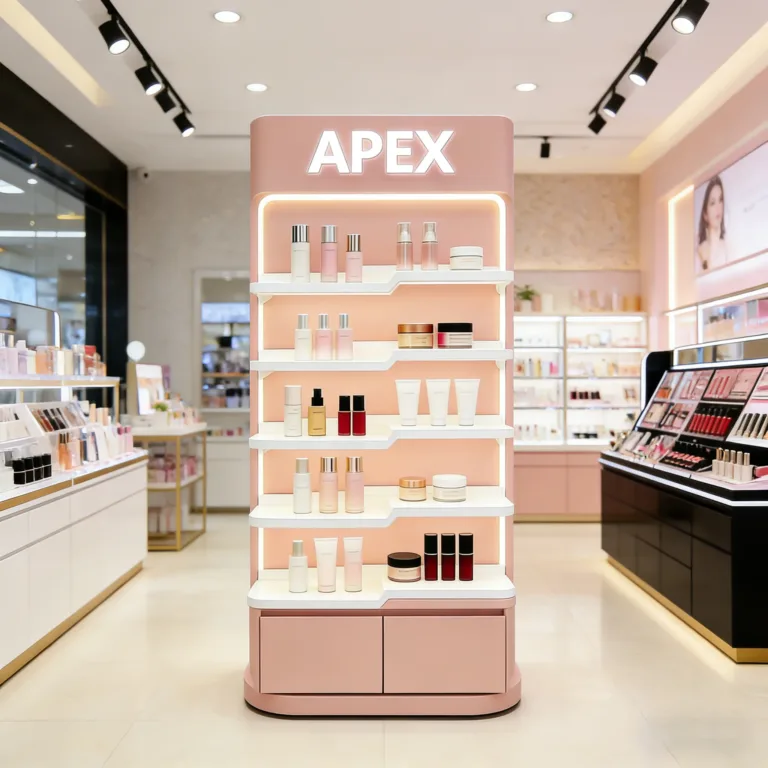
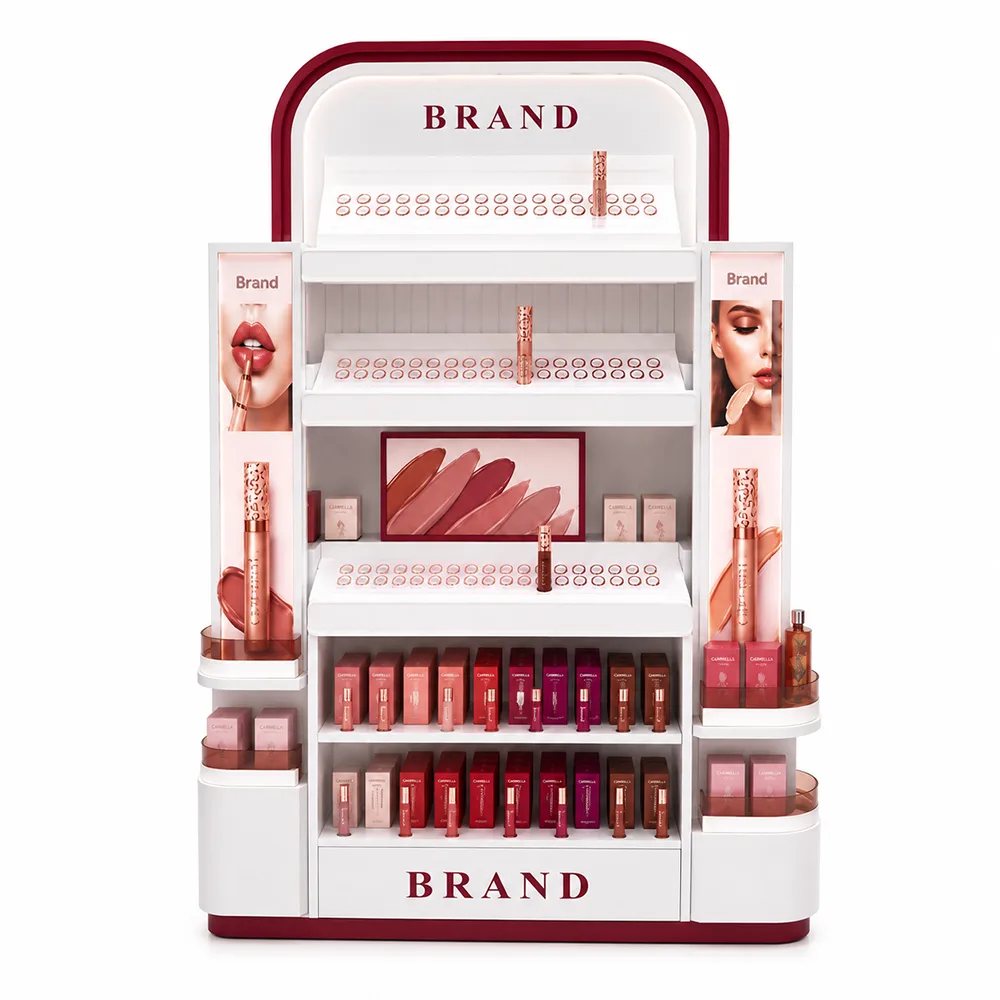
Floor standing displays can provide larger merchandising capacity where sufficient floor space is available. They can combine product shelving, branding areas, lighting, and storage within a single fixture.
For chain store programs, the configuration can be adjusted according to product assortment and available retail space while maintaining the same overall design direction.
Wall and Gondola Displays
Wall and gondola configurations can make use of existing retail space while creating organized product zones.
These formats can be useful when brands need to establish a recognizable presence within a larger retailer environment without requiring a completely independent store area.
APEX’s cosmetic display range includes wall displays and gondola configurations alongside other customized retail fixture formats.
Counter and Endcap Displays
Counter and endcap displays can provide more compact merchandising solutions for stores with limited space or specific promotional locations.
These formats can be used for selected product categories, new launches, featured products, or campaign focused merchandising while maintaining the visual language established by the wider display system.
How Can Display Systems Improve Chain Store Rollouts?
Efficient Display Production
Once a display concept has been approved, the ability to reproduce the design consistently becomes an important part of a chain store program.
Manufacturing should account for structural dimensions, finishes, branding elements, lighting integration, and other project specifications so that subsequent production remains aligned with the approved design.
Consistent Manufacturing Quality
Large retail programs require consistent quality across production batches. Differences in structural details or finishes can become more visible when the same display is deployed across many locations.
An integrated design and manufacturing process can help connect engineering requirements with production and quality control, providing greater consistency during larger orders.
Multi Store Deployment
A scalable display program should be designed with future locations in mind. Rather than treating every new store as an independent project, brands can establish a repeatable system that can be configured according to the requirements of each location.
This allows the display concept to evolve with the retail network while preserving its core visual and functional characteristics.
How Can Lighting and Digital Elements Enhance Cosmetic Displays?
Integrated LED Lighting
Lighting can play an important role in cosmetic merchandising by drawing attention to products and strengthening the visual hierarchy of the display.
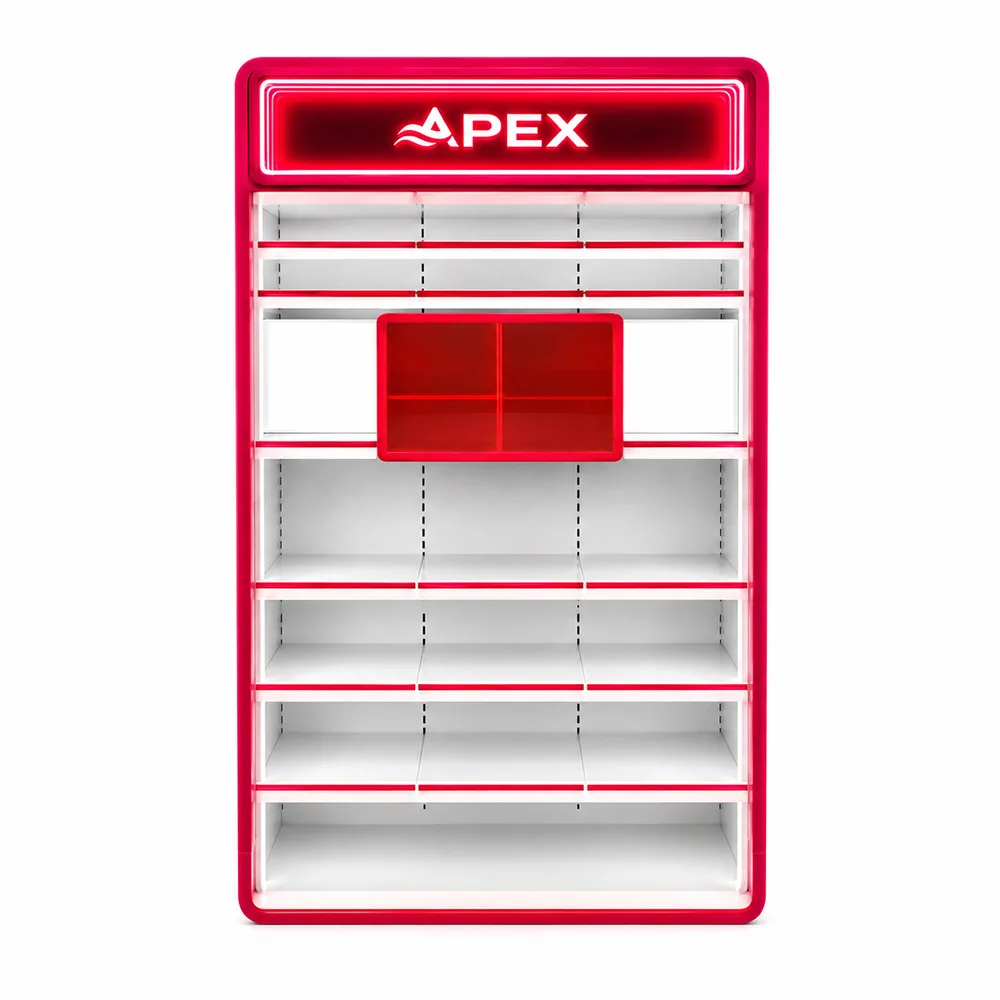
LED elements can be integrated into shelves, headers, or other structural areas. This allows lighting to become part of the fixture design rather than an independent decorative element.
For example, an LED cosmetic display rack can combine a metal structure with integrated LED lighting and adjustable merchandising areas for cosmetic retail applications.
Digital Display Modules
Digital screens can extend the communication capability of a physical display. Depending on the retail program, they can be used for product information, tutorials, promotional videos, or campaign messaging.
Integrating digital modules into the display structure can also help brands update visual communication without changing the fundamental fixture.
Interactive Brand Experiences
Combining physical merchandising with lighting and digital content can create a more engaging retail environment.
The role of these technologies should remain connected to the merchandising objective. Digital content, lighting, and physical product presentation should work together rather than compete for customer attention.
Frequently Asked Questions
What Should Brands Consider When Choosing Cosmetic Displays?
Brands should consider store layout, product assortment, structural requirements, merchandising flexibility, lighting, branding, retailer specifications, and production scalability. The display should be planned as part of the wider retail program rather than for one location alone.
Should Every Chain Store Use the Same Display?
Not necessarily. A consistent structural and visual concept can be adapted into different configurations according to available space, product assortment, and retailer requirements.
Why Are Modular Displays Useful for Chain Store Expansion?
Modularity allows selected display components to be adjusted or replaced while retaining the main structural system. This can make it easier to accommodate different products, campaigns, and store environments.
What Materials Can Be Used in Cosmetic Displays?
Material selection depends on the structural, functional, and visual requirements of the project. Metal can provide an important structural foundation, while wood, glass, acrylic components, finishes, graphics, lighting, and digital modules can be incorporated as supporting elements.
Conclusion
Cosmetic brands expanding into chain stores need display solutions that combine a consistent foundation with flexibility for different retail environments. Modular structures, adaptable merchandising, integrated lighting, and digital elements can support this approach.
For a customized retail display program, contact the APEX team to discuss your store requirements and expansion plans.