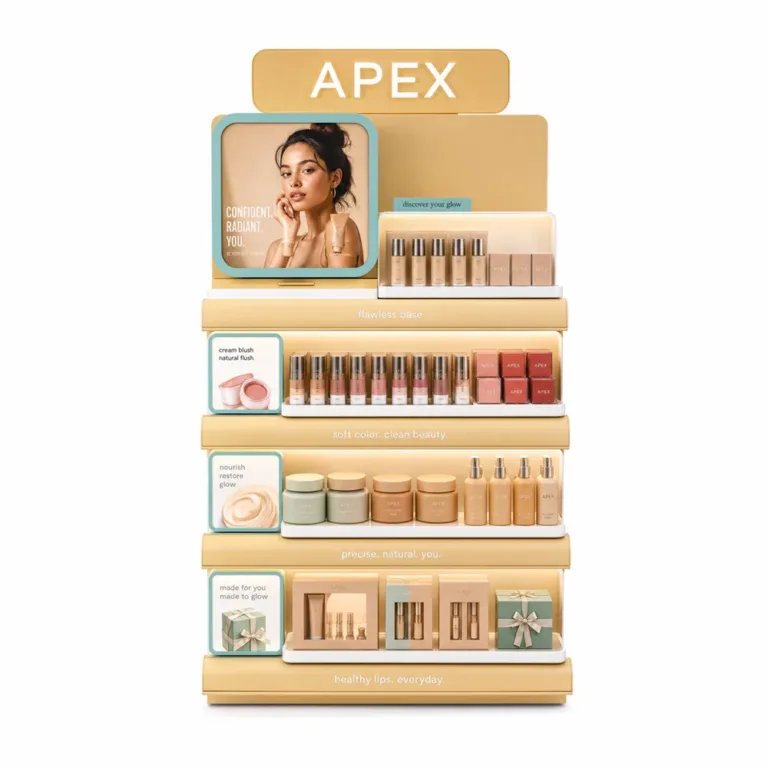
For cosmetic brands, retail displays are an important part of how the brand is experienced in physical stores. A well designed display can connect the brand with the products and the retail environment.
As brands expand across different retail locations, maintaining a clear and recognizable identity becomes more challenging. Custom displays provide a way to address this challenge while adapting to the needs of each store.
How Custom Cosmetic Displays Shape Retail Identity
Turning Brand Identity Into a Physical Experience
Brand identity needs to work beyond packaging and advertising when customers encounter a product in a physical store.
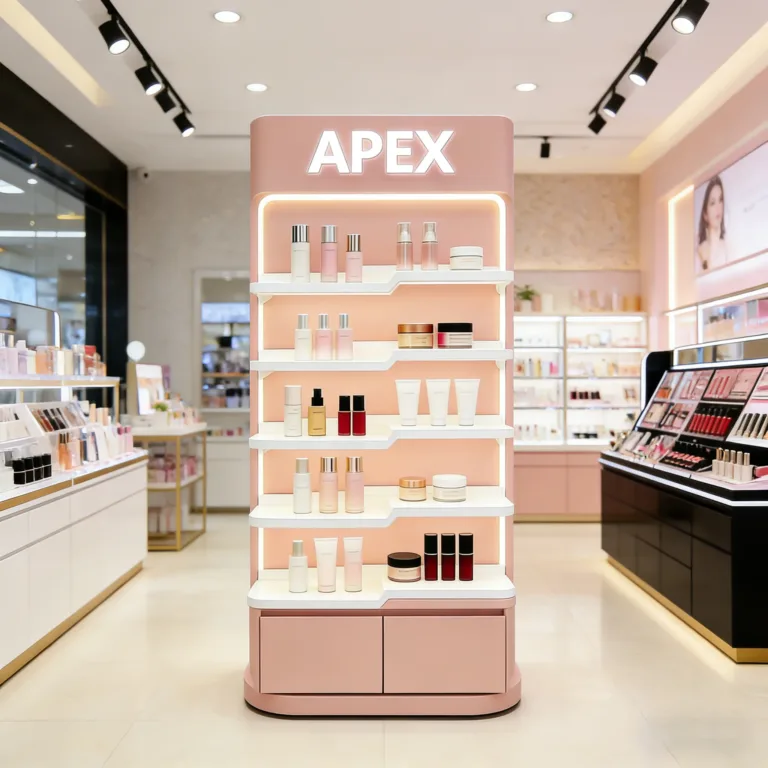
A custom display can bring together brand graphics, product organization, structural details, and visual elements within one retail setting. This creates a more recognizable presentation while allowing the display to reflect the requirements of the brand.
For brands developing a wider retail program, custom cosmetic displays can be planned around the brand identity as well as the requirements of individual retail environments.

Creating Consistency Across Retail Touchpoints
Consistent branding, structural details, product presentation, and selected visual features can help create a recognizable retail presence across different touchpoints.
Balancing Brand Presentation With Product Requirements
A display must also make products easy to understand and access.
Makeup may require organized product sections, while skincare can need more space for product information. Fragrance collections may benefit from a more focused presentation.
Custom design allows these requirements to be considered without separating product function from the overall brand experience.
How Display Formats Support Different Retail Environments
Counter Displays for Focused Product Areas
Counter displays are suitable for smaller retail areas, selected product collections, and focused promotional presentations.
They can provide a compact branded presence while keeping products accessible and visible. Their configuration can also follow the visual direction used in larger retail fixtures.
Floor Displays for Broader Product Ranges
Floor displays provide more space for broader product collections and can create a stronger branded presence within a store.
A custom cosmetic display stand can be developed around product quantity, shelf arrangement, available space, branding requirements, and the surrounding retail environment.
This makes the format suitable for brands that need to present several product groups within one coordinated display.
Wall and Gondola Displays for Larger Retail Programs
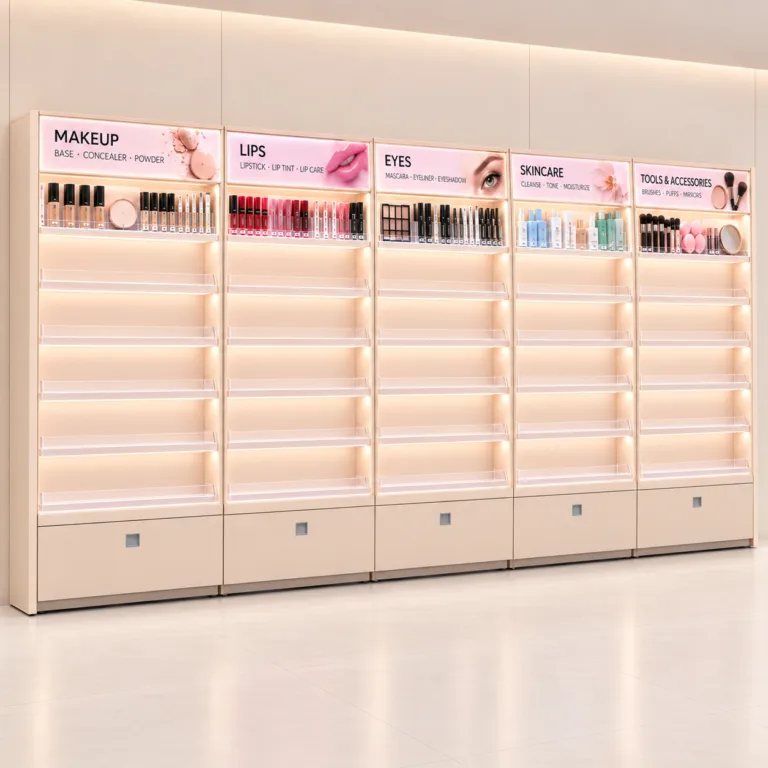
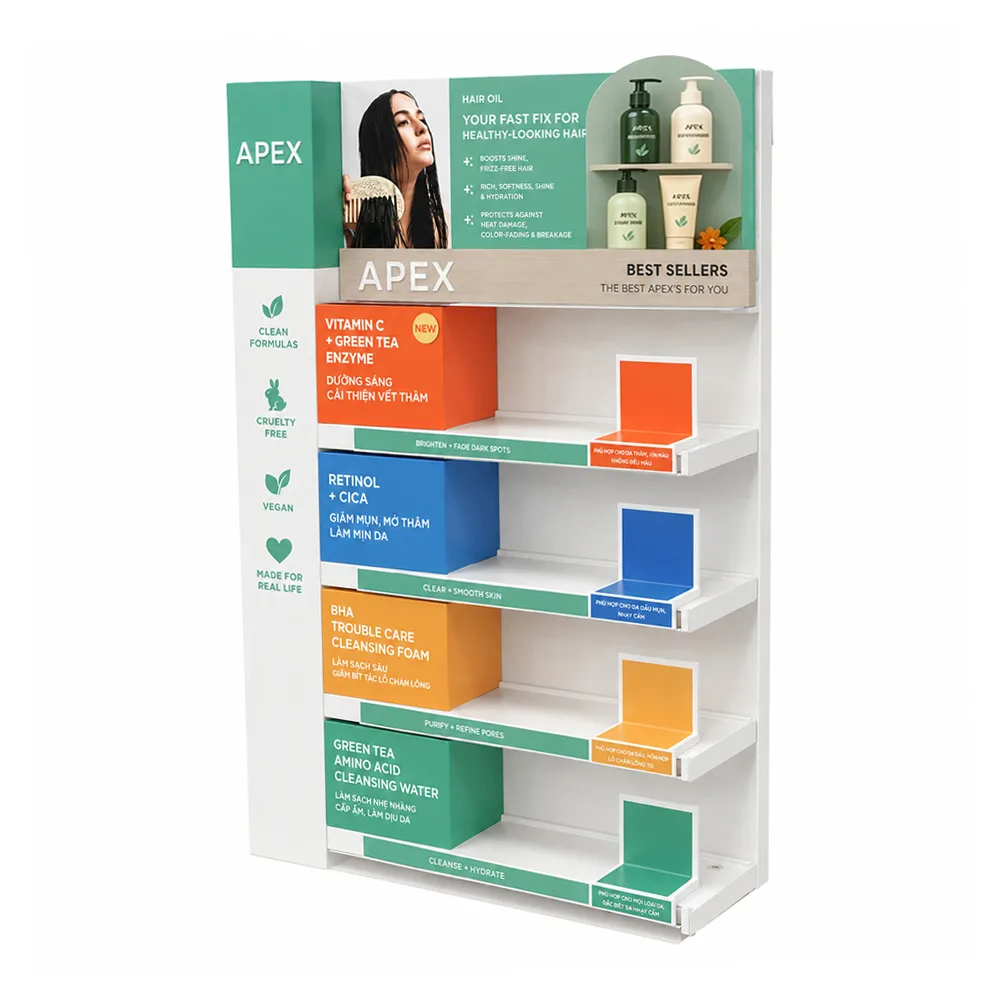
Wall and gondola displays can provide dedicated areas for product presentation within larger retail environments.
These formats can be designed with the same brand direction as counter and floor displays. This allows different fixtures to work as part of one retail program instead of appearing as unrelated installations.
How Structure Lighting and Digital Features Work Together
Using Metal as a Structural Foundation
A retail display needs a structure that can support products while fitting naturally into the store environment.
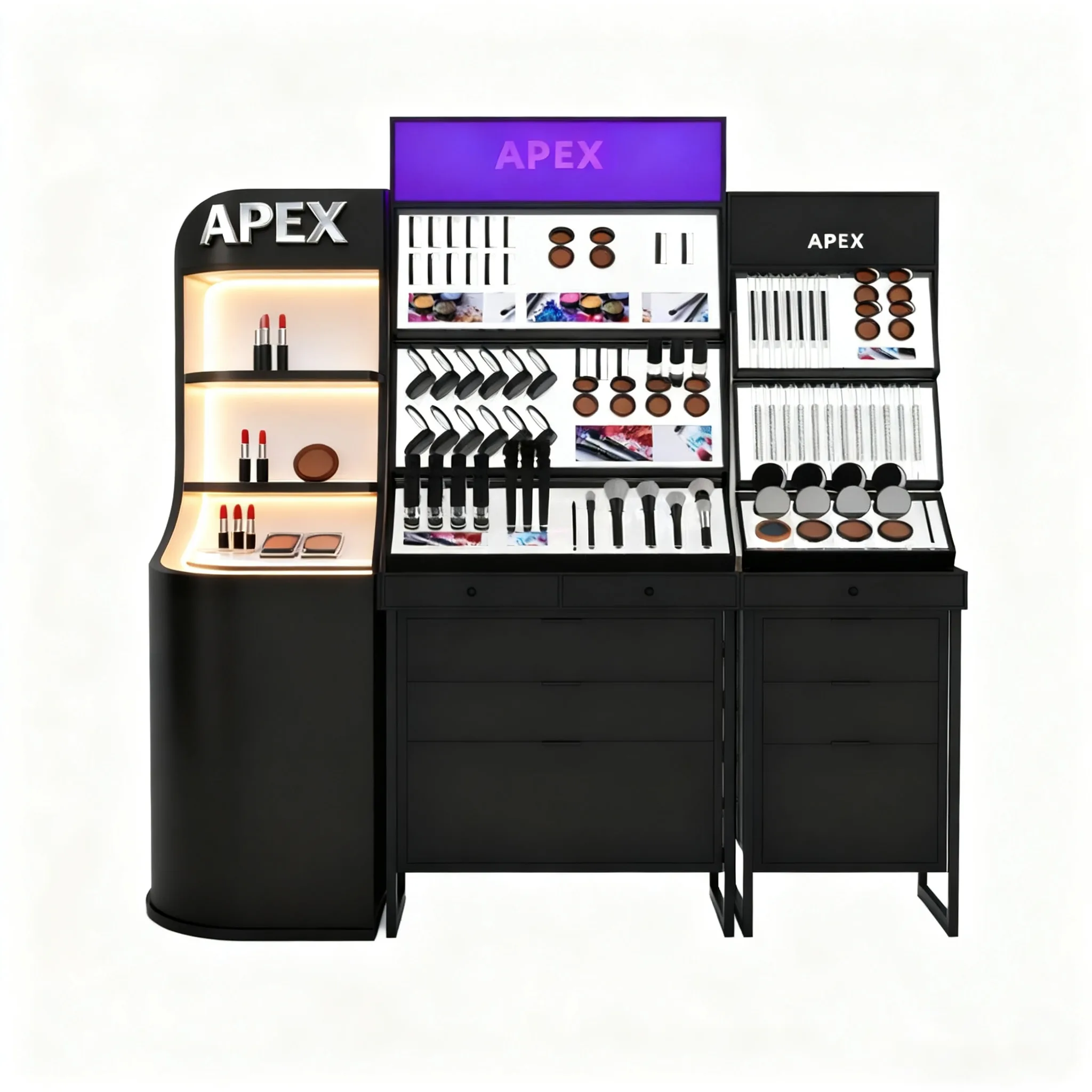
Metal can provide an important structural foundation for counters, floor displays, shelving systems, and other retail fixtures. Additional components can then be incorporated according to the functional and visual requirements of the project.
The objective is to create a complete display solution in which structure supports the product presentation and brand experience.
Adding Materials According to Function
Different materials can be used where they provide a specific visual or practical benefit.
Transparent components can improve product visibility, while selected surface materials can create contrast or add visual detail to branded areas.
These materials should support the overall display concept rather than become the main focus of the design.
Integrating Lighting and Digital Elements
Lighting can help guide attention toward products and important branded areas.
Depending on the project, digital modules can also support product information, visual communication, or customer interaction.
When these features are considered during the design stage, they can be integrated into the display rather than added as separate elements later.
How Modular Design Supports Retail Expansion
Adapting Displays to Different Store Layouts
Retail brands may need to work with department stores, beauty retailers, chain stores, and other environments with different layouts.
A modular display approach allows dimensions and configurations to change according to available space while maintaining important brand elements.
This provides greater flexibility when the same retail concept needs to be introduced across different locations.
Supporting Different Product Ranges
Product collections can change as brands introduce new products, seasonal collections, or different merchandising priorities.
Flexible shelf layouts, product sections, and visual components can make it easier to adjust the presentation without redesigning the entire display system.
Maintaining Consistency During Rollouts
For a multi store program, consistency is not about making every fixture identical. It is about maintaining the elements that customers associate with the brand while allowing each display to fit its specific environment.
This approach can help connect different display formats into one recognizable retail system.
For smaller product areas and focused merchandising zones, cosmetic counter displays can be developed alongside larger floor and wall based fixtures.
What Brands Should Consider Before Developing Custom Displays
Define the Retail Environment
The starting point should be the location where the display will be used.
Brands should consider available space, product quantity, product dimensions, customer interaction, branding requirements, and the relationship between the display and surrounding fixtures.
These factors help determine the appropriate display format and configuration.
Plan Product Presentation and Brand Requirements
The display should balance product organization with the wider visual identity of the brand.
Product visibility, accessibility, branding areas, graphics, lighting, and display capacity should be considered together rather than developed separately.
This helps ensure that the final design serves both merchandising requirements and the intended retail experience.
Prepare for Production and Future Expansion
A display concept also needs to be practical to manufacture and suitable for future retail requirements.
For brands planning multiple locations, the design process should consider how the system can be adapted to different spaces and display formats.
APEX supports customized retail display projects through OEM and ODM manufacturing, combining structural components, different materials, lighting, and other display features according to project requirements.
Choose a Partner With Retail System Capabilities
A suitable manufacturing partner should be able to connect design development with production and understand the requirements of different retail display formats.
APEX provides customized retail display services from design development through production, supporting projects that require coordinated display systems rather than only individual fixtures.
Conclusion
Custom displays can help cosmetic brands create a recognizable retail identity while adapting to different stores, product ranges, and merchandising requirements.
The strongest approach is to treat the display as part of a wider retail system, combining practical product presentation with consistent brand elements and flexible configurations. For customized retail display programs, contact our team to discuss your requirements.