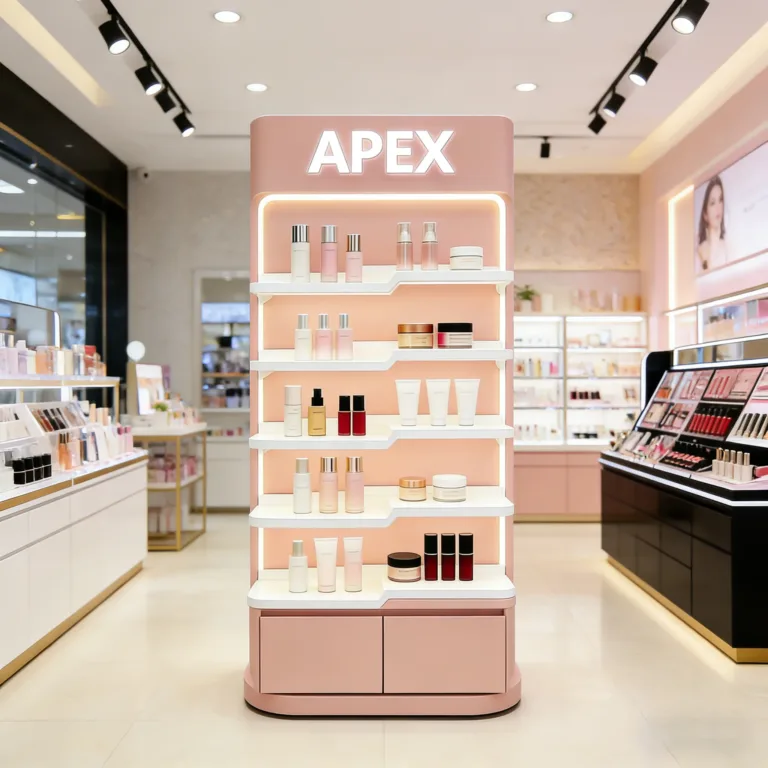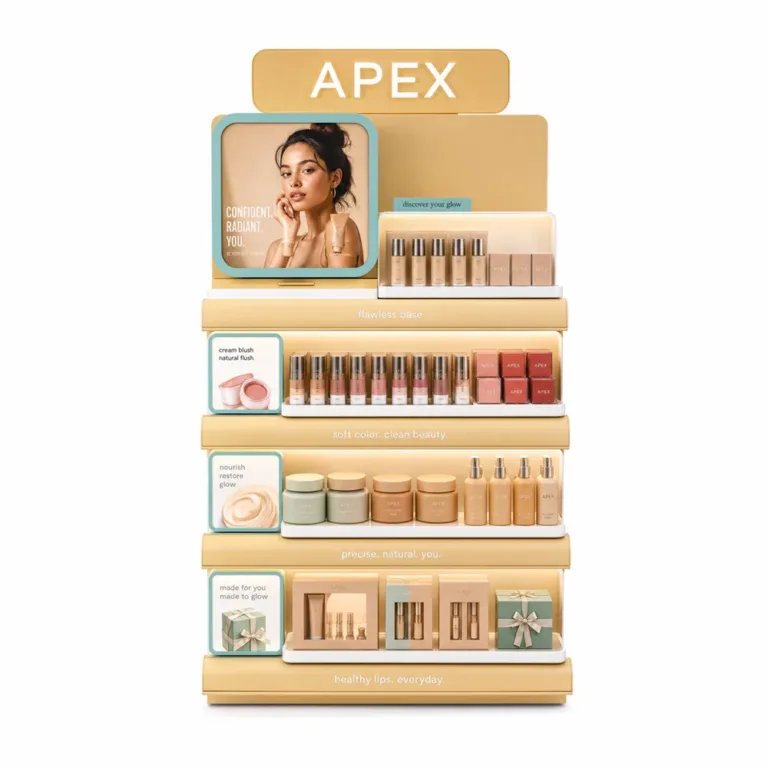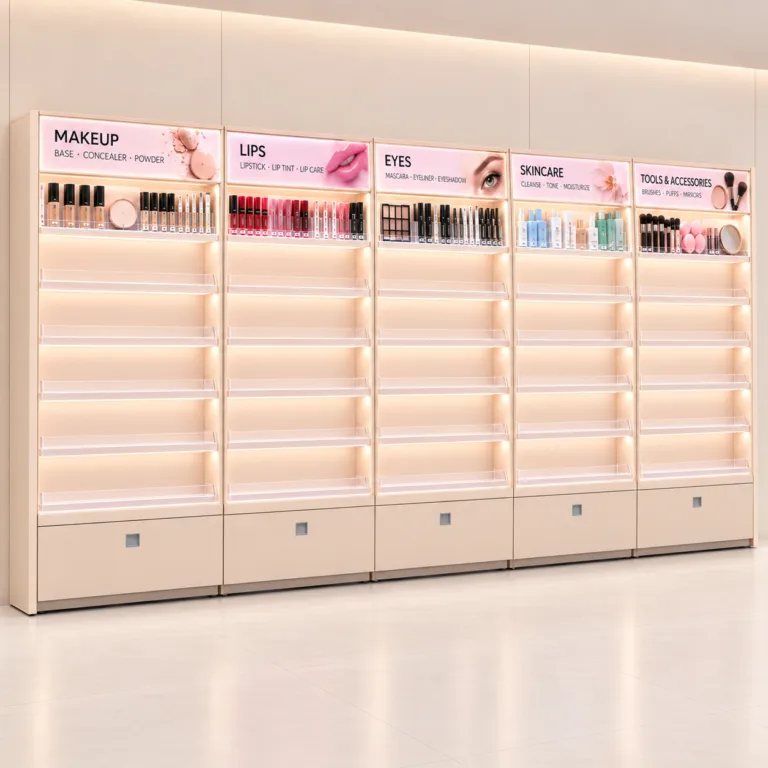
Beauty brands entering department stores, specialty retailers, and other shared retail environments need more than a standalone fixture. A store in store display should create a clear brand presence within an existing retail space while fitting the surrounding environment and supporting everyday merchandising.
For brands expanding across multiple locations, the challenge is to turn one retail concept into a flexible system that can adapt to different spaces, product ranges, and store requirements.
What Should a Store in Store Display Solution Achieve?
Create a Distinct Brand Zone
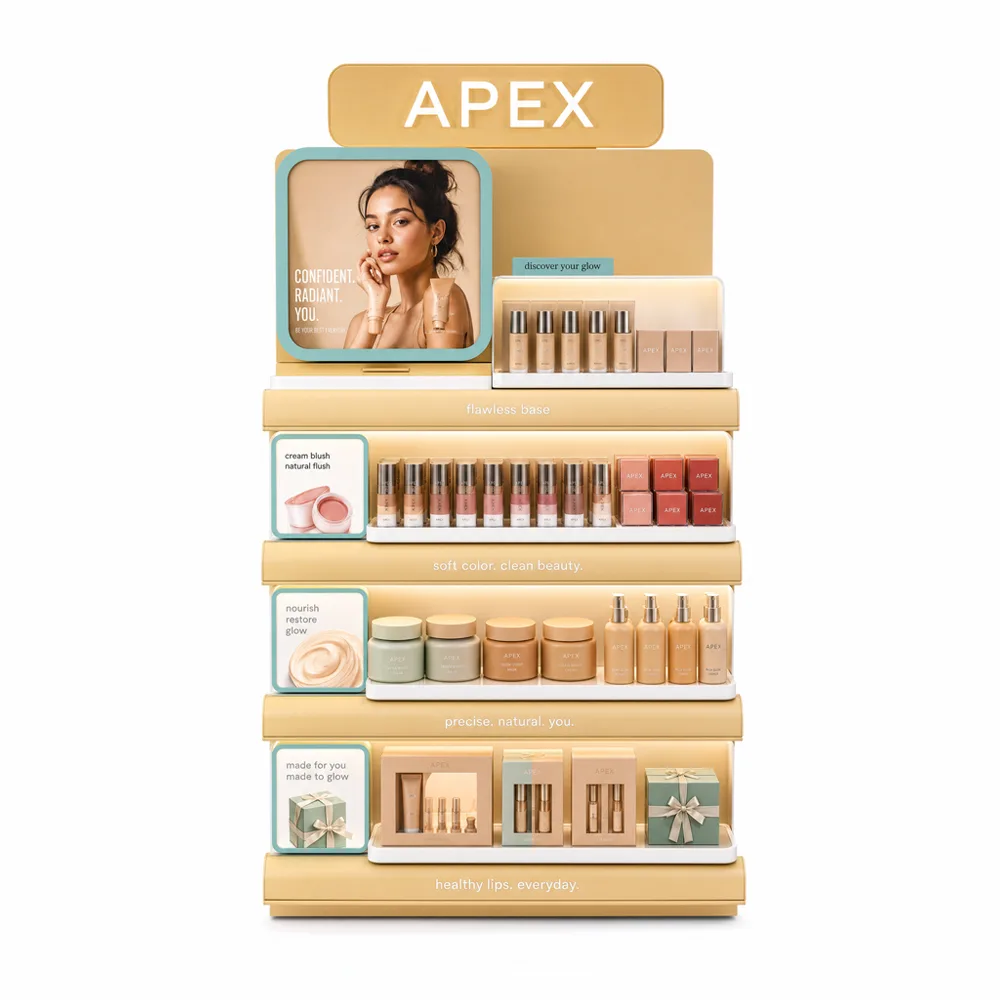
A store in store display gives a beauty brand a defined physical area within a larger retail environment. The structure, product arrangement, branding elements, and lighting can work together to establish a recognizable presentation without separating the display from the host retailer.
The structural design should support the brand experience rather than compete with the products. A clear framework, organized merchandising areas, and controlled visual elements can make the brand zone easier to recognize and navigate.
Support Different Beauty Product Categories
Beauty brands may need to present skincare, makeup, fragrance, personal care, and other products within the same retail program.
Each category can require a different merchandising arrangement. Shelves may work for skincare, while counters or dedicated product sections may be more suitable for makeup and fragrance. The display system should provide enough flexibility to accommodate these differences.
Work Within the Host Retail Environment
A store in store display must coexist with the retailer’s existing fixtures, customer circulation, and merchandising standards.
Available space, fixture dimensions, product quantity, power access, and installation conditions should therefore be considered during the design stage. A display that fits the brand concept but cannot work within the retailer’s environment will require unnecessary changes later.
How Can Modular Design Support Multi Store Retail Programs?
Build Around a Consistent Structural Framework
A modular approach allows brands to establish a consistent foundation while adapting selected elements for different locations.
The main structure can define the display footprint, product areas, branding positions, and lighting integration. Shelves, panels, graphics, and other components can then be configured according to the specific retail environment.
This is particularly useful when a successful store in store concept needs to move from an initial location into a wider retail network.
Adapt the Display to Different Store Formats
Not every location will provide the same amount of floor or wall space.
A store in store system may use a floor standing fixture in one location, a wall based configuration in another, or a more compact countertop format where space is limited. The core visual identity can remain consistent while the physical configuration changes.
APEX’s cosmetic display solutions include floor standing displays, wall version display stands, gondola versions, countertop units, tester displays, newness displays, and other beauty merchandising formats. The product range also includes metal cosmetic display furniture and LED retail display racks.
Maintain Consistent Brand Presentation
Adaptability should not mean losing brand recognition.
Core elements such as the brand logo, graphic treatment, product hierarchy, fixture appearance, and lighting approach can remain consistent across locations. Dimensions and merchandising configurations can then be adjusted according to the retailer’s available space.
This creates a recognizable retail identity while allowing the display to work within different store environments.
How Should Lighting and Digital Features Be Integrated?
Use LED Lighting to Support Product Presentation
Lighting can help establish visual hierarchy within a beauty display. Integrated LED elements can highlight product areas, headers, shelves, or specific merchandising sections.
The lighting should support the products rather than become a separate visual feature. Its position, intensity, and integration with the fixture should be considered together with the overall structure.
Add Interactive Features Where They Serve a Clear Purpose
Digital elements can provide additional product information and brand storytelling within a compact retail footprint.
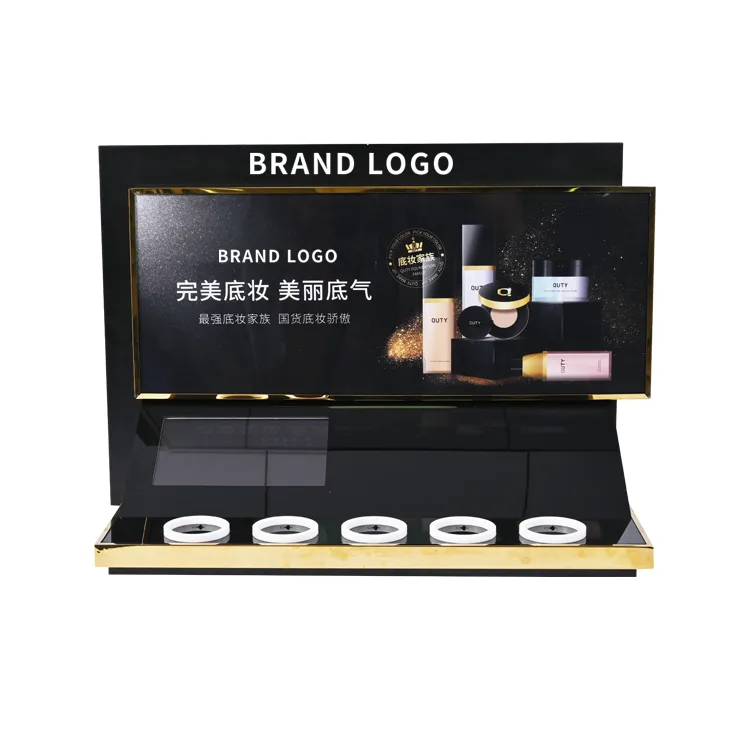
APEX has a cosmetic display that combines a metal structure with a sensor and LCD screen. The unit has five product slots, and when a product is picked up, the LCD screen plays the corresponding video. The design also includes a replaceable graphic area, customized brand logo, power controls, and a video transfer interface.
This type of interactive cosmetic display shows how digital functions can be integrated directly into a physical merchandising structure rather than added as a separate screen.
Keep Technology Connected to the Product Experience
Digital features should have a clear relationship with the products being displayed.
Product demonstrations, educational content, campaign messaging, or other visual information can be integrated when they help shoppers understand the product. The display should still remain functional when customers browse, test, or remove products from the fixture.
How Can Beauty Brands Make Store in Store Displays More Flexible?
Configure Shelves and Product Areas Around the Assortment
The display should reflect the products being sold rather than forcing every category into the same configuration.
Adjustable or configurable merchandising areas can provide greater flexibility for different product sizes, product launches, and changes in assortment. This is particularly important when the same brand display is used across multiple retail formats.
Support Product Launches and Merchandising Updates
Beauty retail programs often change as new products, campaigns, and seasonal collections are introduced.
A modular display can make selected updates easier by allowing certain components to be changed without replacing the complete structural system. Graphics, shelf arrangements, product sections, and selected display elements can be adjusted according to the current merchandising plan.
Use Materials According to Function
Material selection should support the structural and visual requirements of the display rather than become the focus of the solution.
Metal can provide the main framework for shelves, panels, and integrated components. Other materials can be used where they provide a specific functional or visual benefit. The final combination should depend on the display structure, product requirements, retail environment, and brand design.
How Can Store in Store Displays Support Multi Store Expansion?
Standardize the Core Display Structure
Once a store in store concept is approved, the core structure should be defined clearly enough to support consistent production across multiple locations.
Standardized structural elements can help maintain the intended brand presentation while allowing individual display components to be adjusted according to the needs of each store.
Adapt the System to Different Store Formats
A multi store program may involve department stores, specialty retailers, shopping malls, or other retail environments with different space conditions.
The display system should therefore allow practical changes to dimensions, configurations, product capacity, and visual elements without losing the overall design direction.
Simplify Installation and Store Updates
Displays used across multiple locations should be practical to install, maintain, and update. Components that can be assembled and adjusted efficiently can help reduce unnecessary work when a retail program is rolled out to additional stores.
This is particularly important when displays need to be installed in different locations under different site conditions.
Plan for Scalable Production
A display concept that works in one store may eventually need to be produced for a much larger retail rollout. Brands should consider whether the structure can be manufactured consistently at the required quantity while maintaining the intended design and merchandising configuration.
The design should also allow practical adjustments for different store formats without requiring a completely new structure for every location.
For brands moving from an initial concept to a broader retail rollout, APEX provides a custom display service covering design drawings, sampling, production, quality assurance, and after sales support.
Frequently Asked Questions
What Is a Store in Store Display Solution?
A store in store display solution is a dedicated branded retail area located within a larger retailer or shared retail environment. It can combine structural fixtures, merchandising areas, branding, lighting, and digital elements to create a defined brand presence.
What Beauty Products Can Be Presented in a Store in Store Display?
Store in store systems can be configured for skincare, makeup, fragrance, personal care, and other beauty products. The display format can be adapted according to product size, assortment, merchandising requirements, and available retail space.
Can One Display Concept Be Adapted for Different Stores?
Yes. A modular approach allows the core design to remain consistent while dimensions, shelf configurations, graphics, and other elements are adjusted according to each retailer and location.
Conclusion
Store in store display solutions should give beauty brands a consistent retail identity while remaining flexible enough for different locations and merchandising needs. A modular structural approach, integrated lighting, and selected digital features can help create a practical system for multi store retail programs.
APEX provides customized retail display solutions from design and prototyping through production. Brands planning a new store in store program can contact the APEX team to discuss their display requirements.