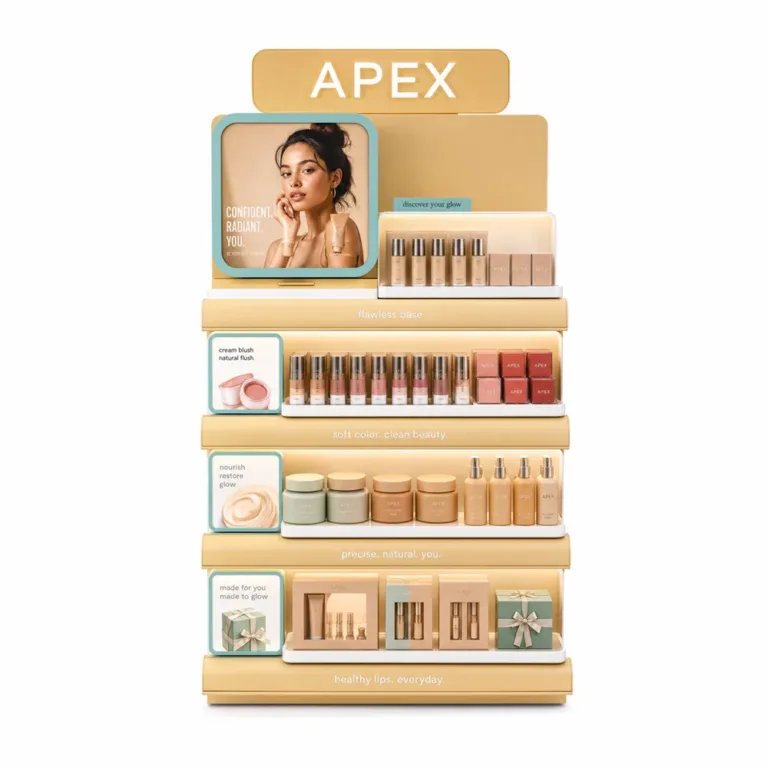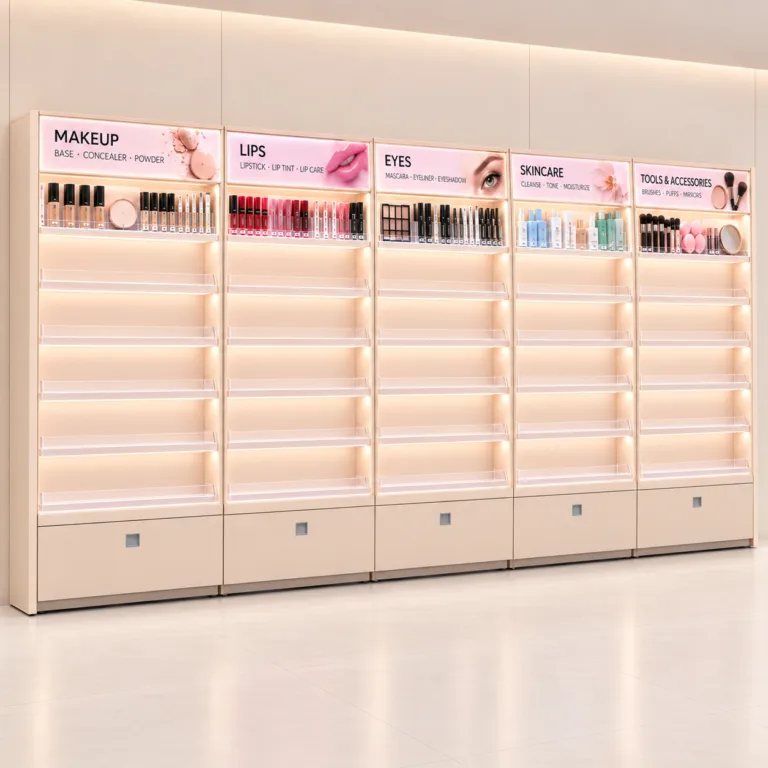
Retail brands, store managers, and commercial interior planners face a persistent operational challenge: building high impact physical retail spaces that command premium price points while maintaining strict control over upfront store opening and fixture procurement costs. Buying into the luxury visual standard no longer requires an unrestricted capital budget.
At APEX Store Solutions, we have spent over 20 years helping global retail brands bridge the gap between high end design and realistic production budgets. Achieving an upscale store appearance comes down to precise material selection, strategic lighting architecture, and optimized display engineering.
By understanding how the human eye registers quality, brands can systematically elevate their store environment through targeted investments in key visual touchpoints while standardizing low visibility structural components.
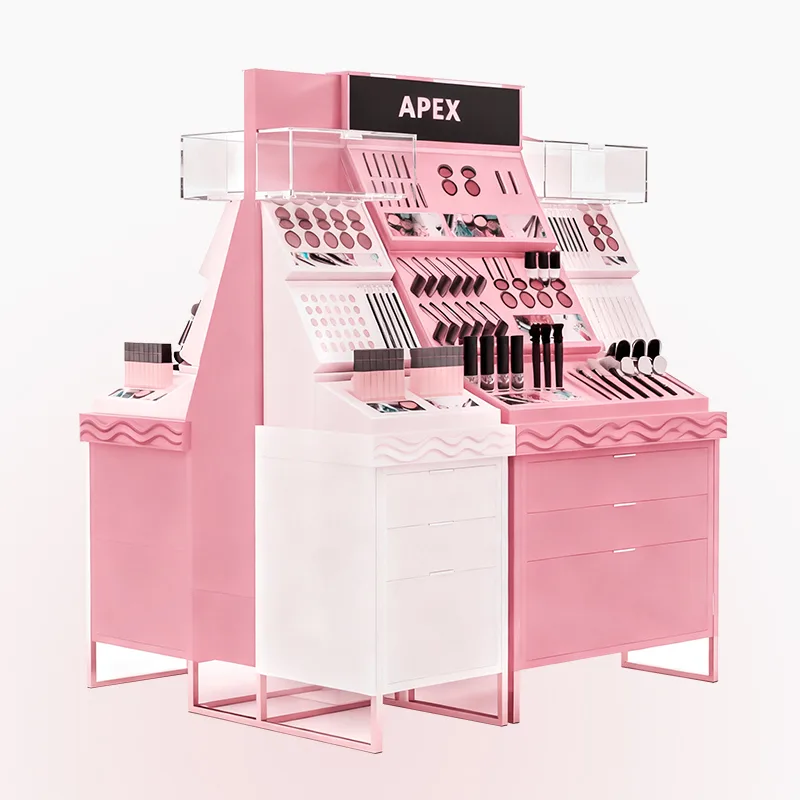
What Makes a Store Look “Expensive”?
The Science Behind Luxury Retail Perception
The human brain evaluates retail environments within seconds based on a few sensory cues, including structural alignment, light uniformity, and tactile material density. Luxury flagship stores rely heavily on negative space giving products breathing room alongside consistent material finishes.
When display units feature clean joinery, hidden mechanical fasteners, and seamless edge bonding, customers subconsciously attribute higher value to the displayed merchandise.
Common Pitfalls of Bargain Display Fixtures
Attempts to save costs through generic retail fixtures frequently backfire and harm brand perception. Low grade acrylics turn yellow over time, budget metal frames show visible welds, and cheap laminates peel at high touch corner seams.
Furthermore, poorly engineered displays lack structural rigidity. This results in subtle sagging under product weight, which completely destroys the clean lines essential to a luxury aesthetic.
Having analyzed the primary psychological factors behind upscale visual perception, let us examine how material selection directly influences both physical presentation and manufacturing expenditure.
How to Select Cost-Effective Materials That Deliver a High-End Finish
High Performance Composite Substrates vs Natural Wood
Authentic marble, solid hardwood, and thick brass sheeting carry astronomical material and shipping costs. Modern retail manufacturing solves this challenge through precision multi material processing.
This allows brands to replicate luxury textures at a fraction of the weight and expense:
- High Density Composite Substrates: Premium MDF or core plywood with engineered veneers delivers natural wood grain with superior structural stability.
- Advanced Surface Coatings: UV printing, electroplating, and hot stamping allow acrylic and metal components to replicate brushed brass or marble textures.
Optical Glass Clarity and Metallic Surface Accents
Standard commercial glass carries a slight greenish tint that distorts true product colors. Transitioning to ultra clear low iron glass eliminates visual distortion, creating an invisible barrier effect for high end jewelry and beauty counters.
For metallic accents, we utilize Physical Vapor Deposition, commonly known as PVD coating. This advanced vacuum plating process applies a micro thin metal layer onto steel tubing. It creates a highly durable, scratch resistant metallic finish where customer contact is highest.
| Traditional Luxury Material | Engineered Alternative | Primary Benefit |
| Solid Hardwood & Marble | MDF Substrates with UV Veneers | Reduces weight and prevents structural warping |
| Standard Tinted Glass | Ultra Clear Low Iron Glass | Eliminates color distortion on display items |
| Solid Cast Brass Frames | PVD Coated Steel Tubing | High scratch resistance at lower material cost |
Transitioning to engineered substitutes allows retail planners to stretch project budgets without compromising visual fidelity. To complement these material choices, precise illumination must be deployed to highlight textures and establish store ambiance.
Strategic Lighting Architecture for Luxury Ambiance
High Color Rendering Index Specifications
The quality of light dictates product appeal far more than the light fixture itself. Standard commercial lighting often features a low Color Rendering Index, or CRI, around 70 to 80. This makes product colors look dull or washed out.
Specifying LED modules with a CRI higher than 90 ensures that product packaging, cosmetic shades, and metallic surfaces display true, vibrant tones. CRI is simply a measurement scale from 0 to 100 that indicates how accurately a light source reveals true colors compared to natural sunlight.
Layered Illumination and Color Temperature Control
Luxury retail environments utilize layered illumination rather than relying on harsh direct overhead lighting:
- Ambient Lighting: Low glare overall illumination that sets the base store mood.
- Accent Lighting: Concealed LED strips integrated directly inside showcase channels to backlight products.
- Task Lighting: Focused beam angles highlighting high margin hero items.
Matching Correlated Color Temperature, or CCT, to brand identity is equally vital. Warm white lighting between 2700K and 3000K works best for luxury fashion and boutique jewelry. Neutral white lighting ranging from 4000K to 5000K suits modern consumer electronics, skincare, and specialty retail stores requiring a crisp look.
With effective lighting frameworks established to enhance material finishes, the focus shifts toward optimizing the physical manufacturing of retail display units.
Modular Showcase Engineering for Custom Store Rollouts
The Standardized Frame and Custom Skin Concept
Fully custom one off retail fixtures drive up engineering fees and lengthen production lead times significantly.
A cost effective alternative utilizes standardized internal structural frames combined with customized exterior cladding panels made from acrylic, brushed metal, or printed graphics. This strategy allows brands to achieve a tailored aesthetic across global store rollouts while keeping factory production runs highly efficient.
Streamlined Installation for Reduced Onsite Labor
On site contractor labor represents one of the largest hidden expenses in commercial retail fit outs.
Sourcing pre engineered modular displays with integrated wiring channels drastically reduces assembly time on location. Fixtures designed for quick connect assembly allow local installation teams to build entire departments rapidly without requiring specialized machinery or custom carpentry tools.
While modular framework designs streamline manufacturing and installation, maintaining long term profitability requires a clear framework for budget allocation across different retail touchpoints.
Targeted Display Categories across Retail Sectors
Beauty and Cosmetics Displays
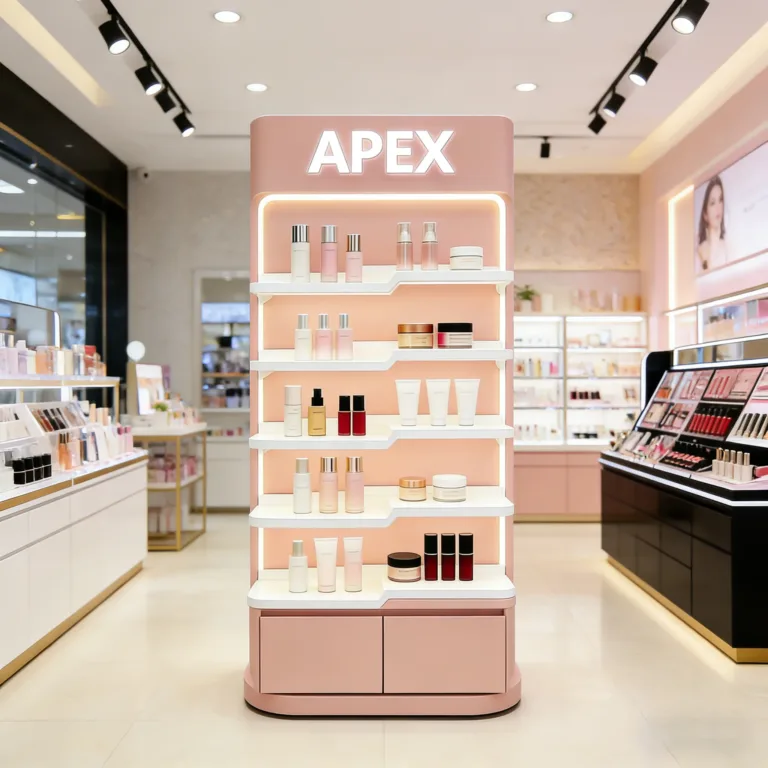
In cosmetics retail, organized visual presentation and lighting accuracy directly impact conversion rates. Implementing a structured Cosmetic Display Stand or a multi tiered Cosmetic Counter Display allows shoppers to navigate product shades effortlessly.
Specialized merchandising units further elevate individual product lines:
- Fragrance Merchandising: High clarity acrylic Perfume Display units reflect ambient light to create a crystal like aesthetic.
- Lip and Nail Stations: Precision cut Lipstick Display tray layouts and tiered Nail Polish Display racks keep small items organized and secure.
Electronics, Eyewear, and Specialty Retail
High value merchandise requires clean structural lines combined with integrated security features:
- Electronics and Optics: A specialized Consumer Electronics Display conceals power wiring, while an Eyeglasses Display Stand uses directional spotlights to highlight frame details.
- Specialty Outlets: Lockable pushers inside a Vape Display Case or a compact Gas Station Vape Display maximize inventory capacity. Deploying comprehensive Vape Store Solutions maintains brand consistency across counter areas.
- High Capacity Fixtures: Upgrading to a heavy duty Supermarket Display Stand or a modular Custom Display Rack improves floor circulation and product access.
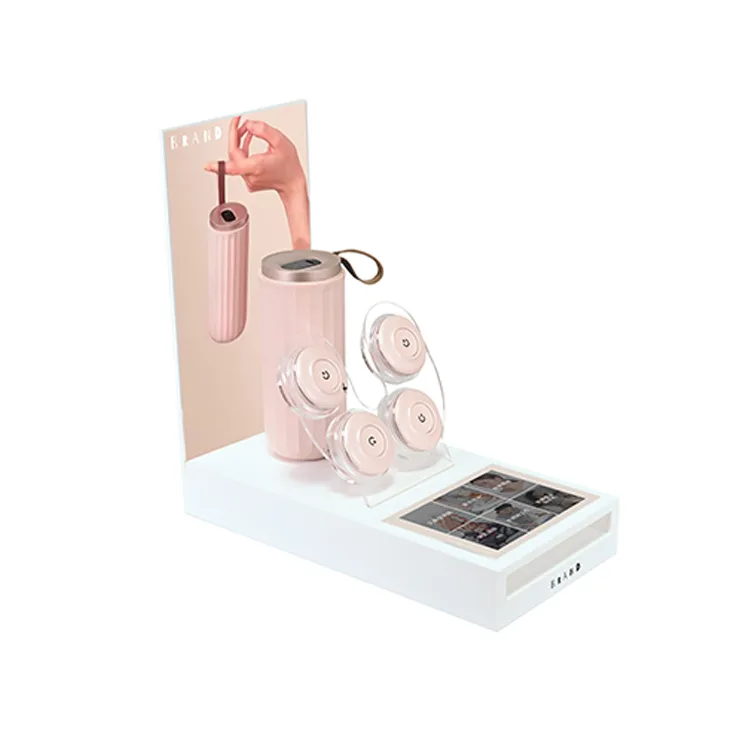
Counter Organization and Corporate Accents
Point of sale areas serve as the final visual impression for store visitors:
- Counter Accessories: Clear Acrylic Sign Holders present pricing details neatly, while a specialized Custom Tray keeps checkout space organized.
- Brand Recognition: Custom awards, including structural Acrylic Trophy and weighted Metal Trophy designs from our Trophy Customization team, support corporate events, while decorative Acrylic Gifts and Acrylic Home Furnishings reinforce brand identity.
The 80/20 Spend Matrix for Retail Fixture Optimization
Capital Allocation by Customer Touchpoint
To maximize return on fixture investments, retail operators must allocate capital according to direct customer interaction levels rather than applying uniform spending across the entire floor plan.
| Zone Category | Target Fixture Components | Recommended Material Spec | Procurement Strategy |
| High Touch Zones | Countertops, handles, front glass, showcases | High grade acrylic, low iron glass, PVD metal, high CRI LEDs | Prioritize tactile durability, optical clarity, and premium finish. |
| Low Touch Zones | Internal frames, rear shelving, base plinths | Standard MDF, powder coated steel, durable laminates | Standardize structural engineering and non exposed interior surfaces. |
Long Term Durability and Compliance Standards
Choosing uncertified budget display suppliers frequently leads to unexpected operational overhead. Non certified LED drivers fail prematurely, causing store downtime and potential safety compliance issues.
Working with an established manufacturer operating under international quality standards like ISO9001 quality management, SEDEX social compliance, and TÜV certification ensures that your fixtures maintain dimensional consistency across multiple franchise locations.
Now that the core structural, lighting, and budgeting principles are established, let us address common technical questions that arise during display procurement and store deployment.
Frequently Asked Questions
What major factors impact the total manufacturing price of custom commercial display showcases?
Custom showcase pricing depends primarily on raw material selection, internal structural engineering complexity, embedded lighting specifications, and total order volume. Integrating multi material components like precision CNC machined metals alongside custom acrylic fabrications requires specialized tooling and multi stage quality checks that influence unit costs. For accurate pricing based on your specific spatial layout and production volume, contact the engineering team at APEX Store Solutions directly.
What common material selection mistake makes retail displays look worn over time?
Selecting standard low cost laminates or thin acrylics without protective surface treatments for high contact areas is a major mistake. Uncoated acrylics scratch easily under daily cleaning, while thin edge banding on base cabinets peels when exposed to commercial floor washing equipment. Specifying anti fingerprint coatings and impact resistant edge protection prevents premature surface degradation.
What installation details are most frequently overlooked during store fit outs?
Installers often overlook proper thermal management for integrated display lighting and clean cable routing. Enclosing high output LED drivers inside tight display bases without adequate ventilation channels causes light drivers to overheat and fail prematurely. Additionally, failing to pre engineer hidden cable pathways leads to exposed wiring that disrupts clean store lines.
What is the typical production and delivery lead time for factory direct display fixtures?
Standard production lead times for factory direct commercial displays range from 3 to 5 weeks following final shop drawing approval, depending on material availability and engineering complexity. Global shipping adds an additional 2 to 4 weeks based on destination ports, making early fixture engineering finalization critical for meeting scheduled store opening dates.
Conclusion
Creating an upscale retail environment does not depend on an unlimited capital budget. It requires disciplined material choices, precise lighting specifications, and intelligent showcase engineering. Concentrating financial resources on high touch customer interaction zones while standardizing underlying fixture structures enables brands to achieve flagship level store presentation while keeping capital expenditure fully under control.
Partnering with an experienced global fixture manufacturer ensures your retail concepts transition smoothly from initial technical drawings to durable store installations. Contact the commercial design and manufacturing team at APEX today to review your store layout requirements and receive a detailed production proposal.