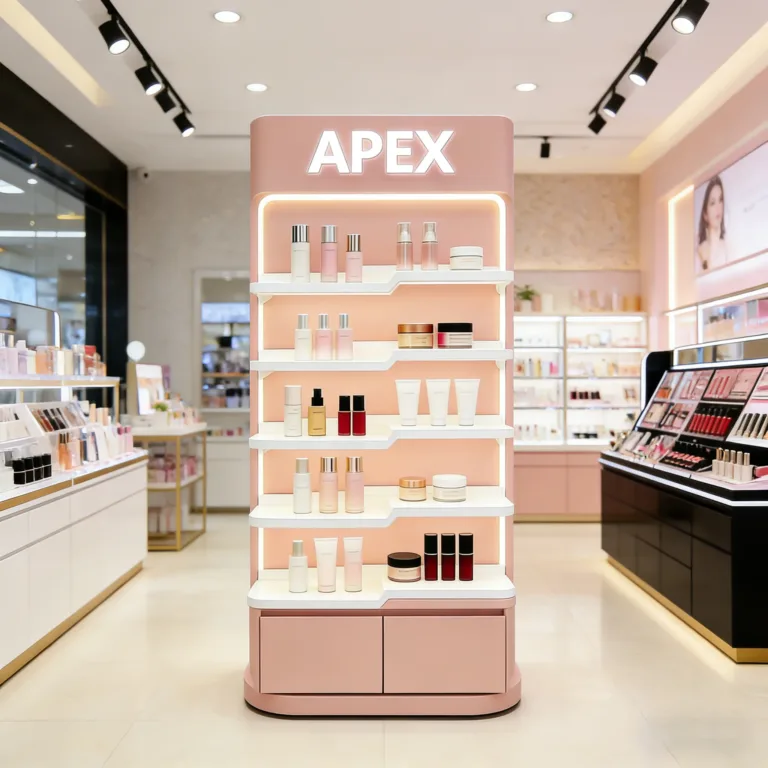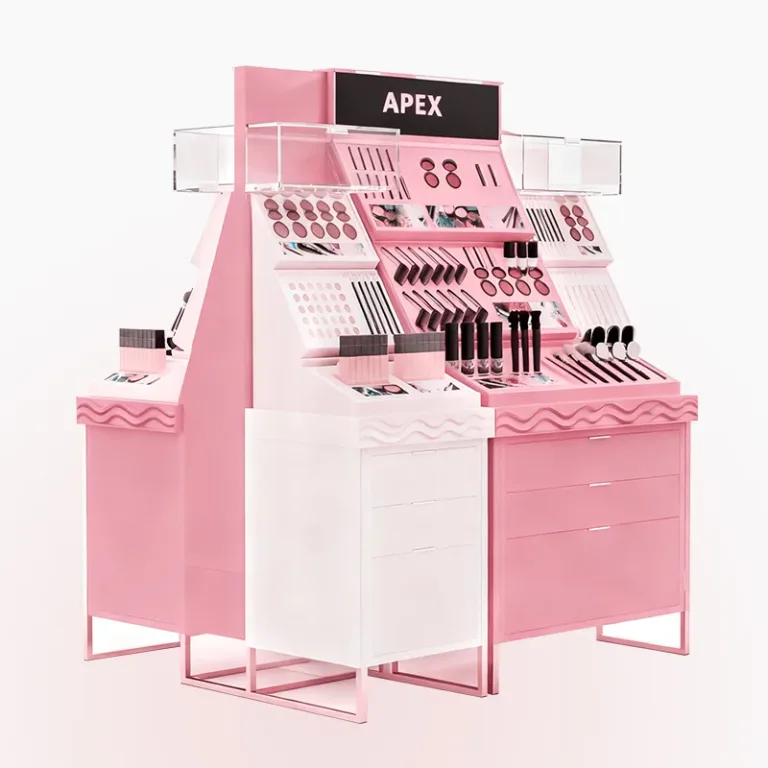
In the competitive world of cosmetics retail, the role of display stands goes far beyond holding products. These essential fixtures highlight the beauty of cosmetics, shape the overall store atmosphere, and directly influence customer purchasing decisions. Choosing the right material for your cosmetic display stands is therefore a key factor in building brand image and maximizing sales impact.
Among the different materials available, acrylic and glass are the two most widely used. Both offer excellent transparency and attractive aesthetics, yet they differ greatly in cost, durability, and practicality. In this article, we will compare acrylic cosmetic display stands and glass cosmetic display stands from multiple angles to help retailers make the right choice.
Acrylic Cosmetic Display Stands
Aesthetic Appeal
Acrylic stands provide outstanding transparency, comparable to glass, allowing customers to clearly see the details of cosmetic products. Beyond clarity, acrylic offers remarkable design flexibility. It can be shaped into unique styles and infused with vibrant colors, creating displays that perfectly match a brand’s personality. This versatility makes acrylic stands a modern and stylish choice for cosmetic retailers seeking customized solutions.
Durability
Durability is where acrylic truly stands out. Unlike fragile glass, acrylic is shatter-resistant and highly impact-resistant. This strength reduces the risk of accidents in high-traffic retail spaces and minimizes maintenance costs. With acrylic cosmetic display stands, retailers enjoy long-lasting performance, while customers benefit from a safe and secure shopping experience.
Weight and Installation
Another significant advantage of acrylic is its lightweight nature. Acrylic stands are easy to transport, install, and rearrange, making them especially convenient for stores that frequently update their layouts. The simple installation process also reduces labor costs and time, streamlining store operations and allowing for greater flexibility in merchandising strategies.
Cost Considerations
From a cost perspective, acrylic is more affordable than glass. Both raw materials and processing expenses are lower, which translates into a cost-effective solution for retailers. Small and medium-sized cosmetic stores, in particular, benefit from this affordability. Importantly, the lower cost does not mean sacrificing quality—acrylic display racks still provide excellent clarity and aesthetics at a budget-friendly price.
Maintenance
When it comes to maintenance, acrylic stands are easy to care for. A soft cloth and neutral cleaning solution are enough to keep them looking spotless. However, to preserve their quality, acrylic should be kept away from high heat and strong chemicals. With basic care, acrylic stands maintain their pristine appearance, making them a practical option for busy retail environments.
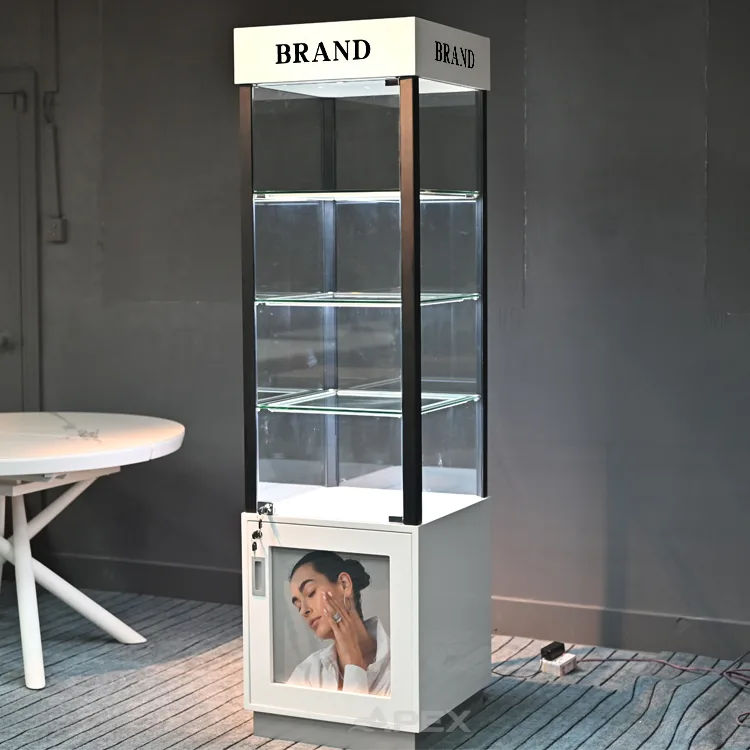
Glass Cosmetic Display Stands
Aesthetic Appeal
Glass stands have long been associated with elegance and luxury. Their brilliant clarity and ability to reflect light beautifully enhance the perceived value of cosmetics, making them appear more refined. Ultra-clear glass, in particular, delivers unmatched transparency, helping to elevate a store’s premium atmosphere and reinforce a high-end brand image.
Durability
Glass excels in heat resistance and corrosion resistance, giving it a long service life under certain conditions. However, its biggest drawback is fragility. Glass breaks easily under impact, which can pose safety risks and lead to costly product losses. For this reason, glass display stands require careful handling in retail spaces.
Weight and Installation
Compared to acrylic, glass is much heavier, making transportation and installation more challenging. Extra support structures are often needed, which increases setup complexity and cost. Retailers must also take precautions during handling to avoid damage, which can add time and effort to the installation process.
Cost Considerations
Glass display stands are generally more expensive. The cost of high-quality glass materials is higher, and the difficulty of processing irregular shapes further increases expenses. Transportation costs are also higher due to the material’s weight and fragility. For stores operating on tight budgets, these factors can be a significant disadvantage.
Maintenance
Maintaining glass stands requires more effort. Fingerprints and smudges show up easily, necessitating frequent cleaning to preserve their elegant appearance. In addition, scratches are difficult to repair, which can affect the overall look of the display over time. This higher maintenance demand is an important factor for retailers to consider.
Comparative Analysis at a Glance
| Feature | Acrylic Display Stands | Glass Display Stands |
| Transparency | High, comparable to glass | Very high, ultra-clear glass excels |
| Impact Resistance | Strong, shatter-resistant | Weak, easily breaks under impact |
| Weight | Lightweight, easy to move | Heavy, difficult to transport |
| Cost | More affordable | Higher |
| Customization | Highly versatile in design and color | Limited customization |
| Maintenance | Easy to clean, polishable | Needs frequent cleaning, scratches hard to repair |
Suitable Scenarios
Acrylic Cosmetic Display Stands are best suited for:
- Retailers that frequently adjust store layouts.
- Stores with high foot traffic that require safe, durable displays.
- Businesses operating on limited budgets.
- Brands that want modern, colorful, or customized display solutions.
Glass Cosmetic Display Stands are ideal for:
- High-end brand stores and luxury counters.
- Retail environments where premium appearance outweighs practicality.
- Situations where creating an elegant and sophisticated atmosphere is the top priority.
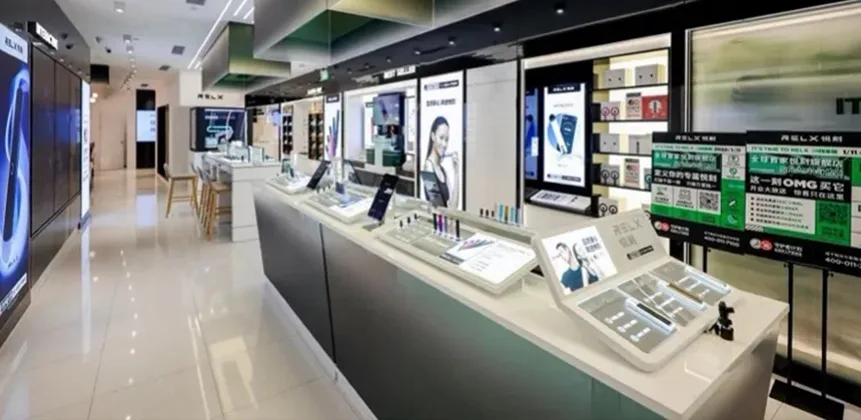
Display Effect and Long-Term Cost
Both acrylic and glass offer high transparency, but they create different impressions. Acrylic stands have a modern, trendy look, making them perfect for youthful and vibrant cosmetic brands. Glass, on the other hand, conveys luxury and refinement, ideal for showcasing premium cosmetic lines.
In terms of long-term cost, acrylic stands have a lower initial investment but may require replacement sooner if used heavily. Glass stands demand a higher upfront cost, but with proper care, they can last longer. The choice ultimately depends on the retailer’s business priorities and brand positioning.
Conclusion
Both acrylic and glass cosmetic display stands have their unique strengths. Acrylic is lightweight, durable, customizable, and cost-effective, making it the preferred choice for most modern retail settings. Glass offers an elegant, premium appearance that enhances high-end brand image, though it comes with higher costs and maintenance requirements.
At the end of the day, the right material depends on your store’s positioning and budget. If you are looking for versatile, practical, and affordable solutions, acrylic stands are the smarter option. As a professional supplier of acrylic display racks, APEX provides high-quality, customizable cosmetic display solutions tailored to your needs. Contact us today to explore how our expertise can help elevate your product presentation and strengthen your brand image.